
Table of Contents
- The Core Mechanism: Collagen Stimulation, Volumization, and Contouring Without Surgery
- The Injectables Explained: Sculptra, Radiesse, and Dermal Fillers
- Are You a Good Candidate for a Non-Surgical BBL? An Honest Framework
- Non-Surgical BBL vs. Surgical BBL: A Side-by-Side Evaluation
- What to Expect: Your Treatment Timeline, Session Sequence, and Recovery Reality
- How Long Do Non-Surgical BBL Results Last — and What Does Maintenance Really Cost?
- Safety, Side Effects, and What a Qualified Practitioner Is Actively Preventing
- Why Injector Artistry Is the Primary Determinant of Your Result
- What Does a Non-Surgical BBL Cost in Philadelphia? A Transparent Breakdown
- What You Now Know — and Your Next Step Toward a Result You Can Trust
- How to Book Your Candidacy Consultation at MEDSPA MD Group in Philadelphia
- Frequently Asked Questions
The Core Mechanism: Collagen Stimulation, Volumization, and Contouring Without Surgery
A non-surgical BBL works by injecting biocompatible substances, most commonly Sculptra or Radiesse, into targeted areas of the buttocks to add volume, lift the contour, and stimulate the body’s own collagen production over time. No incisions. No general anesthesia, and no fat transfer. The result, when done well, is a fuller, more lifted silhouette that develops gradually and integrates naturally with surrounding tissue.
The procedure addresses three distinct goals. Adding volume to flat or deflated areas, lifting the inferior pole of the buttock to reduce ptosis, and improving the overall shape ratio between the waist, hip, and gluteal projection. Skilled injectors approach each of these as separate anatomical problems requiring different product placement strategies.
How a Liquid BBL Differs From What Most People Imagine
Most people arrive at a consultation picturing the dramatic surgical transformation they have seen on social media. The surgical Brazilian Butt Lift involves liposuction to harvest fat from the abdomen, flanks, or thighs, followed by strategic fat injection into the buttocks. The result can add significant projection and simultaneously contour the surrounding body.
A liquid BBL does neither of those things. There is no liposuction, no fat redistribution, and no ability to reshape adjacent anatomy. What it can do is meaningfully enhance the shape and volume of the buttocks themselves. This is particularly for candidates whose primary concern is flatness, lack of projection, or early volume loss rather than a dramatic size increase. Managing that distinction clearly is what separates honest providers from those who overpromise.
The Real Reason Outcomes Vary: Why the Product in the Vial Is Only Half the Story
Sculptra and Radiesse are widely available to licensed injectors across Philadelphia. The products themselves are not what differentiates a result that looks natural and beautifully shaped from one that looks lumpy, asymmetrical, or underwhelming. The differentiator is the injector’s anatomical knowledge and aesthetic judgment.
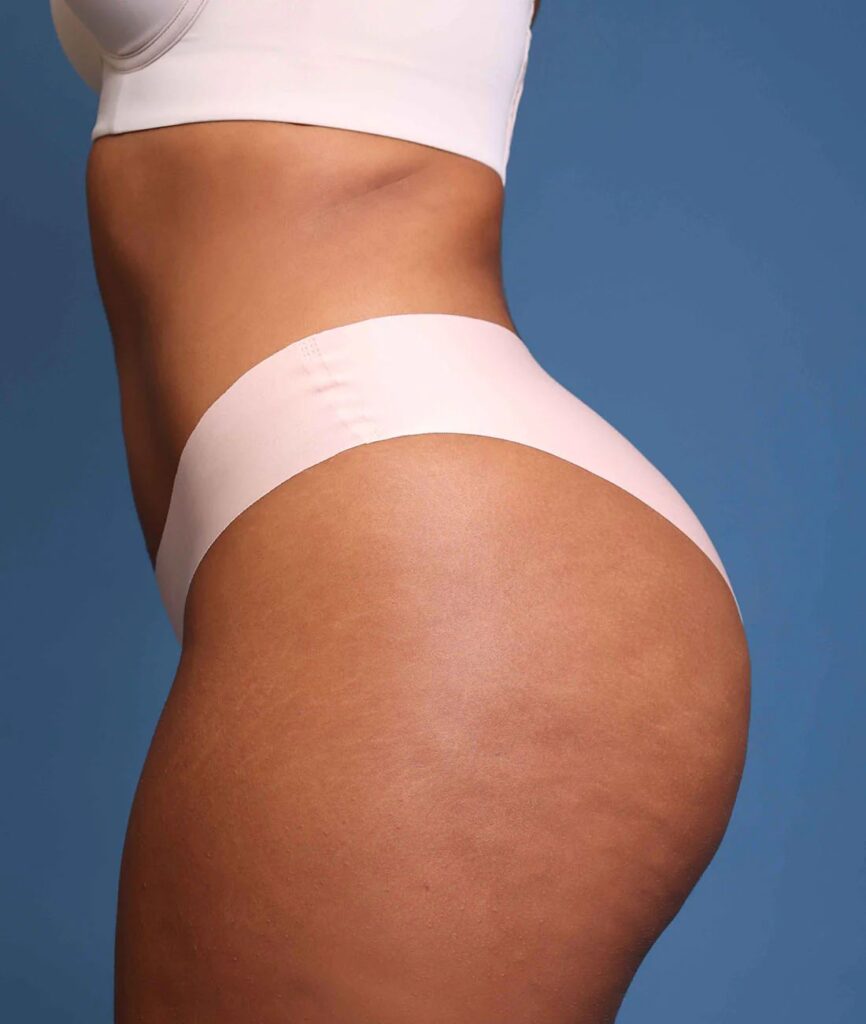
Buttock anatomy is complex. The gluteal region contains multiple fascial layers, neurovascular structures, and fat compartments that behave differently under injection pressure. Placing product at the wrong depth, in the wrong compartment, or in incorrect volume ratios can produce nodules, asymmetry, or a result that fades unevenly. This is precisely why a non-surgical BBL is not a commodity service, and why the provider’s training and experience carry more weight than the product list on any clinic’s menu.
How Long Does the Procedure Take?
Most sessions run between 45 minutes and 90 minutes depending on the number of syringes used and the complexity of the treatment plan. Initial appointments typically include a detailed candidacy assessment and mapping session before any product is placed, so plan for extra time at your first visit. No sedation is required, and most clients return to normal activity the same day.
The Injectables Explained: Sculptra, Radiesse, and Dermal Fillers
Sculptra (Poly-L-Lactic Acid): The Collagen Stimulator
How Poly-L-Lactic Acid Triggers Progressive Volume
Sculptra is not a filler in the traditional sense. Poly-L-lactic acid (PLLA) is a synthetic, biodegradable polymer that acts as a collagen stimulator rather than a volumizing agent. When injected, the microspheres trigger a controlled inflammatory response at the tissue level. The body responds by generating new collagen fibers around the particles. This gradually builds volume from within over a period of weeks to months.
The volume present at six months is your own collagen, not a foreign substance sitting in the tissue. That distinction matters for both the quality of the result, which tends to look natural and feel soft, and for longevity. This is because collagen-based volume degrades more slowly than traditional filler.
Why Sculptra Requires Patience — and Why That Works in Your Favor
Full results from a Sculptra-based liquid BBL typically take three to six months to manifest, and most protocols require two to four treatment sessions spaced several weeks apart. For someone accustomed to the immediate results of hyaluronic acid filler, this timeline can feel counterintuitive.
The practical advantage is discretion. Volume builds gradually enough that no one notices a sudden change, only the cumulative improvement over months. For the professional who wants to enhance her shape without prompting questions from colleagues, the slow reveal is a feature, not a limitation.
Radiesse (Calcium Hydroxylapatite): Immediate Structure With Biostimulatory Benefits
How Radiesse Differs From Sculptra in Mechanism and Timeline
Radiesse is calcium hydroxylapatite (CaHA) suspended in a gel carrier. Unlike Sculptra, it provides immediate structural volume at the time of injection while also stimulating collagen production as the carrier gel integrates and the CaHA microspheres gradually resorb. The result is a two-phase effect: visible lift and contour within days, followed by progressive biostimulatory improvement over the following months.
Radiesse is often preferred when a client wants some immediate visible change alongside longer-term collagen benefits, or when specific areas need structural definition rather than diffuse volume. It is also commonly used in diluted form, a technique that broadens its distribution across larger surface areas of the gluteal region.
Dermal Fillers in Buttock Enhancement: Where They Fit and Where They Fall Short
Traditional hyaluronic acid dermal fillers are occasionally used in buttock enhancement, but they represent a smaller role in most well-designed treatment plans. HA fillers provide immediate, reversible volume, which is an advantage in certain situations. However, they degrade faster in high-movement areas like the buttocks, require larger volumes to achieve comparable results, and carry a different risk profile at those injection depths. For most clients pursuing a non-surgical butt lift, biostimulators like Sculptra or Radiesse offer a more durable and tissue-appropriate solution.
Choosing the Right Material: Why This Decision Belongs to Your Injector
The right injectable for your treatment is not the one featured on a promotional offer or the one a friend received. It depends on your anatomy, your baseline volume, your skin quality, your timeline expectations, and your tolerance for a multi-session protocol. A qualified injector assesses all of these variables before recommending a product and often uses a combination of materials to address different goals within the same treatment plan.
Non-Surgical BBL Injectable Options: A Comparison
| Sculptra (PLLA) | Radiesse (CaHA) | Dermal Fillers (HA) | |
|---|---|---|---|
| Mechanism | Collagen stimulation via PLLA microspheres | Immediate volume plus biostimulation via CaHA gel | Direct volumization via hyaluronic acid gel |
| Onset of results | Gradual: 3 to 6 months | Dual-phase: immediate, then progressive over months | Immediate |
| Longevity | 2 to 3+ years with proper protocol | 12 to 18 months | 6 to 12 months in buttock area |
| Sessions typically required | 2 to 4 sessions | 1 to 3 sessions | 1 to 2 sessions |
| Reversible? | No | No | Yes (with hyaluronidase) |
| Ideal candidate profile | Prefers gradual, natural-looking results; willing to commit to a multi-session protocol; prioritizes longevity | Wants some immediate visible improvement alongside collagen-building benefits; needs structural definition | Specific focal volume needs; prefers reversibility; shorter-term goal |
| Primary limitation | Requires patience; no instant gratification | Less diffuse distribution than Sculptra in some applications | Faster degradation in high-movement areas; higher volume required for comparable results |
The right choice is rarely obvious from this chart alone. Most clients achieve their best outcomes when the injector selects based on a live assessment of anatomy, skin quality, and aesthetic goals rather than a fixed protocol.
Are You a Good Candidate for a Non-Surgical BBL? An Honest Framework
The Ideal Candidate Profile: Body Type, Skin Quality, and Volume Goals
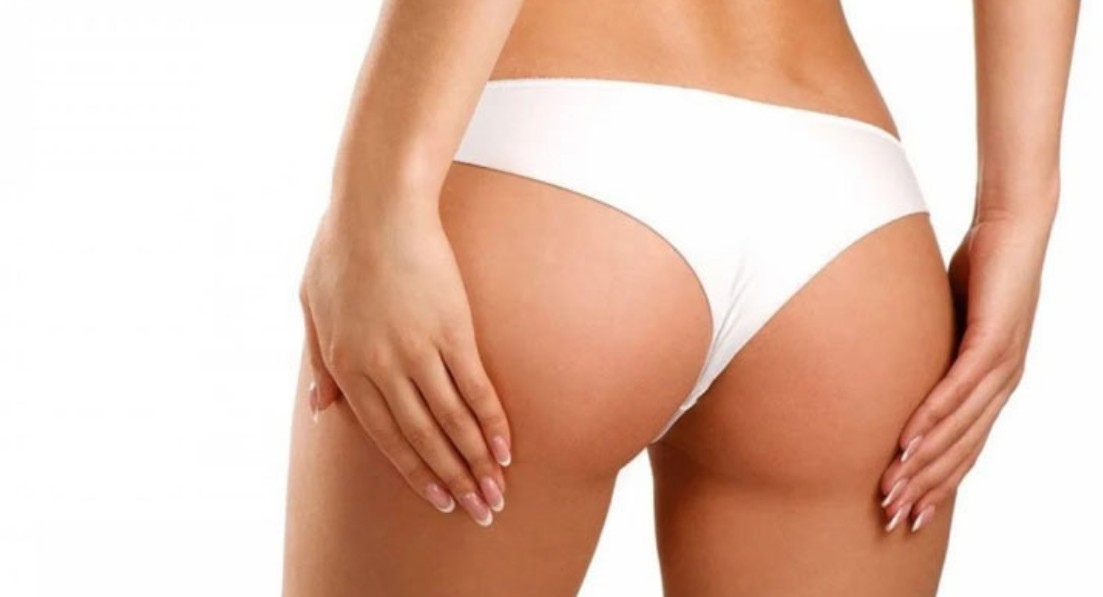
The clients who achieve the most satisfying results from a liquid BBL share a few consistent characteristics. They want moderate enhancement, meaning improved shape, projection, or lift rather than a dramatic size change. They have reasonable skin elasticity. And their goals are achievable within the realistic volume range that injectable protocols can deliver.
Body shape matters as well. Candidates with an existing gluteal foundation, some muscle mass and native tissue to support the product, tend to see more defined, shapely results than those starting from very lean baselines with minimal soft tissue coverage.
BMI Considerations and Why They Matter for Safety and Aesthetic Outcome
BMI is not a hard cutoff for candidacy, but it is a relevant variable for two reasons. First, injecting into the buttocks of someone with very low body fat means placing product in close proximity to deeper anatomical structures. This changes the risk calculus and requires additional precision. Second, at very low body fat percentages, even significant product volume may not produce the visual change a client expects. This is because there is minimal surrounding tissue to integrate with and enhance the result.
At higher BMI levels, the concern shifts in the opposite direction. Very large treatment areas require proportionally higher product volumes to achieve visible change, which affects both session count and cost. Candidacy is not about meeting a number. It is about ensuring the procedure can actually deliver what the client is hoping for.
Skin Laxity as a Qualifying and Disqualifying Factor
Good skin elasticity allows tissue to conform to newly placed volume and maintain a smooth surface as collagen builds. Mild to moderate laxity can sometimes be improved with biostimulatory treatment. Significant laxity, loose or crepey skin with poor recoil, is a more complicated picture. Injectable volume placed beneath loose skin can sometimes accentuate the laxity rather than correct it, producing a result that looks full but not lifted. This is one of the honest conversations a candidacy-first provider has before any treatment begins.
Who Is Not a Good Candidate — and Why Transparency Builds Better Outcomes
Ruling someone out for a procedure is not a failure of the consultation. It is the consultation working exactly as intended. Clients who are not well suited for a liquid BBL include those who:
- Have very significant skin laxity that requires surgical correction
- Are seeking dramatic volume increase comparable to surgical fat transfer
- Have active skin infections, autoimmune conditions affecting wound healing, or a history of adverse reactions to injectable biostimulators
- Are pregnant or breastfeeding
- Have expectations that cannot be realistically recalibrated during the consultation process
Telling a client this procedure is not right for them and directing them toward a better option is what builds long-term trust. It also protects both the client and the provider from a result that disappoints.
Can You Get a Liquid BBL With a Small Frame or Low Body Fat?
Yes, with appropriate expectations. Petite clients and those with lower body fat can be excellent candidates. This is particularly true when their goal is subtle projection and shape improvement rather than significant size increase. The treatment plan for a smaller frame typically uses lower product volumes placed with precision to create proportion-appropriate enhancement. The result reads as a natural improvement rather than an obvious procedure, which is often exactly what this client wants.
How Much Volume Can a Liquid BBL Add Compared to Surgical BBL?
This is the question that most separates genuinely informed candidates from those who will be disappointed. A surgical BBL can transfer substantial volumes of fat per side, producing changes in projection that are visible in clothing and dramatic in photographs. A liquid BBL, even with an aggressive multi-session protocol, typically adds volume in a range that creates meaningful shape improvement and visible lift, but it does not replicate the projection capacity of fat transfer.
The appropriate frame is not “which delivers more” but rather “which matches my goal.” For clients who want subtle to moderate enhancement with no surgery and no significant downtime, a non-surgical BBL in Philadelphia can deliver genuinely beautiful results. For those seeking a transformation visible in a swimsuit from across the room, an honest conversation about surgical options belongs in the consultation.
Non-Surgical BBL vs. Surgical BBL: A Side-by-Side Evaluation
Safety Profile, Anesthesia, and Risk Architecture
Surgical BBL carries a mortality risk that is among the highest of any elective cosmetic procedure, primarily due to fat embolism if transferred fat enters the gluteal vasculature. General anesthesia adds its own risk layer. These are not reasons to avoid surgery categorically, but they are reasons to take the decision seriously. A non-surgical BBL eliminates both of those risk categories entirely. There is no anesthesia, no operating room, and no fat moving through the circulatory system.
That said, “minimally invasive” is not the same as “risk-free.” Injectable procedures in the gluteal region carry their own considerations, including nodule formation, asymmetry, and rare but serious vascular events if product is placed incorrectly. The risk architecture is fundamentally different from surgery, not absent. The relevant comparison is not safe versus unsafe. It is which risk profile matches your tolerance and circumstances.
Downtime, Recovery, and the Professional Schedule Test
Surgery requires weeks. Most surgical BBL patients are instructed to avoid sitting directly on the buttocks for two to six weeks, wear compression garments continuously, and take significant time away from work and physical activity. The recovery is real, visible, and disruptive.
A liquid BBL imposes none of that. Most clients return to desk work the same day. Strenuous exercise is typically paused for 48 to 72 hours. There may be mild tenderness, swelling, or bruising at injection sites for a few days. You will not need to explain your absence to anyone, modify how you sit in meetings, or navigate compression garments under work clothing. For the professional who cannot — or simply will not — take weeks off, this is a meaningful practical advantage.
Longevity, Volume Capacity, and Long-Term Value
Over a five-year window, the math is worth examining honestly. A single surgical BBL, once fully healed, can produce results that persist for many years with minimal maintenance. A non-surgical BBL built on Sculptra or Radiesse delivers results lasting two to three years before volume begins to diminish, at which point a maintenance session restores the result. Spread the cumulative cost of a multi-session initial protocol plus periodic maintenance over five years, and for some clients the total investment approaches or exceeds the cost of surgery.
Volume capacity compounds this consideration. Surgery can add substantial projection per side. Injectable protocols deliver meaningful improvement, but within a ceiling that cannot match fat transfer for clients seeking significant size increase.
If your goal is moderate enhancement with zero surgical risk and schedule flexibility, the non-surgical route offers strong value. If your goal is maximum projection and you are a surgical candidate, the five-year cost comparison may actually favor the operating room. A provider who acknowledges this openly is one worth trusting.
Who Should Seriously Consider Surgery Instead
Some clients walk into a liquid BBL consultation and leave with a referral to a board-certified plastic surgeon. That is the right outcome for them. Specifically, if you are seeking dramatic size increase, have significant skin laxity requiring excision, or want simultaneous contouring of the abdomen and flanks through liposuction, surgery delivers what injectables cannot. Redirecting a client toward a better-fit procedure is not a lost opportunity. It is the clinical judgment that defines a practice worth recommending.
What to Expect: Your Treatment Timeline, Session Sequence, and Recovery Reality
From First Session to Final Result: A Realistic Progression
The first appointment is longer than subsequent ones. This is because it includes a full candidacy assessment, anatomical mapping, and treatment planning before any product is placed. Expect 90 minutes or more. Your injector evaluates skin quality, tissue depth, existing volume distribution, and your specific aesthetic goals. This session sets the foundation for everything that follows.
Product is then placed according to the mapped protocol. For Sculptra-based plans, you will leave the appointment without dramatic visible change, as the collagen-building process has begun but is not yet visible. For Radiesse, some immediate structural improvement is typically apparent. Over the following weeks and months, volume builds progressively. Most clients report that the transformation becomes clearly visible around the three-month mark, with full results apparent at six months.
How Many Sessions Are Typically Needed
Most clients complete two to four sessions spaced six to eight weeks apart. The variables that drive session count include your baseline volume, your target outcome, the product selected, and your body’s individual collagen response, which genuinely varies from person to person.
A petite client seeking subtle projection improvement may achieve her goal in two sessions. A client with more significant volume deficit or a more defined shape goal may require three or four. Your injector should provide an honest estimate at your first appointment, along with a clear explanation of what determines whether you land at the lower or higher end of that range.
What Downtime Actually Looks Like After a Liquid BBL
The first 24 to 48 hours involve mild soreness and possible swelling or bruising at injection sites, comparable to what you would experience after any injectable procedure. Avoid vigorous exercise, heat exposure, and prolonged pressure on the treated area for the first two to three days. After that, normal activity resumes.
There is no bruising that requires concealing clothing, no restricted posture that requires explanation, and no recovery arc visible to the outside world. The most common feedback from clients after their first session is that they expected to feel worse than they did.
How Long Do Non-Surgical BBL Results Last — and What Does Maintenance Really Cost?
Longevity Data for Sculptra vs. Radiesse
Sculptra results, when achieved through a properly sequenced multi-session protocol, typically last two to three years. Some clients report maintained volume beyond that mark, depending on their individual collagen response and lifestyle factors. Radiesse results generally last 12 to 18 months before noticeable volume reduction begins.
These timelines assume a complete initial protocol, not a single session. One Sculptra treatment does not produce years of results. The longevity data reflects a full course of treatment followed by the collagen integration period. Single-session shortcuts compress both the timeline and the durability.
What Happens to a Liquid BBL Over Time Without Maintenance
Results do not disappear overnight. Volume fades gradually as the biostimulatory product resorbs and collagen naturally degrades over time. Most clients notice the change subtly, as a slight softening of shape or reduction in projection, rather than a sudden reversal. You will not look worse than before you started. You will gradually return toward your pre-treatment baseline.
The practical implication is that you have a window to schedule a maintenance session before the change becomes noticeable, rather than waiting until the result is visibly diminished.
Building a Realistic Maintenance Schedule: Sessions, Timing, and Multi-Year Cost
A reasonable planning framework for a Sculptra-based non-surgical BBL looks like this: two to four initial sessions in year one, followed by a single maintenance session every 18 to 24 months to sustain the result. Radiesse-based protocols typically require maintenance closer to the 12 to 18-month mark.
Over five years, that translates to the initial protocol cost plus two to three maintenance sessions. The total varies significantly based on product volume, session count, and provider pricing, but budgeting for the full maintenance arc rather than just the initial treatment is how you accurately compare this option against surgical alternatives. Ask your provider for a five-year cost estimate during your consultation. A provider who gives you that number clearly is one who respects your ability to make an informed financial decision.
Safety, Side Effects, and What a Qualified Practitioner Is Actively Preventing
Is a Non-Surgical BBL Safe? The Accurate Answer
Injectable buttock enhancement is safe in the hands of a properly trained, anatomically knowledgeable practitioner, and meaningfully less safe outside of that context. The procedure’s safety is not a fixed property of the products used. It is a function of the injector’s depth of understanding and technical precision. This is one of the most important things to understand before selecting a provider.
The gluteal anatomy is not forgiving of errors in placement depth or injection pressure. The same characteristics that make this region capable of holding volume well, dense tissue compartments and layered fascial planes, also make it capable of trapping complications if product is placed incorrectly.
Risks and Side Effects of a Non-Surgical BBL
Nodule Formation, Asymmetry, and Product Migration
Nodules, small palpable lumps beneath the skin surface, are the most common complication of buttock injectables when product is placed too superficially or in incorrect volumes per injection point. An experienced injector prevents them by adhering to proper dilution protocols, particularly with Sculptra, distributing product across multiple small-volume injection points rather than depositing large boluses, and placing product at the correct tissue depth.
Asymmetry can result from unequal product distribution or from a client’s pre-existing anatomical asymmetry that was not accounted for in the treatment plan. A thorough pre-treatment assessment maps existing asymmetries so the treatment corrects rather than replicates them.
Product migration, meaning filler moving from its intended location, is primarily a concern with lighter-viscosity products placed in areas subject to significant movement. Biostimulators like Sculptra and Radiesse, used with appropriate technique in the gluteal region, have a low migration risk compared to traditional HA fillers in the same area.
Infection Risk, Vascular Considerations, and the Anatomy Knowledge That Protects You
Infection risk with injectable procedures is low but not zero. Sterile technique throughout the procedure, including proper skin preparation and use of sterile equipment, is the primary preventive factor. Clients with compromised immune function or active skin conditions in the treatment area require additional assessment before proceeding.
Vascular injury, the most serious potential complication, occurs when product is injected into or near a blood vessel, potentially causing tissue damage or, in rare cases, embolism. In the gluteal region, this risk is mitigated through knowledge of the superior and inferior gluteal artery anatomy, use of cannulas rather than sharp needles in high-risk zones, and injection techniques that apply consistent low pressure. This is precisely the clinical knowledge that distinguishes a trained body contouring injector from a generalist offering the procedure as an add-on service.
What to Look For When Evaluating Any Provider Offering a Liquid BBL
Ask specific questions, and pay attention to how they are answered.
- Can they explain exactly which product they recommend for your anatomy and why?
- Do they perform a candidacy assessment before quoting a price or a session count?
- Can they describe their injection technique for the gluteal region, including depth, cannula versus needle preference, and product distribution strategy?
- Do they have a clear protocol for managing complications if one arises?
- Are they willing to tell you this procedure may not be right for you?
A provider who answers these questions with specificity and without defensiveness is demonstrating the clinical confidence that comes from genuine expertise. A provider who pivots quickly to pricing, before-and-after photos, or promotional offers without addressing your clinical questions is showing you something important about their priorities. In Philadelphia, where the market for non surgical bbl services is active and not uniformly regulated in terms of provider qualifications, that discernment is worth developing before you book.

Why Injector Artistry Is the Primary Determinant of Your Result
Anatomical Expertise as a Non-Negotiable Clinical Requirement
Buttock contouring with injectables is one of the highest-stakes injection contexts in aesthetic medicine, not because the products are dangerous, but because the anatomy demands a level of precision that most generalist injectors have not developed. The gluteal region contains branching arteries, layered fascial compartments, and dense subcutaneous tissue that behaves differently from the face or other body areas where most injectors build their skills. Depth errors are not corrected by adjusting technique mid-session. They manifest weeks later as nodules, asymmetry, or uneven volume distribution.
A qualified body contouring injector understands the gluteal anatomy in three dimensions, not just from a textbook, but from the kind of procedural repetition that builds intuitive spatial awareness. They know where the superior gluteal artery runs, which compartments hold volume predictably, and how tissue responds under cannula versus needle pressure. That knowledge is what you are actually paying for when you invest in a non-surgical BBL in Philadelphia.
Aesthetic Vision: Why Body Contouring Is as Much Art as Medicine
Technical safety is the floor, not the ceiling. The difference between a result that looks naturally beautiful and one that looks merely “done” is aesthetic judgment: the ability to see proportion, read how a body carries volume, and understand how changes in one area affect the visual balance of surrounding anatomy.
Body contouring requires the injector to think in silhouette. Volume placed in the upper pole of the buttock reads differently than volume in the lateral projection. A subtle correction to hip width can change how the entire lower body appears in clothing. These decisions cannot be made from a standardized protocol or a product menu. They require an aesthetic eye trained specifically on body proportion, combined with the anatomical knowledge to execute what that eye envisions.
This is why before-and-after portfolios matter for body contouring in a way they may not for other injectable treatments. You are not evaluating whether the injector can place product safely. You are evaluating whether they can consistently make people look beautiful.
How MEDSPA MD Group’s Candidacy-First Approach Shapes Every Treatment Plan
At MEDSPA MD Group, the treatment plan does not begin until the candidacy assessment is complete. That sequence is not procedural formality. It is the mechanism by which every other decision gets made correctly. Before any product is selected, before any session count is quoted, the injector evaluates your anatomy, your skin quality, your realistic volume goals, and whether this procedure is actually the right tool for what you want to achieve.
This matters because the candidacy conversation is where expectations get calibrated. A client who arrives wanting a dramatic size increase leaves that conversation with an honest understanding of what injectable protocols can and cannot deliver, and sometimes with a referral to a surgical colleague instead. That outcome protects the client from a disappointing result and protects the practice from a relationship built on misaligned expectations.
What Tailored Care Means in Practice
Every client who receives a non-surgical BBL at MEDSPA MD Group leaves the first appointment with a treatment plan built for their specific anatomy, not adapted from a template. The product selection, injection depth, volume distribution, and session sequencing are all decisions made in response to what the injector observed during the live assessment.
In practice, two clients with similar goals may receive meaningfully different treatment plans. One may benefit from Sculptra placed across the full gluteal surface for diffuse volume building. Another may need Radiesse for structural definition in a specific lateral projection zone, with Sculptra added in subsequent sessions for broader collagen stimulation. The plan evolves as results develop. The injector reassesses at each session and adjusts based on how the tissue has responded, not on a pre-set schedule.
That responsiveness is what tailored care actually means. It is not a marketing phrase. It is the clinical behavior that separates results that look like your best self from results that look like a procedure.
What Does a Non-Surgical BBL Cost in Philadelphia? A Transparent Breakdown
The Variables That Drive Pricing
Three variables determine what your treatment will cost: which product or combination of products your injector recommends, how many syringes or vials are required to achieve your goals, and how many sessions your protocol requires. Each of these is anatomy-specific, which is why any provider quoting a flat price before completing a candidacy assessment is giving you a number that cannot be trusted.
Sculptra is typically priced per vial, and most buttock enhancement protocols use multiple vials per session across multiple sessions. Radiesse is priced per syringe, and the diluted technique used in body contouring requires higher volumes than the same product used in facial applications. These are not inflated costs. They reflect the product volume actually required to create meaningful change in a large treatment area.
Realistic Philadelphia-Market Cost Ranges for a Liquid BBL
In the Philadelphia market, a complete Sculptra-based non-surgical BBL protocol covering the full initial course of two to four sessions typically ranges from $3,000 to $7,000 depending on session count and vial volume. Radiesse-based protocols tend to fall in a similar range, with per-session costs varying based on the number of syringes used. Single-session pricing is not a reliable benchmark because it does not reflect the total investment required for full results.
These ranges reflect the cost of working with a skilled, experienced body contouring injector in a clinical setting with appropriate safety protocols. Prices significantly below this range warrant scrutiny. They typically reflect lower product volumes, less experienced injectors, or both.
How to Think About Total Cost of Ownership Over Three to Five Years
The initial protocol represents the largest single investment. Maintenance sessions, typically one every 18 to 24 months for Sculptra-based results, add to the cumulative cost but represent a fraction of the original investment. Over a five-year window, a reasonable estimate for a Sculptra-based liquid BBL with maintenance is $5,000 to $10,000 depending on your anatomy and maintenance frequency.
That number deserves context. It is comparable to, and for some clients less than, the total cost of a surgical BBL when you factor in anesthesia fees, facility costs, compression garments, and time away from work. For a client whose primary concerns are safety and schedule flexibility, that comparison often clarifies the decision.
Ask for a five-year cost estimate at your consultation. The answer tells you both what to plan for financially and whether your provider is thinking in terms of your long-term outcome or simply the next appointment.
Is a Non-Surgical BBL Right for You? A Quick Decision Guide
Consider scheduling a non-surgical BBL consultation if you want moderate enhancement with no surgery, cannot take significant time away from work, and your primary goals are improved shape, projection, or lift rather than dramatic size increase.
Consider a different conversation if you want results comparable to fat transfer, have significant skin laxity, or are seeking simultaneous contouring of adjacent body areas. In those cases, a surgical consultation is the more honest starting point.
If you are unsure which category you fall into, that uncertainty is exactly what a candidacy consultation is designed to resolve.
What You Now Know — and Your Next Step Toward a Result You Can Trust
The Three Questions to Bring Into Any Consultation
After reading everything above, your ability to evaluate a provider comes down to how they answer three questions.
- What product do you recommend for my anatomy, and why that product specifically?
- What is my realistic outcome given my baseline, and where does this procedure reach its limits for someone like me?
- What is the total cost of my full protocol and maintenance over three to five years?
A provider who answers all three questions clearly, specifically, and without defensiveness has demonstrated the clinical confidence and transparency that a procedure like this requires. A provider who pivots away from any of them is telling you something worth knowing before you commit.
How to Book Your Candidacy Consultation at MEDSPA MD Group in Philadelphia
MEDSPA MD Group’s approach to non surgical bbl in Philadelphia starts with a candidacy consultation, not a sales conversation. That first appointment is designed to give you a complete picture: an honest assessment of whether this procedure fits your goals, a specific treatment plan if it does, and a clear alternative path if it does not.
To book your consultation, contact MEDSPA MD Group directly through their Philadelphia office. Bring your questions, bring your goals, and expect a conversation that respects both your intelligence and your investment. The result you are hoping for is achievable, with the right plan, the right provider, and a clear-eyed understanding of what that commitment involves.
Frequently Asked Questions
Yes, with the understanding that longevity depends on both the product used and the completeness of the initial protocol. Sculptra-based results from a full multi-session treatment course typically last two to three years before gradual fading begins. Radiesse results generally last 12 to 18 months. A single session does not produce the same durability as a complete protocol, and periodic maintenance sessions are the most reliable way to sustain your result over time.
In the Philadelphia market, a complete initial protocol typically ranges from $3,000 to $7,000 depending on the product selected, the number of vials or syringes required, and the total number of sessions in your plan. Because every treatment plan is anatomy-specific, any flat price quoted before a candidacy assessment should be treated with caution. Ask your provider for a five-year cost estimate that includes both the initial protocol and anticipated maintenance.
Individual sessions typically run between 45 minutes and 90 minutes. Your first appointment will be longer because it includes a full candidacy assessment and treatment mapping before any product is placed. No sedation is required, and most clients return to their normal schedule the same day.
In the hands of a properly trained, anatomically knowledgeable injector, injectable buttock enhancement has a favorable safety profile and eliminates the general anesthesia and fat embolism risks associated with surgical BBL. That said, the gluteal anatomy is complex, and the procedure’s safety is directly tied to the injector’s precision and depth of training. Choosing a provider with specific experience in body contouring, rather than a generalist, is the most important safety decision you will make.
The most common side effects are mild soreness, swelling, and bruising at injection sites in the first 24 to 48 hours. More significant complications, including nodule formation, asymmetry, or uneven volume distribution, are typically the result of incorrect product placement and are best prevented through proper injector technique, appropriate dilution protocols, and thorough pre-treatment assessment. Serious vascular events are rare but are mitigated by working with an injector who has detailed knowledge of gluteal vascular anatomy and uses cannula-based techniques in high-risk zones.
Volume fades gradually as the biostimulatory product resorbs and the collagen it stimulated naturally degrades. Most clients notice the change as a subtle softening of shape over time rather than a sudden reversal. You will not look worse than before you started. You will gradually return toward your pre-treatment baseline, which is why scheduling a maintenance session before the result becomes noticeably diminished is the most practical approach to sustaining your outcome.