
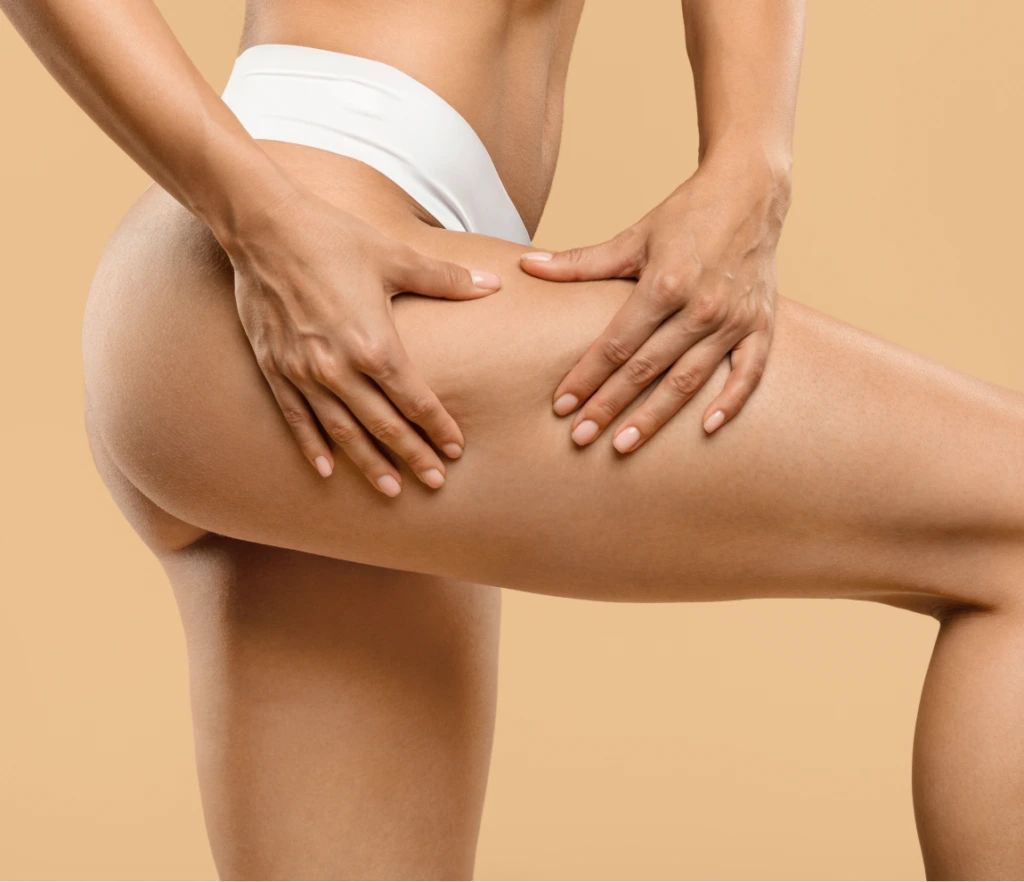
Loose or crepey thigh skin can be frustrating, especially when exercise and a healthy diet are already part of your routine. The good news is that skin tightening for thighs can include everything from consistent at-home care to advanced in-office technology and, for severe cases, a thigh lift. This guide explains what actually works, what each option can and cannot do, and how to choose a plan that fits your skin concerns, downtime, and goals.
Table of Contents
- Understanding Loose Thigh Skin & Why It Happens
- What Causes Loose Thigh Skin?
- At-Home Strategies to Improve Thigh Skin Tightness
- Non-Surgical Skin Tightening Treatments for Thighs
- Surgical Options for Significant Excess Thigh Skin
- Am I a Good Candidate for Thigh Skin Tightening?
- FAQs About Skin Tightening for Thighs
- Why Choose Our Clinic for Thigh Skin Tightening?
- Next Steps: Choosing the Best Thigh Tightening Plan for You

Understanding Loose Thigh Skin & Why It Happens
The inner thigh, outer thigh, and area above the knees are common places for sagging skin, cellulite, and crepey skin to appear. Aging naturally reduces collagen and elastin, the proteins that keep skin firm and resilient, leading to loose thigh skin as one gets older. Pregnancy, weight changes, genetics, and sun exposure can also affect skin elasticity and skin tone.
It helps to know what you are seeing. Skin laxity means the thigh skin has lost snap-back and structural support. Stubborn fat is excess fat under the skin that changes contour. Cellulite dimpling happens when fibrous bands pull down while fat cells push upward toward the skin’s surface. Many treatments overlap, but tightening skin is not the same as fat loss or hair removal.
What Causes Loose Thigh Skin?
Several medical and lifestyle factors can make the thighs look softer or less defined. Understanding the cause helps determine whether at-home care, non surgical options, body contouring treatments, or surgery will give the best result.
Age-related collagen loss often begins in the mid-20s and becomes more noticeable in the 40s and 50s, although visible changes may start around age 35–45. As skin loses collagen and elastin, skin firmness declines, the skin starts to thin, and the skin produces less of the supportive material needed for a youthful appearance.
Rapid weight loss can leave behind excess skin that does not shrink back, contributing to the appearance of loose skin on the thighs. Repeatedly gaining and losing weight, or major weight loss of 20–50+ pounds, can stretch the skin beyond its recoil capacity.
Genetics can influence skin elasticity, meaning some individuals may be more prone to loose skin on the thighs than others. Lack of muscle tone can lead to sagging skin on the thighs, as strong underlying muscles provide support to the skin. Hormonal shifts, smoking, poor nutrition, medical conditions, and chronic sun exposure can also speed collagen loss.
At-Home Strategies to Improve Thigh Skin Tightness
Home care can help mild laxity and support professional treatment options, but it works gradually. At-home skin tightening methods typically require 8 to 12 weeks of consistent dedication for visible results.
Start with strength training 2–3 times per week. Squats, lunges, step-ups, bridges, and deadlift variations target the quadriceps, hamstrings, adductors, and glutes. Strength training exercises targeting the quadriceps, hamstrings, and glutes can help fill out loose areas and improve skin firmness, giving the legs a more toned appearance.
Support collagen and elastin with a healthy diet that includes lean protein, citrus or berries for vitamin C, leafy greens, and healthy fats. Daily hydration is important for maintaining skin cell plumpness, helping to minimize the appearance of sagging. Hydrating body lotions containing hyaluronic acid can deeply hydrate the skin, contributing to its appearance and texture.
Topical solutions may temporarily plump and tighten the skin’s surface layer, but they do not permanently remove excess skin. Retinoid serums can accelerate cell turnover and trigger collagen production, contributing to skin elasticity and firmness. While collagen supplements show potential benefits for skin elasticity and hydration, research is ongoing.
A simple routine:
- Exfoliate thighs 1–2 times weekly.
- Use retinol or firming body cream at night.
- Apply broad-spectrum SPF when legs are exposed.
- Try dry brushing or self-massage to support blood flow and very mild cellulite reduction.
Non-Surgical Skin Tightening Treatments for Thighs
Non surgical skin tightening treatments use energy-based devices to firm the thighs without large incisions or major downtime. Most skin tightening methods work by creating controlled thermal or mechanical stress in the deeper layers of the skin, triggering the body’s natural wound-healing response to produce collagen and elastin.
Effective methods for skin tightening on the thighs range from non-invasive energy devices to surgical reconstruction, depending on the severity of the skin laxity. Non-surgical skin tightening options, such as radiofrequency and ultrasound treatments, are generally best suited for patients with mild to moderate skin laxity, early crepey texture, moderate sagging, and some cellulite smoothing.
Non-surgical skin tightening can temporarily halt the process of skin laxity and restore a firmer, smoother appearance with little to no downtime. Most patients notice gradual improvement after 6–12 weeks, with new collagen continuing to build for up to 3–6 months. Side effects are typically mild and may include temporary redness, swelling, tenderness, or bruising in the treatment area.
Radiofrequency & Combination Energy Treatments
Radiofrequency energy heats collagen-rich layers of thigh skin to encourage collagen stimulation and gradual tightening. Radiofrequency (RF) treatments heat the skin to trigger collagen production, focusing on epidermal layers to achieve a firmer appearance, while many modern systems also reach deeper dermal tissue.
Radiofrequency (RF) treatments heat the skin to trigger collagen production, effectively smoothing and tightening skin in older patients and postponing the need for surgical lifts in younger patients. During treatment, a handheld applicator usually glides over the front thighs, back thighs, inner thigh, outer thighs, or knees while cooling helps protect the surface.
Thermage is a non-invasive treatment that uses radiofrequency energy to improve skin laxity and boost collagen production, resulting in tighter skin on the thighs. Thermage is also a non-invasive treatment that uses radiofrequency energy to improve the appearance of cellulite by boosting collagen production, which leads to smoother, firmer skin.
Velashape is a treatment option that combines heat, infrared light, and radiofrequency technology to disrupt the fibrous bands under the skin and boost collagen production, effectively reducing the appearance of cellulite. Combining treatments such as RF, suction, massage, or other treatments can improve contour and cellulite reduction when both laxity and texture are concerns.
Ultrasound, Laser, and Plasma-Based Tightening
Ultrasound skin tightening treatments use focused ultrasound energy to heat skin at specific depths, inducing collagen production and helping skin become firmer. Ultrasound skin tightening uses focused ultrasound energy to heat skin at specific depths up to 5mm deep to induce collagen production, resulting in firmer skin.
A small randomized study published in Lasers in Surgery and Medicine reported thigh circumference reduction after focused ultrasound treatment, supporting its role in selected body contouring treatments. Laser skin tightening tends to work more superficially, making it useful for early crepey skin, uneven skin texture, and improving skin tone.
Combining intense pulsed light (IPL) with radiofrequency (RF) allows for treatment of deeper skin layers and induces a natural healing response that triggers collagen production. Plasma-based devices may create strong collagen stimulation with controlled surface effects, but they require careful patient selection, especially across different skin types.
QWO is the first FDA-approved injectable treatment specifically designed to treat cellulite by dissolving the fibrous bands that cause fat cells to bulge, thereby reducing the appearance of cellulite. Availability and suitability vary, so ask your provider what is currently offered and whether a device is fda approved or cleared for your concern.
Surgical Options for Significant Excess Thigh Skin
Surgery is considered when saggy skin is heavy, folded, or unlikely to contract with energy-based care. Surgery is the most effective solution for severe skin laxity, often seen after massive weight loss or significant aging.
A thigh lift, also called thighplasty, removes excess skin and tightens remaining tissue. Liposuction may be added when excess fat is present, but liposuction alone does not tighten loose skin reliably.
Traditional Thigh Lift (Thighplasty)
A traditional thigh lift reshapes the inner or outer thighs for firmer skin and a smoother skin contour. Incisions may be placed near the groin crease, down the inner thigh, or in a customized pattern depending on the amount of excess skin.
Recovery usually includes compression garments for several weeks, activity limits for 2–4 weeks, and gradual return to exercise. Risks include scarring, infection, asymmetry, sensation changes, fluid buildup, and delayed healing. According to the American Society of Plastic Surgeons, safety planning and proper candidate selection are important for any surgical lift.
Minimally Invasive “Scar-Conscious” Tightening
Some patients with moderate skin laxity may qualify for minimally invasive tightening through a small incision or tiny entry points. The concept is internal heating of deeper layers to contract collagen, followed by compression as the tissue heals.
This approach can offer more tightening than non invasive surface treatments, with smaller marks than a full thigh lift. It is not a substitute for dramatic lifting when there is severe laxity or heavy excess skin. Board-certified plastic surgeons can explain whether this option is realistic for your anatomy.

Am I a Good Candidate for Thigh Skin Tightening?
A good candidate depends on skin quality, degree of laxity, medical history, and expectations. Non surgical options are usually best for mild laxity, moderate skin laxity, stable weight, and a willingness to complete many treatments if recommended.
You may benefit more from a thigh lift if you have major weight loss, hanging folds, chafing, or hygiene issues. In general, candidates should be near a healthy weight, avoid smoking, have well-controlled medical conditions, and understand aftercare. Bring photos or point out exact concerns, such as the inner thighs, knees, or saddlebags, during your consultation.
FAQs About Skin Tightening for Thighs
Can loose thigh skin be tightened without surgery?
Yes, mild to moderate laxity can often improve with non surgical RF, ultrasound, laser, or plasma treatments. These options can tighten loose tissue and improve a smoother appearance, but they cannot remove large folds of excess skin.
How long do results last?
Energy-based results often last a year or longer when weight is stable, though maintenance is usually needed because aging continues. A thigh lift gives longer-lasting contour change, but gaining weight again can stretch the skin.
When will I see results?
Collagen-based treatments usually begin to show change around 6–12 weeks. Results often continue improving for 3–6 months as new collagen forms.
What do treatments cost?
Costs vary by location, technology, and treatment area. Non surgical sessions can range from several hundred to several thousand dollars, while surgical thigh lift pricing is higher because it includes surgeon, anesthesia, and facility fees.
Is treatment safe?
Most non surgical side effects are temporary redness, swelling, or tenderness. Risks increase when devices are poorly matched to skin types or used by inexperienced providers.
Is cellulite the same as loose skin?
No. Cellulite is dimpling from fibrous bands and fat cells, while loose skin is laxity from collagen and elastin decline. Some plans improve both, but the strategy is different.
Why Choose Our Clinic for Thigh Skin Tightening?
Our clinic focuses on customized thigh skin tightening solutions rather than one-size-fits-all plans. We assess your skin conditions, degree of laxity, excess fat, cellulite pattern, and goals before recommending non surgical options, minimally invasive tightening, or a surgical lift.
Patients choose us for advanced technologies, evidence-based protocols, transparent pricing, and natural-looking results. Our team emphasizes safety, medical-grade devices, detailed consultations, and supportive aftercare for both non-invasive and surgical patients.
Next Steps: Choosing the Best Thigh Tightening Plan for You
The right path may include lifestyle changes, topical support, in-office collagen stimulation, or a thigh lift for significant excess skin. Start by identifying your main concern: mild creping, moderate sagging, cellulite, excess fat, or loose folds after weight loss.
If you are ready for firmer, smoother thigh skin, schedule a consultation with our clinic. We will evaluate your inner thighs, outer thighs, knees, and overall goals, then recommend a personalized plan to help you achieve a more youthful appearance with realistic expectations.