
Jump straight to the section that matters most to you, whether that’s Brazilian laser hair removal, managing discomfort for darker skin tones, or what to do before and after your appointment.
Table of Contents
- Is laser hair removal painful, really?
- How laser hair removal works (and why it can sting)
- Pain scale: how laser hair removal compares to other hair removal methods
- Pain by area: bikini line, Brazilian, face, underarms, legs, and more
- Factors that influence how much laser hair removal hurts
- Modern comfort tools: cooling technology, numbing, and more
- Before your appointment: how to make laser hair removal hurt less
- During the session: what it feels like step-by-step
- Aftercare, redness, and “sunburn” sensations
- Safety and comfort for darker skin tones and different hair types
- FAQs about laser hair removal pain
- Why choose MedSpa MD Group
Is Laser Hair Removal Painful, Really?
Most patients at MedSpa MD Group rate laser hair removal pain between 2 and 4 on a scale of 10. The sensation is commonly described as a rubber band snapping against the skin, paired with a brief flash of warmth. It is not considered an agonizing process. Most patients find laser hair removal less painful than waxing, especially for the bikini line and Brazilian areas.
Each laser pulse lasts only a fraction of a second. The discomfort is brief and fades quickly after treatment. At our Philadelphia and Houston locations, built in cooling mechanisms in our devices keep treated skin comfortable and protected throughout each session. Individual pain tolerance varies among individuals, but even clients with low pain thresholds find the experience manageable with the numbing cream and cooling options we offer.
Pain also depends on the treatment area, your skin and hair type, and where you are in your series. Sensitive areas like the bikini line and upper lip feel more noticeable than legs or arms. But here’s what we hear constantly: clients who dreaded monthly Brazilian waxes are usually surprised at how manageable laser hair removal feels by the second session. Discomfort decreases with each subsequent laser hair removal session as hair becomes thinner and less dense after each treatment.
How Laser Hair Removal Works (And Why It Can Sting)
Laser hair removal works through a process called selective photothermolysis. The laser light targets melanin (the pigment in dark hair), and each laser pulse delivers heat to the hair follicle. That concentrated heat damages the follicle’s ability to produce future hair growth. Over time, treated hair grows back slower, finer, or not at all.
That pulse of heat is exactly what creates the warm pinch or stinging sensation. Think of it as the laser doing its job: the energy has to be absorbed to be effective. Modern devices at MedSpa MD Group use cooling technology that chills the surrounding skin before and after each pulse, offsetting much of that heat so only the hair follicles receive the thermal impact.
Hair grows in cycles. During the anagen (active growth) phase, hair is connected to the follicle and contains the most melanin, making it the ideal target. Catagen and telogen phases don’t respond well, which is why you need multiple sessions; typically 6 to 10 for most areas, and sometimes more for hormonal zones like the face or Brazilian region. The first session is often reported as the most intense because hair density is at its peak. As sessions progress, there’s less hair for the laser to target, and the sensation drops.

The contrast between your hair color and skin color also plays a role. Dark hair on light skin absorbs laser energy efficiently at lower settings. Lighter hair or darker skin tones require adjusted wavelengths and energy levels, which your provider calibrates during each visit.
Pain Scale: How Laser Hair Removal Compares to Other Hair Removal Methods
Where does laser fall relative to other hair removal methods? On a 0-to-10 discomfort scale, most laser hair removal treatments land between 2 and 5, depending on the area and your pain tolerance. Here’s how that stacks up.
Shaving causes minimal pain during the act itself, but the aftermath tells a different story. Razor burn, nicks, and ingrown hairs create ongoing skin irritation that repeats every few days. For anyone prone to bumps on the bikini line or underarms, shaving becomes a cycle of irritation rather than a solution.
Waxing and sugaring pull hair from the root in large strips. The result is sharp, sustained pain that lingers for minutes to hours, along with redness, swelling, and frequent ingrown hairs. Brazilian waxing consistently ranks as one of the most painful hair removal methods, often a 7 or 8 out of 10 for first-timers.
Epilating uses rotating tweezers to pluck hair rapidly. Early sessions can rival or exceed waxing in discomfort, and the process is slow across larger areas like legs.
Depilatory creams dissolve surface hair chemically. Pain is usually low, but chemical burns and stinging are common, especially on sensitive skin or sensitive areas like the bikini line.
Electrolysis treats each follicle individually with an electric current. The stinging per follicle can be more intense than laser, and sessions run much longer because only a fraction of hair follicles are treated at a time.
Laser hair removal involves brief stinging per pulse with rapid recovery. Over a finite number of sessions (typically 6 to 10), you achieve long term hair reduction that eliminates the need for ongoing waxing appointments, razor purchases, or cream applications. The upfront discomfort is a trade for years of smoother, hair free skin with fewer ingrown hairs and less irritation.
Pain by Area: Bikini Line, Brazilian, Face, Underarms, Legs, and More
Different body areas have different nerve endings density, skin thickness, and hair density. All three factors change how laser hair removal feels.
The bikini area is rated as the most sensitive for laser hair removal. Full Brazilian laser hair removal covers areas with thinner skin and coarse hair packed densely together, which means the laser targets more follicles per pulse. The sensation is a stronger “snap,” but sessions for this area are fast; usually 20 to 30 minutes; so the intense part is over quickly. Most clients report the outer bikini line is more tolerable than the inner areas.
Underarms involve moderate intensity but a tiny treatment area. Many clients say the session finishes before they have time to get nervous. A typical underarm laser hair removal session runs about 10 to 15 minutes.
The upper lip and chin produce sharp but very brief stings. The skin here is thin with dense nerve endings, so you notice each pulse. The trade-off: most upper lip sessions take less than 10 minutes.
Legs and arms are generally the easiest areas. The sensation is more diffuse, a mild warmth spread across a broader zone. Sessions run longer (30 to 45 minutes for full lower legs) but the per-pulse feeling is gentler.
Back and chest treatments, common for men, can feel more intense during early sessions when hair density is high. By session 3 or 4, thicker skin in these areas and reduced hair density make treatments noticeably more comfortable.
At MedSpa MD Group, technicians adjust laser settings and pacing for more sensitive zones. If a particular spot feels too intense, we can pause, apply additional cooling, or break the session into shorter segments.
Factors That Influence How Much Laser Hair Removal Hurts
Discomfort is not one-size-fits-all. Several biological and lifestyle factors determine how a laser treatment feels for you, and at MedSpa MD Group, we customize settings based on each of these variables.
Thicker, darker hair absorbs more laser energy, increasing discomfort during early sessions. This is also the hair type that responds best to laser, so the trade-off is faster, more complete results. Coarse hair on the bikini line or underarms will feel the laser more than fine arm hair.
Your skin tone matters. Darker skin tones may require lower energy settings, reducing discomfort, but also requiring a specific wavelength (like Nd:YAG at 1064nm) to bypass surface melanin safely. At MedSpa MD Group, we match the device and settings to your Fitzpatrick skin type at every session.
Skin sensitivity fluctuates with the menstrual cycle, affecting pain levels. One clinical study found pain scores averaged 3.9 during menstruation versus 3.5 during ovulation. Scheduling sessions after menstruation can reduce discomfort for women who notice this pattern.
Well-hydrated skin tolerates laser treatment better than dry skin. Skin that’s sunburned, freshly waxed, or irritated by harsh products amplifies discomfort. Showing up with healthy, moisturized skin makes a measurable difference.
Caffeine can increase skin sensitivity and lower pain thresholds. Stress, poor sleep, and alcohol have similar effects. These aren’t minor details; they can shift a session from “barely notice it” to “felt every pulse.”
For clients with darker skin, we emphasize that advanced laser technology can treat a wide range of skin tones safely, but the provider’s experience with calibration and patch testing is just as important as the device itself.
Modern Comfort Tools: Cooling Technology, Numbing, and More
Modern laser devices often incorporate built-in cooling features that protect the epidermis and minimize discomfort with every pulse. At MedSpa MD Group, our medical-grade lasers use chilled sapphire tips or cold air systems that cool the surrounding skin before and after each flash of laser energy. One clinical trial showed that advanced cooling reduced pain scores from 5.4 down to 2.8 on a 0-to-10 scale in underarm treatments.
Topical numbing creams can reduce discomfort when applied 20 to 45 minutes before the session. We recommend them for Brazilian laser hair removal, the bikini line, underarms, and the upper lip. A topical numbing cream containing lidocaine is the most common option, and our team provides guidance on safe application and timing.
After treatment, simple comfort measures help: cool compresses on the treated area, breathable clothing over sensitive zones, and avoiding tight waistbands for a few hours. These small steps reduce post treatment discomfort noticeably.
How do professional devices compare to at-home IPL gadgets? At-home units use lower energy levels and typically lack precision cooling, which means less effective hair removal and less predictable comfort. The devices in our Philadelphia and Houston medspas deliver higher laser energy with better control, making the experience both more effective and more consistent in terms of managing sensation.
At MedSpa MD Group, pain management is part of every consultation. Patients can discuss fear of pain, low pain tolerance, or prior bad experiences with waxing so the team can adapt the treatment plan from session one.
Before Your Appointment: How to Make Laser Hair Removal Hurt Less
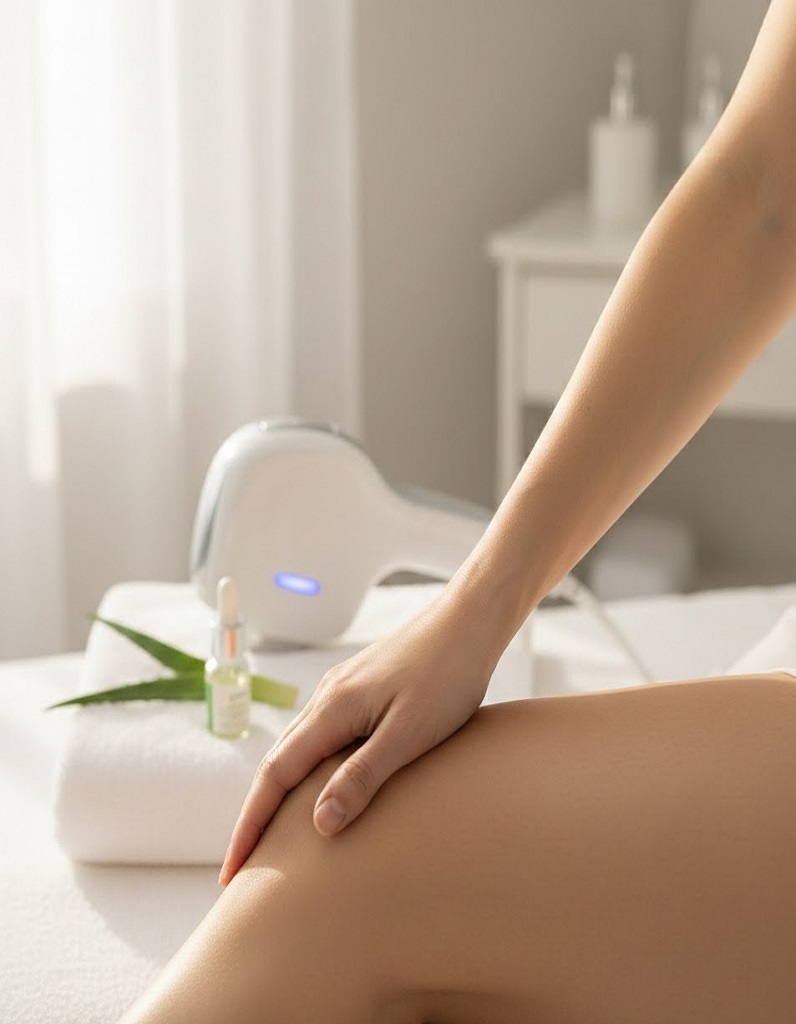
Preparation can cut discomfort and side effects by a wide margin, especially for sensitive areas like the bikini line, Brazilian, and underarms.
- Avoid sun exposure and tanning beds for at least 2 weeks (4 weeks if possible) before your laser hair removal session. Tanned skin contains more epidermal melanin, which forces lower energy settings and can make the treated skin more tender. This is especially relevant for Houston clients dealing with year-round sun.
- Shave the treatment area 12 to 24 hours before your appointment. Shaving the treatment area before an appointment improves laser efficacy because the laser targets the follicle beneath the skin rather than burning long surface hair above it. Unshaved hair increases heat on the skin surface and raises discomfort.
- Stop waxing, plucking, and depilatory creams 3 to 4 weeks before your first session. These methods remove the hair follicle or root, leaving nothing for the laser to target.
- Skip retinoids, strong exfoliants, and harsh scrubs on the treatment area for several days before to avoid skin irritation that amplifies sensitivity.
Lifestyle tweaks also matter. Avoid caffeine 2 to 4 hours before treatment to lower sensitivity. Stay well-hydrated in the days leading up to your session; hydrated skin tolerates laser treatment better than dry skin. Get good sleep the night before, and if your menstrual cycle affects your pain thresholds, try to schedule outside your most sensitive days.
MedSpa MD Group provides pre-treatment guidance during consultation calls and sends reminder messages before each appointment so you arrive prepared.
During the Session: What It Feels Like Step-by-Step
Here’s what a typical laser hair removal session looks like at MedSpa MD Group:
- You check in and your provider reviews your medical history, current medications, and recent sun exposure.
- The treatment area is cleansed. If any spots need a quick shave touch-up, the technician handles it.
- If you opted for numbing cream, it’s applied and you wait about 20 to 30 minutes.
- You put on safety goggles. The provider performs a test spot to gauge your reaction and fine-tune laser settings for your skin type and hair type.
- Treatment begins: a series of quick pulses with concurrent cooling. Your provider checks in on comfort after the first few passes.
Common sensations include a warm pinch or mild stinging feeling, sometimes described as a rubber band snap followed by a brief warm flash. The first few passes tend to feel more noticeable. After that, the sensation becomes repetitive and tolerable. Patients often describe discomfort as background noise by the end of the session. Many clients carry on a conversation throughout.
Laser hair removal sessions typically last 15 to 30 minutes for most areas. Underarms take about 10 to 15 minutes. Bikini line runs 15 to 20 minutes. Full Brazilian takes 20 to 30 minutes. Lower legs can stretch to 30 to 45 minutes.
If a setting feels too intense at any point, tell your technician. They can adjust power, pulse speed, or cooling in real time without sacrificing results. Communication during the session is one of the easiest ways to manage discomfort.
Aftercare, Redness, and “Sunburn” Sensations: How Long Does Soreness Last?
Immediately after treatment, skin may appear warm or slightly reddened. This is normal. Post-treatment sensations can include mild redness and swelling around the hair follicles, sometimes called perifollicular edema. It looks and feels similar to a mild sunburn.
Post-treatment discomfort lasts 1 to 2 hours after laser hair removal for most people. Warmth and tingling resolve within a few hours. Redness and tiny bumps typically settle within 24 to 48 hours. Most clients return to work or daily activities right away.
Here’s what to do after your session:
- Apply cool compresses or aloe vera gel as needed on the day of treatment to soothe the treated area.
- Avoid hot showers, saunas, and intense exercise for at least 24 hours. Heat can extend redness and irritation.
- Avoid sun exposure on exposed treated skin and apply broad-spectrum SPF 30+ daily.
- Skip exfoliation, retinoids, and harsh acids on treated skin for several days.
Properly performed laser hair removal does not create open wounds, so severe pain after treatment is not expected. If you experience blistering, strong swelling, or pain lasting beyond 48 hours, contact the clinic. These outcomes are rare with experienced providers using calibrated equipment.
One of the biggest long-term benefits is the reduction in ingrown hairs. Clients who switched from shaving or waxing frequently report that the ongoing irritation, razor burn, and bumps they dealt with for years disappear after a few laser sessions. Removing hair safely through laser treatment also means no more cuts, no more chemical burns, and no more weekly maintenance.
Safety and Comfort for Darker Skin Tones and Different Hair Types
Older myths suggested laser hair removal wasn’t safe or was excessively painful for darker skin. That’s outdated. In 2026, advanced laser technology and proper provider training have changed the equation.
Specific wavelengths like the Nd:YAG (1064nm) penetrate deeper into the skin and bypass much of the surface melanin that darker skin tones carry. This reduces the risk of burns, hyperpigmentation, and hypopigmentation while keeping discomfort manageable. Darker skin tones may require lower energy settings, which can actually mean less per-pulse sensation, though more sessions may be needed for full results.
At MedSpa MD Group, every treatment plan for darker skin begins with a patch test and conservative starting settings. We adjust wavelength, pulse duration, and fluence session by session based on how your skin responds. This careful calibration is what separates a safe, comfortable experience from a risky one.
For clients with very light hair color (blond, red, or gray), there’s less melanin for the laser to target hair effectively. These hair types may need additional sessions, and results can be less complete. We set realistic expectations during your consultation so there are no surprises.
Our teams in Philadelphia and Houston treat clients across a wide range of Fitzpatrick skin types every week. Whether your skin is light skin or deep brown, and whether your hair is fine or coarse, safety and comfort are built into every treatment plan.
FAQs: Your Top Questions About Laser Hair Removal Pain Answered
These are the questions our clients ask most during consultations, especially about what laser hair removal feels like and how to reduce discomfort.
Does laser hair removal hurt more than waxing?
Most patients find laser hair removal less painful than waxing. Waxing causes sharp, sustained pain as hair is ripped from the root, and the soreness can linger for hours. Laser pulses are brief, each lasting only a fraction of a second. Most MedSpa MD Group clients who previously waxed say laser is easier to tolerate, especially after the first session.
What area hurts the most for laser hair removal?
The bikini area, especially the full Brazilian, ranks as the most sensitive. Treatment areas with thinner skin and dense, coarse hair tend to feel more intense. The upper lip is another sharp spot due to concentrated nerve endings. Both areas have very short session times, which limits the total duration of discomfort.
Does laser hair removal get less painful over time?
Yes. Pain decreases with each subsequent laser hair removal session. Hair becomes thinner and less dense after each treatment, so there’s less for the laser to react with. Most patients report later sessions are noticeably less intense. By session 4 or 5, many describe it as mild discomfort or background noise.
How long does pain last after a laser hair removal appointment?
Post-treatment discomfort lasts 1 to 2 hours for most people, presenting as mild warmth similar to a light sunburn. Redness and small bumps usually resolve within 24 to 48 hours. Severe pain after treatment is not typical and should be reported to your provider.
Can I use numbing cream or take pain relievers before my session?
Topical numbing cream applied 20 to 45 minutes before treatment is the most common approach to reduce discomfort. Over-the-counter pain relievers like acetaminophen can also help. Avoid aspirin or ibuprofen unless cleared by your provider, as they can increase bruising risk. Always coordinate with the clinic before applying anything.
Is laser hair removal safe and comfortable for darker skin tones?
With the right laser type (such as Nd:YAG) and properly adjusted settings, darker skin can be treated safely with manageable discomfort at MedSpa MD Group. Patch testing and experienced calibration are essential. We treat a full range of skin tones at both our Philadelphia and Houston locations.
Will I still feel pain if I’ve done multiple waxing sessions before?
Prior waxing doesn’t eliminate the sensation of laser. However, many clients who are accustomed to the sustained pain of waxing find the brief pulses of laser more tolerable by comparison. The sensations are different: a quick snap versus a prolonged pull.
Is it normal to feel nervous about the pain before my first session?
Completely normal. Fear of the unknown drives most pre-session anxiety. Our team walks first-time clients through a test spot so you know exactly what to expect before full treatment begins. Most people find their anxiety drops after the first few pulses, once they realize the sensation is far less than they imagined.
Why Choose MedSpa MD Group for Comfortable Laser Hair Removal in Philadelphia and Houston
MedSpa MD Group runs physician-led protocols with medical-grade lasers equipped with advanced cooling technology. Our staff treats a wide range of skin tones, hair types, and sensitive areas including bikini line and Brazilian regions every day. This isn’t a side offering; it’s a core part of what we do.
Every client starts with a personalized consultation. We assess your skin type, hair color, hair density, medical history, and pain tolerance before building a custom treatment plan. That plan includes session count, spacing, comfort measures (numbing, cooling, pacing), and realistic expectations about results and sensation.
Our locations in Philadelphia, PA and Houston, TX serve busy professionals, parents, and clients who fly in for multiple aesthetic treatments like body contouring, facial fillers, or skin rejuvenation. Laser hair removal fits into that mix as an efficient, low-downtime procedure that pairs well with other services.
Consider two common client profiles. One: a woman who spent years getting monthly Brazilian waxes, dealing with ingrown hairs and dreading each appointment. After her third laser session, she reported the discomfort was a fraction of what waxing used to be, and the ingrown hairs had stopped. Two: a male professional tired of razor burn under his chin and neck. After six sessions, he no longer shaves daily and the chronic irritation is gone.
We believe in transparent pricing, honest conversations about what laser hair removal feels like, and no pressure. If you want to undergo laser hair removal but pain concerns have held you back, a consultation is the best first step.
Ready to Try Laser Hair Removal with Less Fear and More Confidence?
Laser hair removal is not painless, but for most people it’s a brief, manageable stinging that falls well below what they feared. Common sensations are a quick snap and a flash of warmth, repeated for 15 to 30 minutes, with each session becoming easier as hair thins. It’s far less than the sustained pull of waxing or the chronic irritation of shaving.
The long-term payoff makes the short-term trade worthwhile: smooth skin, a drastic reduction in ingrown hairs, no more razor burn, and freedom from the repetitive cycle of unwanted hair removal.
If you’re in Philadelphia or Houston, schedule a no-pressure consultation with MedSpa MD Group. You can call the clinic, book online, or fill out a contact form. Virtual consultations are available for fly-in clients planning multiple aesthetic treatments. Bring your questions about pain thresholds, darker skin, hormonal hair growth, or any specific area, and we’ll build a treatment plan around your comfort and goals.
The goal isn’t just removing hair. It’s feeling confident in your skin with safe, modern methods that respect your time and your comfort.