Table of Contents
- Where to Inject Semaglutide (Quick Answer)
- Understanding Semaglutide and Why Injection Site Matters
- Approved Semaglutide Injection Sites: Abdomen, Thigh, Upper Arm
- How to Rotate Semaglutide Injection Sites Without Getting Confused
- Step-by-Step: How to Inject Semaglutide Safely at Home
- Using Pens vs. Vials and Compounded Semaglutide at MedSpa MD Group
- Comfort, Pain Levels, and Myths About Semaglutide Injection Sites
- Common Injection Site Mistakes to Avoid
- Managing Redness, Swelling, and Other Injection Site Reactions
- Why Proper Injection Technique Supports Better Results
- Why Choose MedSpa MD Group for Semaglutide in Philadelphia & Houston
- Frequently Asked Questions About Semaglutide Injection Sites
- Start Your Semaglutide Journey with MedSpa MD Group
If you are starting semaglutide injections for weight loss or weight management, one of the first questions you will face is simple but important: where exactly should the needle go? Choosing the right injection site, using proper technique, and rotating sites week to week can mean the difference between a smooth semaglutide journey and unnecessary discomfort or complications. This guide covers everything you need to know about where to inject semaglutide, how to do it safely, and what MedSpa MD Group teaches every client in Philadelphia and Houston.
Where to Inject Semaglutide (Quick Answer)
You can inject semaglutide into three approved areas, all targeting the subcutaneous fat just beneath the skin: the front of the abdomen (stomach), the front or outer thigh, and the back of the upper arm. These are the best injection sites recognized by both FDA labeling and clinical practice.
The most common injection site is the abdomen. Inject at least two inches away from the belly button, avoiding scars, moles, and irritated skin. The outer thigh between hip and knee is another popular choice, especially for self-administration while seated. The upper arm can serve as an injection site but may require assistance to reach, making it less practical for solo use.
For most people self-injecting at home in Philadelphia or Houston, the abdomen tends to be the easiest option because there is more subcutaneous tissue and it is fully visible. That said, there is no evidence that one injection site is better for weight loss or glucose control than others. All three regions deliver semaglutide effectively when injected into the fatty layer beneath the skin.
What matters most is rotating injection sites weekly rather than fixating on a single “perfect” spot. At MedSpa MD Group, providers show every client exactly where to inject semaglutide during their first in-person visit, using mirrors and skin-marking examples so there is zero guesswork at home.
Understanding Semaglutide and Why Injection Site Matters
Semaglutide is a GLP-1 receptor agonist used in 2026 for chronic weight management and type 2 diabetes. Available as brands like Wegovy and Ozempic, as well as compounded semaglutide formulations, it mimics the body’s natural GLP-1 hormone to help regulate appetite, blood sugar, and fullness. Because semaglutide is a peptide, it requires a weekly subcutaneous injection rather than a pill for reliable delivery.
Why does the semaglutide injection site matter? Blood flow and fat thickness vary slightly between the abdomen, thigh, and arm. The thigh has up to 12% lower bioavailability than the abdomen in early absorption windows, but this difference evens out over the weekly dosing schedule thanks to semaglutide’s long half-life. Major studies and FDA guidance confirm that no dose adjustment is needed when switching between approved injection sites.
The real reasons to choose and rotate sites are comfort, skin health, and avoiding lumps or scar tissue buildup known as lipohypertrophy. At MedSpa MD Group, every semaglutide program includes teaching injection technique and site selection as part of a physician-led weight loss plan, not just handing over medication.
Approved Semaglutide Injection Sites: Abdomen, Thigh, Upper Arm
Semaglutide is a subcutaneous injection, meaning every recommended injection spot must have a comfortable layer of subcutaneous fat. Here is what you need to know about each approved injection site:
Abdomen (Stomach): Inject into the front of the stomach area, at least two inches away from the belly button. Avoid injecting near scars, moles, tattoos, stretch marks, or irritated skin. The abdomen typically has more fatty tissue and is the easiest area to see and reach, which is why it is the most common injection site for semaglutide.
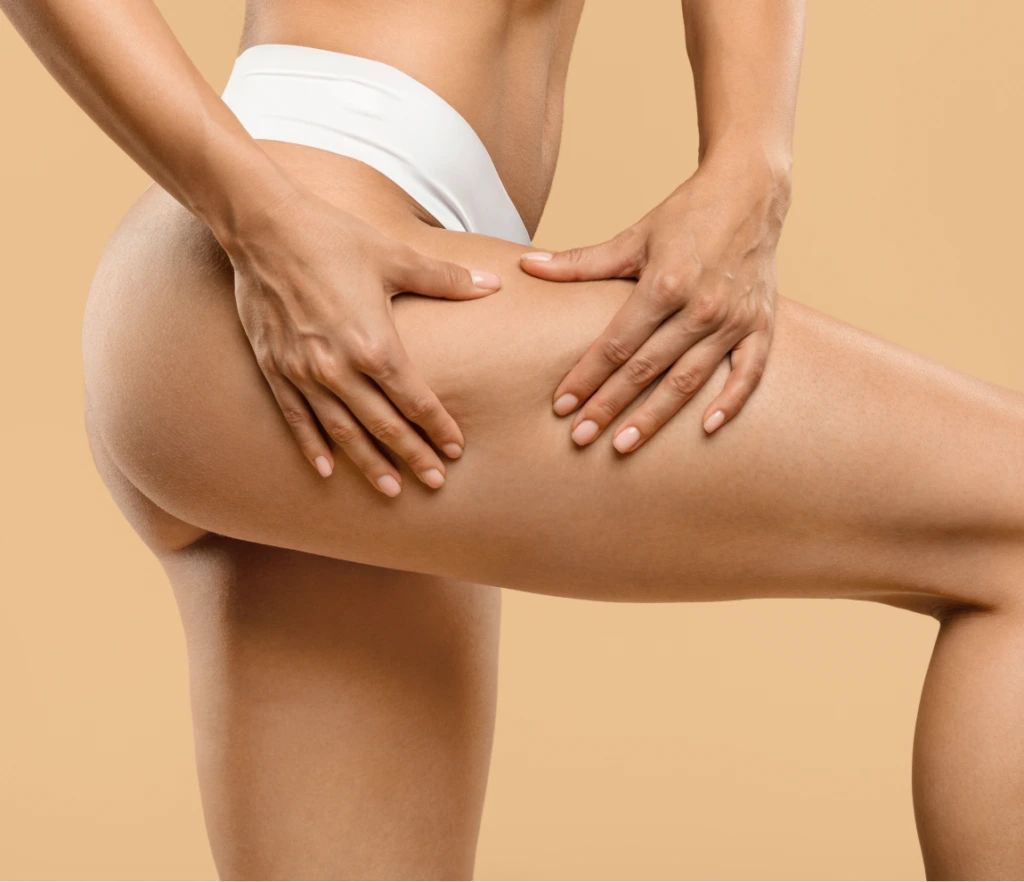
Outer Thigh: The front or outer thigh can be used as an injection site. Target the area between hip and knee on the outer front portion. Do not use the inner thigh, which has less fat present and higher risk of irritation from movement and clothing friction. Many people find this site convenient when injecting while seated.
Upper Arm: The approved area is the back of the upper arm where there is a soft fatty pad. The upper arm is harder to self-inject than the abdomen or thigh because it is difficult to see and reach alone. A partner, caregiver, or healthcare provider can help with accurate placement.
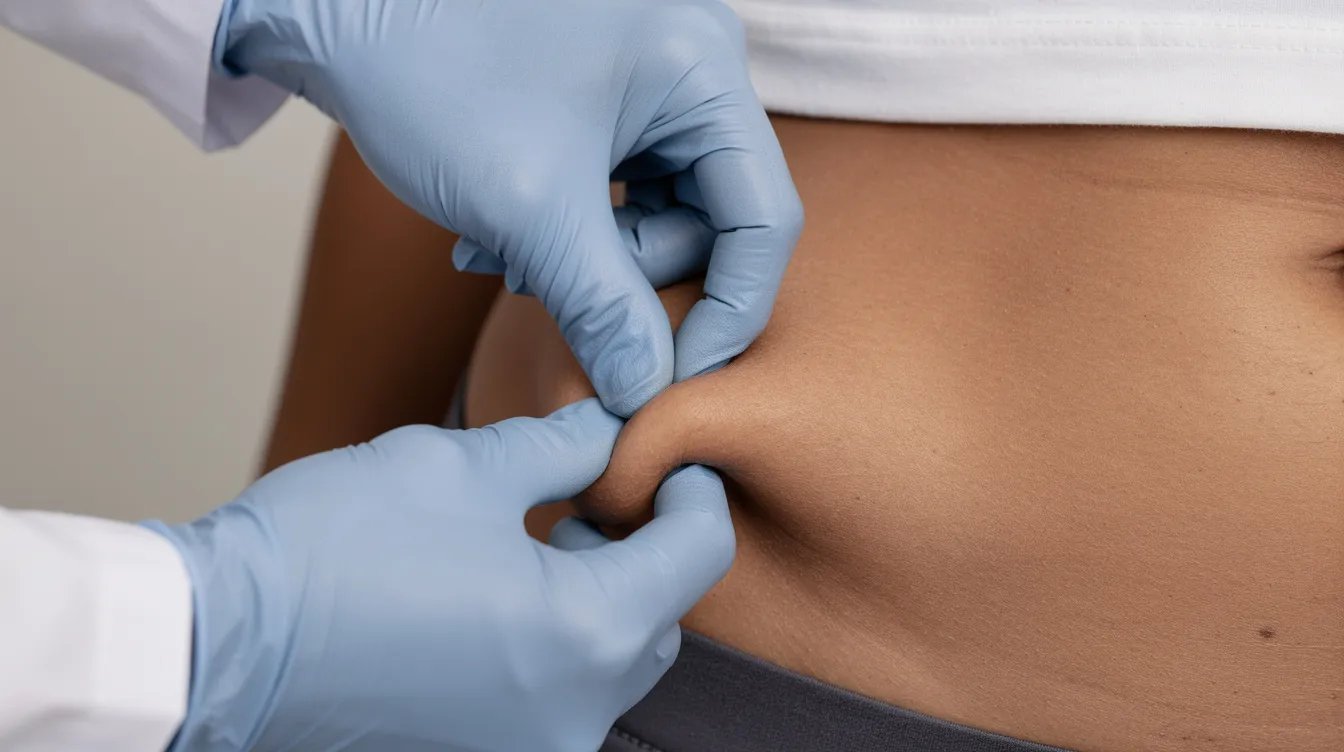
Semaglutide should never be injected into a vein, muscle, or bone. You can confirm you are in the fat layer by pinching the skin. If it feels soft and pinchable rather than firm, you are in the right zone.
At MedSpa MD Group in Philadelphia and Houston, clinicians draw a “safe zone” outline on the abdomen or thigh during training so clients can mirror it at home with confidence.
How to Rotate Semaglutide Injection Sites Without Getting Confused
Injecting semaglutide into the same spot week after week creates real problems. Repeated injections in one location can cause scar tissue formation, tenderness, and fat buildup known as lipohypertrophy. Two-thirds of diabetic patients may develop lipohypertrophy from repeated injections in the same area, and although GLP-1 data is more limited, the subcutaneous mechanism is the same.
Rotating injection sites prevents lipohypertrophy and irritation while supporting effective medication absorption. A simple rotation strategy:
- Week 1: Right side of abdomen
- Week 2: Left side of abdomen
- Week 3: Right outer thigh
- Week 4: Left outer thigh
- Repeat
Move at least 1 inch away from the last injection site each time. You do not need to use all three regions. Rotating sites around different spots within just the abdomen and thigh is perfectly fine if those areas are comfortable.
Practical tools that help: mark sites on a printed body diagram, log each injection spot in a notes app, or use a weekly planner. For a busy client on a Monday injection routine in Philadelphia, this might look like right abdomen one Monday, left abdomen the next, right thigh the following week, and so on.
Minor variations within a region do not change semaglutide’s effectiveness. Consistency with your dosing schedule, correct subcutaneous depth, and avoiding the same location matter far more than rigid patterns. MedSpa MD Group nurses help patients create a customized rotation map during follow-up sessions, tailored to body type and even clothing preferences.
Step-by-Step: How to Inject Semaglutide Safely at Home
This section walks through a typical weekly injection using either a semaglutide pen (like Ozempic or Wegovy) or a syringe drawn from a semaglutide vial. Always follow your specific product’s instructions and your healthcare team’s guidance.
Gather your supplies: You will need your semaglutide pen or prescribed syringe, an alcohol swab or alcohol wipe, a clean cotton ball or gauze, and a sharps container (FDA-cleared or a sturdy puncture-resistant bottle with a screw lid). Check the expiration date on the medication before each use.
Choose and clean the injection site: Select the abdomen, outer thigh, or upper arm. Stay at least 2 inches from the belly button. Do not inject into areas that are bruised, scarred, or inflamed. Clean the injection site with an alcohol swab and let the skin dry completely. Skin should be clean and dry before injecting semaglutide.
Inspect the medication: Before administering semaglutide, check that the liquid is clear and colorless. If it appears cloudy or contains particles, do not use it.
Inject the medication: Pinch a fold of skin at your chosen site. Correct insertion technique involves pinching the skin and injecting at a 90-degree angle into subcutaneous fat. For very lean patients, a 45-degree angle may be recommended by your provider. With the needle pointing straight in, press the plunger or pen button steadily to inject the medication. Hold the needle in place for 5 to 10 seconds after injecting to ensure you receive all the medication and the full dose.
Aftercare: Remove the needle slowly, then apply gentle pressure with a clean cotton ball or gauze if you notice a drop of blood. Do not rub the area.
Disposal: Carefully remove the used needle and safely dispose of it in a sharps container. Never place a used needle in loose household trash. Follow local Philadelphia or Houston disposal rules or use pharmacy drop-off programs.
During MedSpa MD Group visits, providers demonstrate this entire injection routine on a practice pad or under direct supervision so clients feel confident when administering semaglutide at home.
Using Pens vs. Vials and Compounded Semaglutide at MedSpa MD Group
Semaglutide comes in branded prefilled pens (Ozempic, Wegovy) or as compounded semaglutide in vials or prefilled syringes from a licensed pharmacy. The injection site guidance is identical for all formats: subcutaneous fat of abdomen, thigh, or arm.
Prefilled pens: Turn the dose selector to your prescribed dose, attach a new needle, insert the needle into your chosen site, press and hold the button until the counter reaches 0, then keep the needle in place a few seconds. Use the entire pen as directed and do not adjust the dose without consulting your provider.
Vials or prefilled syringes: Draw up or confirm the correct amount on the syringe. If using a semaglutide vial, turn the vial upside down and draw the medication, then tap the syringe gently to release any air bubbles before injecting. Inject subcutaneously using the same technique and sites as with pens.
Compounded semaglutide offered through MedSpa MD Group is sourced from compliant, U.S.-based pharmacies and contains the same active ingredient. Compounded GLP-1 medications are not FDA-approved and should only be used under medical supervision. There is no special “compounded semaglutide injection site.” Rotating sites and injection technique are identical to branded products.
Never change your prescribed dose or switch between products (pen vs vial, brand vs compounded) without speaking to your MedSpa MD Group provider or prescribing clinician.
Comfort, Pain Levels, and Myths About Semaglutide Injection Sites
Needle anxiety is real, but semaglutide injections typically feel like a tiny pinch or mild pressure. The needles used for subcutaneous use are thin and short, often less noticeable than a routine vaccine.
Comfort can vary depending on the site. Many people find the abdomen least painful because there is a thicker fat layer cushioning the needle. Others with sensitive stomach skin prefer the outer thigh. Pain levels can also vary depending on hydration, temperature, and individual sensitivity.
Simple comfort tips:
- Let the alcohol dry fully before you insert the needle
- Use a new, sterile needle for each injection (dull needles hurt more)
- Bring the medication to room temperature if allowed by the product label
- Inject slowly and steadily rather than pushing quickly
A few common myths deserve correction. “The arm works faster than the stomach” is not supported by clinical evidence. “Injecting deeper into the muscle makes it stronger” is flatly wrong and potentially dangerous. Semaglutide is designed for subcutaneous fat and should never be injected into muscle. Slight burning or stinging for a few seconds is usually normal, but intense or prolonged pain should prompt a call to a healthcare professional immediately.
At MedSpa MD Group, clinicians adjust needle length and coach positioning based on body type to make every injection as comfortable as possible.
Common Injection Site Mistakes to Avoid
Most semaglutide issues are preventable with consistent habits. Here are the most frequent errors clinicians see:
- Using the same spot repeatedly. Injecting in the same area week after week can cause scar tissue formation and lipodystrophy. Always rotate.
- Choosing areas with too little fat. The inner thigh, bony areas, and very lean spots on the upper arm lack enough fatty tissue for proper medication absorption.
- Injecting too close to the belly button. Stay at least two inches away to avoid injecting into areas with less subcutaneous fat.
- Injecting over tattoos, scars, bruises, or stretch marks. These areas can cause skin irritation and unpredictable absorption.
- Not letting the alcohol dry. Injecting through wet alcohol stings and can introduce irritation.
- Reusing needles. A dull or used needle increases pain and infection risk. Use a fresh needle every time.
- Injecting through clothing. Always expose the skin completely.
If blood enters the syringe or pain feels deep and sharp, you may have reached muscle rather than the fat layer. Stop and contact your healthcare provider for guidance. Never adjust the dose to “make up for” a painful or uncertain injection. Call your prescribing provider or MedSpa MD Group instead.
MedSpa MD Group reviews injection technique with clients who are unsure, helping them correct form quickly rather than guessing at home.
Managing Redness, Swelling, and Other Injection Site Reactions
Mild, temporary injection site reactions are common when starting semaglutide, especially in the first few weeks. Minor irritation at the injection site usually resolves within hours and is rarely a cause for concern.
Typical mild reactions include slight redness, a small bump, mild warmth, or brief itching at the semaglutide injection site. Redness or swelling at the injection site is usually temporary.
Practical self-care tips:
- Keep rotating sites so the same area is not irritated repeatedly
- Avoid tight waistbands or leggings pressing directly over a fresh injection spot
- Apply a cool compress for 10 to 15 minutes if needed
- Do not scratch the area
When to call your provider: Contact a healthcare professional immediately if swelling gets larger instead of smaller, if you see pus or red streaking, if you develop a fever, or if a rash spreads beyond the injection spot. Lipohypertrophy appears as firm lumps under the skin, while lipoatrophy shows up as dents or depressions. Persistent changes in the skin should be evaluated by your healthcare team.
MedSpa MD Group clinicians routinely inspect injection areas during follow-up visits in Philadelphia and Houston and adjust site rotation or needle size if irritation patterns appear.
Why Proper Injection Technique Supports Better Results
Good injection technique and consistent site rotation lead to reliable semaglutide absorption, fewer side effects, and steadier progress toward your weight loss and blood sugar goals over months. When you inject the medication properly into healthy subcutaneous tissue, the drug enters your system at a predictable rate.
Repeatedly injecting into damaged or scarred fat tissue can slow absorption and make it less predictable, potentially causing more nausea some weeks and less appetite control in others. Taking semaglutide at the same time and day each week, using the same general region but rotating different sites within it, and confirming the correct amount on the pen or syringe are key habits for long-term success.
MedSpa MD Group integrates injection coaching into a broader program that includes nutrition guidance, realistic timelines (gradual results over 3 to 6 months), and body contouring options that can complement medical weight loss once weight stabilizes. You do not need perfect technique to benefit from semaglutide, but small improvements in where and how you inject can noticeably improve comfort and confidence throughout your treatment.
Why Choose MedSpa MD Group for Semaglutide in Philadelphia & Houston
MedSpa MD Group is a physician-led medspa offering medical weight loss with semaglutide alongside body contouring, facial aesthetics, and skin rejuvenation in Philadelphia, PA and Houston, TX. This is not a clinic that prescribes medication and sends you home to figure things out alone.
Every client receives one-on-one injection training, review of safe injection sites, and ongoing check-ins to troubleshoot technique or side effects. Board-certified providers and experienced nurse injectors teach safe injection technique daily, whether for weight loss injections, Botox, fillers, or other treatments, giving them deep familiarity with subcutaneous and intradermal anatomy.
A typical client journey looks like this:
- Consultation (in-person or virtual) with candidacy assessment and lab review
- Discussion of branded vs. compounded semaglutide options and transparent pricing
- First supervised injection with hands-on site mapping
- Scheduled follow-ups with technique review and progress tracking
MedSpa MD Group works regularly with travel and fly-in clients, arranging efficient visit schedules so out-of-town patients can receive injection coaching and services like Endolift or liquid BBL in the same trip. The practice emphasizes realistic expectations for how long it takes to lose weight, transparent cost discussions, and how semaglutide pairs with non-surgical body contouring once weight stabilizes.

Frequently Asked Questions About Semaglutide Injection Sites
These are the real-world questions MedSpa MD Group hears most from clients about where to inject semaglutide, rotating sites, and handling issues. This content is educational and does not constitute medical advice. Always consult your provider for personalized guidance.
What is the best place to inject semaglutide?
The abdomen is often the easiest and most comfortable common injection site for many people, but thigh and upper arm are equally effective when injected into subcutaneous fat. The “best” site is one site you can reach easily and rotate safely each week.
Does it matter where I inject semaglutide for weight loss?
As long as you stay within the approved injection sites and inject subcutaneously, outcomes are similar. Injection timing, your prescribed dose, and consistency matter more than choosing one particular spot.
Can I inject semaglutide in the same spot every week?
No. Avoid injecting into the same spot to prevent lipodystrophy and scar tissue. Move at least 1 inch away each week and alternate regions over time.
Are there places I should never inject semaglutide?
Avoid injecting into veins, muscle, bone, the inner thigh, areas within 2 inches of the belly button, or skin that is bruised, infected, sunburned, scarred, or heavily tattooed.
Do semaglutide injections hurt more in the thigh or stomach?
Pain differs from person to person. Many find the stomach less painful due to thicker fat, but some prefer the outer thigh. Try both with proper technique and use whichever feels most comfortable.
How should I safely dispose of used semaglutide needles and pens?
Always place used needles in a sharps container or heavy-duty puncture-resistant bottle with a screw lid. Safely dispose of the needle safely by following local Philadelphia or Houston guidelines or pharmacy return programs. Never toss sharps in household trash.
Can I self-inject semaglutide in my upper arm?
The back of the upper arm is an approved injection site, but self administration is difficult because you cannot easily see or reach it. Use abdomen or thigh for solo injections and reserve the upper arm for times when a partner or clinician can assist.
Is compounded semaglutide injected in different places than Ozempic or Wegovy?
No. Compounded semaglutide uses the same subcutaneous injection sites (abdomen, thigh, upper arm) and requires the same rotation and technique recommendations as branded products.
How often should I rotate semaglutide injection sites?
For a typical once-weekly injection regimen, rotate with every injection. Move at least 1 inch from your last injection point and alternate between different sites and regions over the weeks.
When should I call a provider about an injection site problem?
Call if redness or swelling is getting worse after 24 to 48 hours, if you see pus or streaking, if there is a large hard lump that does not fade, or if you think you accidentally injected into muscle or a vein. Contact a healthcare professional immediately if you develop a fever or spreading rash.
Start Your Semaglutide Journey with MedSpa MD Group
If you are considering semaglutide for weight loss or metabolic health, professional guidance makes the process safer, easier, and more effective than trying to figure out injection technique alone. Too many people start their semaglutide journey with uncertainty about where to inject, how to rotate, and what to watch for, and that uncertainty chips away at confidence and consistency.
During an initial consultation at MedSpa MD Group in Philadelphia or Houston, you can review your medical history, discuss your goals, learn about semaglutide and other options, and get a detailed, hands-on demonstration of correct injection sites and technique. Flexible scheduling is available for busy professionals and fly-in patients.
What you get: evidence-based medical weight loss, expert injection coaching, aesthetics options like body contouring and skin rejuvenation, and transparent discussion of costs and expected timelines. No guesswork, no generic instructions printed from the internet.
Book a consultation with MedSpa MD Group today to find out whether semaglutide is right for you and to feel confident about exactly where and how to inject it each week.