

Table of Contents
- The Anatomy Behind the Art: Why Lip Structure Dictates Every Treatment Decision
- Your Options Compared: Fillers, Lip Flip, and the Treatments Worth Knowing
- How Personalized Treatment Planning Separates Exceptional Results From Ordinary Ones
- What to Realistically Expect: Results, Recovery, and How Long They Last
- Safety, Medical History, and the Contraindications That Deserve an Honest Conversation
- The True Cost of Lip Enhancement Over Time: Planning Like a Professional
- Lip Enhancement as One Part of a Holistic Facial Rejuvenation Strategy
- Why Philadelphia-Area Clients Choose MEDSPA MD Group for Lip Enhancement
- Conclusion: Refined Results Begin With the Right Partnership
- Frequently Asked Questions
The Anatomy Behind the Art: Why Lip Structure Dictates Every Treatment Decision
Your lips are not a single structure. They are a collection of distinct anatomical landmarks, each of which behaves differently under injection and contributes differently to the final result. A skilled injector reads this landscape before making a single placement decision.
Cupid’s Bow, Vermillion Border, and Philtrum: The Landmarks That Matter
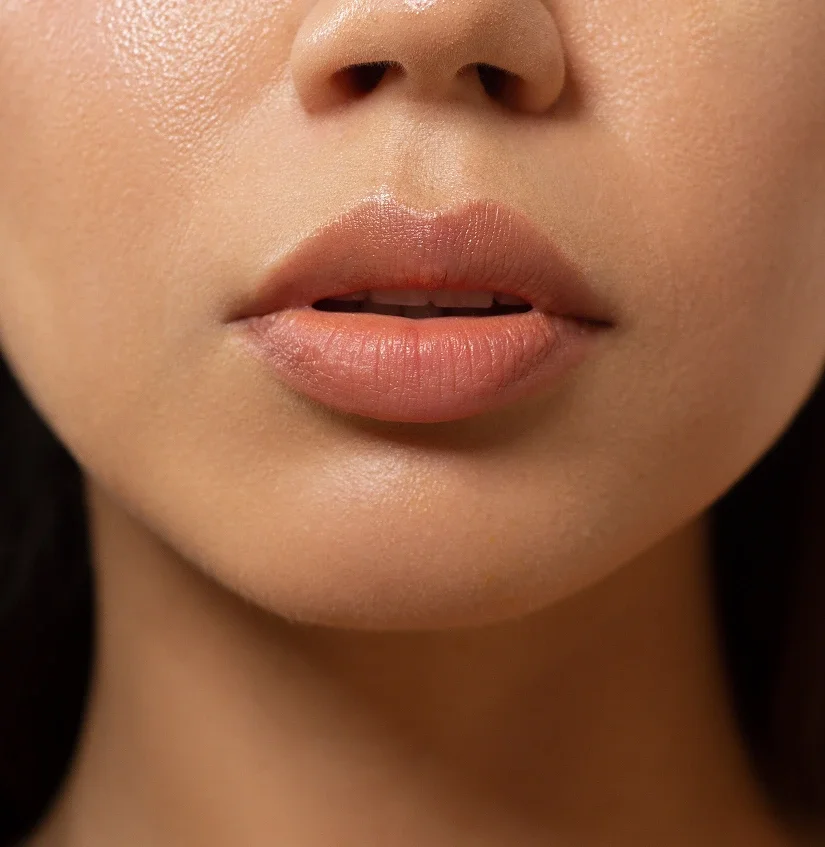
The cupid’s bow is the double-curved peak of the upper lip that gives the mouth its signature shape. The vermillion border is the crisp transition line between the lip tissue and surrounding skin. The philtrum columns, the two vertical ridges descending from the nose, define the central projection of the upper lip. These three landmarks interact constantly. Sharpen the vermillion border without accounting for the cupid’s bow, and the result looks drawn on. Add volume without preserving philtrum proportions, and lips lose their characteristic definition, reading as overfilled rather than enhanced.
How Age-Related Volume Loss Changes the Treatment Equation
Lip anatomy does not stay static. From the mid-thirties onward, collagen loss, bone resorption in the jaw, and repetitive muscle movement gradually flatten the upper lip, efface the vermillion border, and extend the distance between the nose and the lip edge. These are not cosmetic inconveniences. They are structural shifts that change which treatment approach will actually restore proportion versus merely adding volume in the wrong plane.
Beyond Adding Volume: The Full Spectrum of Lip Enhancement Goals
Volume is one outcome. It is rarely the only one that matters.
Symmetry Correction, Border Definition, and Proportion Refinement
Most lips carry some degree of natural asymmetry. One peak of the cupid’s bow sits slightly lower, or one side of the lower lip is fractionally fuller. Subtle asymmetry is normal and often goes unnoticed. More pronounced asymmetry, however, draws the eye in ways that make the entire face read as unbalanced. Hyaluronic acid fillers, placed with precision, can redistribute projection to create a more even result without adding volume the client did not want.
Border definition is a separate goal entirely. A client whose lips have lost their crisp edge often wants her lipstick to stop bleeding, or simply wants her lip shape to look more deliberate without appearing larger. That result requires targeted placement along the vermillion border, not volume distributed throughout the lip tissue.
How Natural Lip Enhancement Differs From a Dramatic Transformation
The difference is not simply a matter of how much product is injected. It is a matter of where the product is placed, which structures are addressed, and whether the result remains coherent with the rest of the face. Natural enhancement preserves the lip’s inherent character, its asymmetries, its resting movement, its relationship to the nose and chin. A dramatic transformation prioritizes visible change. Both are legitimate goals. The critical point is that achieving either one well requires deliberate planning, not a default protocol.
What Most Providers Don’t Tell You: The One-Size-Fits-All Problem
Many practices have standardized their lip filler offerings around a single protocol: one product, one syringe, one technique. This approach is efficient for the provider and straightforward to market, but it consistently underserves clients at both ends of the spectrum, those who want barely-there refinement and those who need structural correction that a single off-the-shelf approach cannot deliver.
The deeper problem is what gets skipped: the anatomy assessment, the goal-mapping conversation, the consideration of how this treatment fits into the rest of the face. When a provider moves from consultation to injection in under ten minutes, something has been left out. That something is usually the difference between a result the client is proud of and one she is quietly waiting to dissolve.
Your Options Compared: Fillers, Lip Flip, and the Treatments Worth Knowing
Hyaluronic Acid Fillers: Juvéderm, Restylane, and How to Choose
Hyaluronic acid is the foundation of modern lip augmentation. It is a naturally occurring molecule in the body that attracts and retains water, creating soft, pliable volume when injected. What most clients do not realize is that “hyaluronic acid filler” is a category, not a product, and the differences between formulations are clinically meaningful.
Product Characteristics That Affect Texture, Longevity, and Natural Feel
Fillers within the hyaluronic acid family vary in their cross-linking density, particle size, and water-binding capacity. These differences translate directly into how a filler moves with the lips during expression, how long it lasts, and how it feels under the skin. A denser, more cohesive product tends to hold its shape and provide lift, while a softer, more fluid formulation integrates more naturally into the lip tissue, suiting clients who want an imperceptible result. Both Juvéderm and Restylane offer multiple products within their lines designed for different anatomical goals. Selecting the right one requires knowing what the lip actually needs.
Why Brand Recognition Alone Is Not a Treatment Plan
Asking for a specific brand by name is a reasonable starting point, but it is not a substitute for a provider who understands which formulation within that brand serves your anatomy and goals. A practitioner who defaults to one product for every lip client, regardless of lip structure or desired outcome, is working from brand habit rather than clinical reasoning.
The Lip Flip: What Botox Can and Cannot Do for Lip Shape
The lip flip uses small doses of botulinum toxin injected into the orbicularis oris muscle just above the upper lip border. By gently relaxing that muscle, the upper lip rolls slightly outward, creating the appearance of more lip surface without adding any volume. For clients who want their upper lip to show more when they smile, or who find that their top lip virtually disappears at rest, a lip flip is an elegant solution that requires no filler at all.
The limitation is equally clear. A lip flip does not add volume, does not correct asymmetry, and does not address a deflated or thinned lip. It also requires more careful technique than its simplicity suggests. Over-relaxing the muscle impairs speech and the ability to use a straw, two inconveniences no busy professional wants. The lip flip earns its place in the toolkit when the goal is subtle eversion, not structural change.
Combining Modalities: When a Single Treatment Is Not Enough
A client who has experienced volume loss, vermillion border effacement, and early perioral lines often needs more than one approach to achieve a result that looks genuinely refreshed. A small amount of hyaluronic acid filler can restore central lip volume and sharpen the border, while a lip flip softens the upper lip curl and a trace of filler in the philtrum columns restores the vertical definition that age has flattened. Individually, each of these treatments addresses one dimension. Together, they reconstruct the relationship between lip structures that made the lips look youthful in the first place.
How Injectors Tailor Technique: Cannula vs. Needle, Placement Depth, and Entry Points
Technique is where the same product produces dramatically different outcomes in different hands. Needles allow precise, targeted placement and are often preferred for border work. Cannulas, blunt-tipped flexible tubes that thread through tissue rather than puncturing it, reduce bruising risk and allow product to be distributed smoothly across larger areas, making them well-suited for volumizing the body of the lip. Neither tool is categorically superior. Experienced injectors choose based on what the anatomy requires.

Placement depth matters just as much. Superficial injections close to the skin surface refine texture and border definition. Deeper placement into the lip body adds structural volume. An injector who uses only one depth regardless of the target is limiting both their precision and your results.
Which Lip Enhancement Approach Fits Your Goal?
| Hyaluronic Acid Filler | Lip Flip (Botox) | Combination Treatment | |
|---|---|---|---|
| Volume added | Moderate to significant | None | Moderate |
| Definition achieved | High (border and shape) | Low (eversion only) | High |
| Downtime | 3–7 days (swelling) | Minimal | 3–7 days |
| Longevity | 6–12 months | 8–12 weeks | 6–12 months |
| Reversible | Yes (hyaluronidase) | Yes (fades naturally) | Partial |
| Ideal candidate | Volume loss, asymmetry, or border effacement | Upper lip curl, minimal lip show at rest | Multiple concerns: volume, eversion, and definition |
Most clients are best served by hyaluronic acid filler alone. The lip flip earns its place when the primary concern is how the lip rests or smiles, not its size. Combination treatment makes clinical sense when a single modality would address one problem while leaving another visible. A qualified injector will identify which approach matches your anatomy and goals, not simply your preference for a particular brand or technique.
How Personalized Treatment Planning Separates Exceptional Results From Ordinary Ones
The Anatomy-First Consultation: What a Rigorous Assessment Actually Looks Like
A thorough consultation begins before any product is selected. The practitioner examines the lips at rest, in motion, and during speech, because lips that look balanced in a static photograph may reveal asymmetry or disproportionate movement when animated. They assess lip volume, skin quality, philtrum length, tooth show, and how the lips relate to the nose, chin, and overall facial thirds. Photographs taken at consistent angles provide a baseline for comparison and ensure that both provider and client are working from the same visual reference.
The goal of this assessment is not to generate a treatment list. It is to build a clear picture of what the lips actually need versus what a client thinks she wants, and to find where those two things align.
Communicating “Refreshed, Not Overdone”: A Framework for Expressing Your Preferences
How to Articulate Subtle Enhancement Goals Without Clinical Vocabulary
You do not need to know what a vermillion border is to communicate what you want. The most useful language focuses on what you want to change about how you look or feel. “My lips look thinner than they did five years ago” tells a practitioner about volume loss over time. “My lipstick bleeds” signals border effacement. “I want to look more rested, not different” is a clear mandate for proportion refinement over dramatic change.
Reference photos help, but use them as a conversation starter rather than a blueprint. Your anatomy is not identical to anyone else’s, and a result that looks natural on someone else may not suit your face.
Red Flags That Signal a Provider Is Upselling Rather Than Listening
Be cautious when a provider suggests a volume significantly larger than what you described wanting, recommends multiple syringes in an initial consultation without explaining the anatomical rationale, or moves quickly past your stated preference for subtle results. A trustworthy practitioner will push back on requests that could compromise your result, but they do so by explaining, not by substituting their aesthetic for yours. If you leave a consultation feeling pressured rather than informed, that is meaningful data about how the treatment itself would go.
How Injectors Account for Professional Image and Lifestyle
Timing Treatments Around Your Calendar and Public Commitments
Swelling and bruising after lip filler are normal and typically resolve within five to seven days, but that timeline is not guaranteed for every client. Scheduling treatment at least ten to fourteen days before high-stakes public commitments builds in time for swelling to resolve and for any touch-up to be completed if needed. A board presentation or media appearance within that window is a risk most professionals would prefer to avoid.
The Role of Facial Harmony in Avoiding an Overdone Result
The most common source of an overdone appearance is not excessive product. It is product placed without regard for the rest of the face. Lips that appear disproportionately large often look that way because the surrounding facial features were not considered. A practitioner who views the lips in isolation, rather than in context, is solving a local problem while creating a global one. Facial harmony, the relationship between lip size, nose width, jawline definition, and overall facial balance, is the frame within which any lip treatment should be designed.
What Sets MEDSPA MD Group’s Consultation Process Apart in the Philadelphia Area
MEDSPA MD Group’s approach to lip enhancement in Philadelphia begins with the premise that no two lips require the same solution. The practice’s anatomy-first consultation framework assesses each client’s lip structure, facial proportions, and stated goals before any product or technique is selected. Providers discuss lifestyle factors, professional context, and maintenance preferences as part of the planning process, not as afterthoughts.
This is not a longer version of the standard consultation. It is a different kind of conversation, one where understanding precedes action. Clients leave with a clear picture of what is being done, why, and what to expect, and that clarity is the foundation on which confident, lasting results are built.
What to Realistically Expect: Results, Recovery, and How Long They Last
The First 72 Hours: Swelling, Bruising, and What Is Normal vs. Concerning
Swelling after lip filler is not a complication. It is a predictable physiological response to injection, and it will make your lips look larger than your final result for the first several days. Most clients see peak swelling around 24 to 48 hours post-treatment. Bruising, if it occurs, typically appears as small mottled areas near injection sites and fades within five to seven days.
What warrants a call to your provider: blanching or white discoloration at or near the injection site, which can signal vascular compression; pain that intensifies rather than diminishes after the first day; or any area of skin that feels hard, warm, and progressively tender. These presentations are uncommon, but they require prompt medical attention. A practice with medically trained providers can assess and respond to them immediately, a meaningful advantage over facilities without that clinical infrastructure.
When Do You See Your True Results? The Two-Week Benchmark
The two-week mark is the standard benchmark for assessing a lip filler result. By that point, swelling has fully resolved, any residual bruising has cleared, and the hyaluronic acid has settled into the tissue. What remains is the actual result: the shape, proportion, and volume you and your provider planned.

This timeline has a practical implication. Schedule your follow-up appointment or touch-up assessment no earlier than two weeks post-treatment. Evaluating results before that point introduces unnecessary uncertainty into a process that benefits from patience.
How Long Do Lip Enhancements Last, and What Drives the Difference?
Filler Type, Metabolism, Lifestyle, and Injection Volume as Longevity Factors
Most hyaluronic acid lip fillers last between six and twelve months, though that range has real variance driven by factors specific to each client. A denser, more cross-linked formulation tends to persist longer than a softer one. Clients with faster metabolisms, often those who exercise frequently, break down filler more quickly. Smoking accelerates both collagen degradation and filler metabolism. Sun exposure and significant weight fluctuation also affect longevity.
Injection volume plays a counterintuitive role. Very small amounts of filler placed precisely in high-movement areas may dissolve faster than a fuller treatment that distributes product across multiple zones. An experienced injector accounts for these variables when advising on realistic timelines.
Building a Realistic Maintenance Schedule Into Your Routine
A practical approach for most clients looks like this: an initial treatment, a possible touch-up at two to four weeks if needed, and a refresh appointment every six to twelve months depending on individual metabolism and how much product was used. Clients who maintain consistent scheduling often find they need less product over time because they are topping off volume before it fully dissipates rather than rebuilding from baseline. Factoring this rhythm into your annual calendar, rather than treating each appointment as a standalone event, is how the most satisfied clients manage their results.
Activity Restrictions and Professional Image Preservation After Treatment
What to Reschedule and What You Can Safely Attend Within Days
The restrictions after lip filler are narrow but worth planning around. Avoid vigorous exercise for 24 to 48 hours, as elevated heart rate and blood pressure can worsen swelling and bruising. Skip high-heat environments, including saunas, steam rooms, and hot yoga, for at least 48 hours. Do not apply pressure to the lips for the first week, which includes certain dental procedures.
Most low-key professional obligations, such as desk work, phone calls, and internal meetings, are manageable within a day or two. Client-facing presentations, media appearances, or social events where your appearance is prominent warrant a two-week buffer from treatment. Building that window into your scheduling decisions protects both your result and your professional image during the resolution period.
Reversibility: Understanding Filler Dissolving With Hyaluronidase
Hyaluronic acid fillers can be dissolved with hyaluronidase, an enzyme that breaks down the filler material within 24 to 48 hours. This is a genuine clinical advantage. It means a result you do not love is correctable, not permanent. Hyaluronidase is also the first-line response to a vascular occlusion, which is one reason it should be available at any facility offering filler treatments.
Reversibility does not make the initial treatment decision inconsequential. Dissolving filler causes temporary additional swelling and requires another recovery window. The better use of this knowledge is confidence: you are not making an irreversible commitment, which makes thoughtful decision-making easier, not less necessary.
Safety, Medical History, and the Contraindications That Deserve an Honest Conversation
Medications and Supplements That Affect Treatment Safety and Bruising Risk
Several common medications and supplements increase bruising risk by inhibiting platelet aggregation or thinning the blood. The most frequently relevant include:
- NSAIDs such as ibuprofen and aspirin, when not medically required
- Fish oil, vitamin E, and high-dose omega-3 supplements
- St. John’s Wort
- Certain anticoagulants and antiplatelet medications
Where medications are prescribed for a medical condition, discontinuing them is not appropriate without physician guidance. Your provider’s role is to help you time elective treatment strategically and set accurate expectations about bruising likelihood. Disclosing your full medication list, including supplements, before treatment is the single most effective step you can take to minimize preventable complications.
Can People With Autoimmune Conditions or Scleroderma Get Lip Fillers Safely?
Why This Question Requires a Medical Assessment, Not a Generic Answer
Scleroderma presents specific challenges for lip filler candidates. The condition can cause reduced oral aperture and altered tissue quality around the mouth, and some presentations involve vascular changes that affect how tissue responds to injection. Whether lip enhancement is appropriate depends on disease activity, current medications, and the specific pattern of involvement. None of that can be assessed through a general questionnaire.
Other autoimmune conditions, including lupus, rheumatoid arthritis, and inflammatory conditions managed with biologics, require individual review rather than blanket clearance or exclusion. The risk profile is not uniform across diagnoses or within them.
The Role of a Medically Supervised Medspa in Navigating Complex Health Histories
A practice staffed by medically trained providers can review your rheumatology records, consult with your specialist if needed, and make an informed clinical decision about whether treatment is appropriate, what protocol modifications may reduce risk, or whether a referral is the right path. For clients with complex medical histories, the clinical credentialing of their provider is not a credential detail. It is a safety prerequisite.
Other Health Conditions That Require Provider Disclosure Before Treatment
Beyond autoimmune conditions, several other health contexts warrant proactive disclosure before lip injections:
- Active cold sores or a history of oral herpes simplex, as lip injection can trigger an outbreak; prophylactic antiviral treatment is standard protocol
- Active skin infections or open lesions near the treatment area
- History of severe allergic reactions or anaphylaxis
- Pregnancy or breastfeeding
- Planned dental procedures within two weeks of treatment, as oral manipulation near fresh filler carries infection risk
None of these automatically disqualify a client from treatment. They inform the planning process, the timing, and any necessary protocol modifications.
How MEDSPA MD Group Approaches Informed Consent and Pre-Treatment Screening
Why Complete Information Is a Clinical Standard, Not a Disclaimer
Informed consent at a medically supervised practice means more than a signature on a form. It means the client understands what is being injected, why that specific product was selected, what the realistic range of outcomes looks like, and what circumstances would prompt her to contact the practice. MEDSPA MD Group treats this conversation as a clinical obligation, not an administrative step.
Pre-treatment screening at the practice reviews medications, supplements, relevant medical history, and any conditions that could affect treatment safety or healing. Clients with complex health histories receive individualized guidance rather than generic clearance. The goal is to proceed with confidence, or to defer with clarity, based on information rather than assumption.
The True Cost of Lip Enhancement Over Time: Planning Like a Professional
Understanding the Initial Investment vs. Total Cost of Ownership
First Treatment, Touch-Up Cycles, and Multi-Year Maintenance: An Illustrative Model
A single lip filler session typically ranges from $600 to $1,200 depending on the amount of product used and the provider’s fee structure. That initial number, however, does not capture what a realistic two-year investment looks like for a client committed to maintaining her results.
An illustrative model for a client on a six-to-nine-month maintenance cycle:
- Year one: initial treatment plus one possible touch-up, approximately $700 to $1,400
- Year two: one to two refresh appointments, approximately $700 to $1,200
- Two-year total: roughly $1,400 to $2,600
Clients who maintain consistent scheduling and respond well to treatment often find their per-visit cost decreases over time as smaller touch-up volumes suffice. Clients who allow results to fully dissipate between appointments effectively restart each time, which costs more cumulatively and yields less consistent results.

Why Chasing the Lowest Price Often Costs More Over Time
Discounted lip filler typically reflects one of three realities: a less experienced injector, a lower-cost product with different performance characteristics, or a high-volume practice model that compensates for low per-service margins through throughput. Any of these can produce results that require correction, dissolution, or more frequent retreatment, costs that quickly exceed what a higher-quality initial treatment would have required.
The more consequential cost, though, is not financial. A result that looks overdone, asymmetric, or inconsistent with your professional image carries social and professional consequences that no refund addresses. For a client whose appearance is part of her professional presence, that calculus deserves real weight.
How to Evaluate Value When Comparing Lip Filler Providers in Philadelphia, Radnor, and Cherry Hill
Price comparison across providers in the Philadelphia area is most useful when the services being compared are actually equivalent. A meaningful evaluation considers:
- The clinical credentials of the injector, whether a physician, nurse practitioner, or registered nurse with documented aesthetic training, versus minimally supervised staff
- Whether the consultation is substantive or perfunctory
- The range of products available and whether the provider selects based on your anatomy or by default
- The practice’s protocol for managing complications, including hyaluronidase availability and after-hours access
MEDSPA MD Group serves clients across Philadelphia, Radnor, and Cherry Hill, covering the full range of where most Philadelphia-area professionals live and work. The practice’s medically supervised model means clinical oversight is embedded in every appointment, not reserved for emergencies.
Lip Enhancement as One Part of a Holistic Facial Rejuvenation Strategy
Why Isolated Lip Treatment Can Miss the Larger Aesthetic Picture
A client who addresses her lips in isolation may achieve a technically successful result that still leaves her looking less rested than she hoped. The reason is straightforward: lips exist in a facial context. If volume loss at the temples, descent of the mid-face, or early jowling goes unaddressed, even beautifully enhanced lips cannot overcome the cumulative effect of surrounding structural change. The face reads as a whole, and treatment that improves one feature without considering the rest can inadvertently highlight what remains untreated.
How Lip Enhancement Integrates With Non-Surgical Facelift Approaches and Endolift
Endolift, a minimally invasive laser procedure that uses optical fiber technology to tighten tissue and stimulate collagen from within, addresses the structural foundation that makes lip enhancement more effective and longer-lasting. By restoring tissue quality and mild lifting to the perioral area and lower face, Endolift changes the environment into which lip filler is placed. Firmer surrounding tissue supports filler placement differently than lax skin, and the combined result reads as genuinely rejuvenated rather than simply filled.
For clients experiencing lower face laxity alongside lip volume loss, sequencing matters. An experienced provider can guide the order and timing of treatments to maximize the benefit of each one.
Pairing Lip Fillers With Botox and Other Neurotoxin Treatments for Cohesive Results
Botulinum toxin treats dynamic movement, while hyaluronic acid filler addresses volume and structure. These are complementary mechanisms, and combining them thoughtfully produces results that neither achieves independently. Beyond the lip flip discussed earlier, strategic neurotoxin placement in the perioral area can soften lip lines, reduce downward pull on the lip corners, and ease the muscle tension that accelerates filler breakdown. Treating both dimensions, movement and volume, creates a result that holds its shape and looks natural through the full range of facial expression.
How MEDSPA MD Group Builds a Comprehensive Rejuvenation Plan Around Your Goals
Moving From a Single Appointment to a Long-Term Aesthetic Partnership
MEDSPA MD Group’s approach to lip enhancement in Philadelphia does not end with a single treatment recommendation. For clients whose goals extend beyond the lips, the practice offers a structured pathway from initial consultation to multi-treatment planning, mapping out which concerns to address first, how treatments interact and complement each other, and what a realistic one-to-three-year aesthetic arc looks like.
This framework converts a series of disconnected appointments into a coherent strategy. The client who starts with lip filler and later adds Endolift or a neurotoxin protocol is not pursuing unrelated procedures. She is building toward a cumulative result that isolated treatments could never achieve. That continuity of vision, maintained by providers who know her face over time, is what distinguishes a long-term aesthetic partnership from a transactional service.
Where to Start Based on Your Primary Concern
- Volume loss: Start with hyaluronic acid filler placed in the lip body and central projection to restore fullness without distorting your natural lip shape.
- Border definition: A targeted vermillion border treatment sharpens lip edges and stops lipstick migration, often achievable with less product than clients expect.
- Asymmetry: A detailed anatomy assessment comes first. Precision filler placement corrects uneven peaks or projection imbalances before any volume is added.
All three starting points are available through a single consultation at MEDSPA MD Group, where the first step is always understanding your anatomy before selecting your treatment.
Why Philadelphia-Area Clients Choose MEDSPA MD Group for Lip Enhancement
The Clinical Credentials and Philosophy Behind the Practice
MEDSPA MD Group is a medically supervised practice, which means every treatment protocol, including lip enhancement, is designed and overseen by clinicians with formal medical training, not simply aesthetics certification. That distinction carries practical consequences. Providers can assess complex health histories, make evidence-based adjustments to protocol, and manage complications with the same clinical infrastructure used for any medical procedure. For a client whose appearance is part of her professional identity, that level of oversight is not a luxury.
The practice’s philosophy is built around a single premise: the result should look like you, only better. At MEDSPA MD Group, that means the anatomy assessment precedes product selection, the client’s stated goals shape the treatment plan, and the face as a whole informs every decision about the lips specifically.
Serving Philadelphia, Radnor, and Cherry Hill: Accessibility Without Compromise
MEDSPA MD Group’s locations across Philadelphia, Radnor, and Cherry Hill are positioned to serve the full geographic spread of the region’s professional population, from Center City to the Main Line to the southern New Jersey suburbs. This is not simply a matter of convenience, though convenience matters. It means clients across the metro area access the same medically supervised clinical standard at every location, without trading quality for proximity.
For the professional managing a packed calendar, having a trusted provider within a reasonable commute of both her office and her home makes consistent maintenance scheduling realistic rather than aspirational. That consistency, as earlier sections established, is what produces the most stable and cost-effective results over time.
What the Personalized Consultation at MEDSPA MD Group Looks Like in Practice
The consultation is a working session, not a sales conversation. A provider examines your lips at rest and in motion, assesses philtrum length, lip volume, vermillion border definition, and how your lips relate to your nose, chin, and mid-face. Your medication list and relevant health history are reviewed before any product discussion begins.
From there, the conversation focuses on your goals in your own language. You describe what you want to change and what you want to preserve. The provider translates that into a specific treatment recommendation, covering product, technique, placement, and volume, and explains the rationale for each decision. If your goals would be better served by a combination approach, or by addressing another facial concern first, you hear that clearly and why.
You leave with a written treatment plan, a realistic timeline for results, and a maintenance schedule that fits your professional calendar. By the time you schedule your first injection appointment, there are no open questions.
Your Next Step: Scheduling a Lip Enhancement Consultation in Philadelphia
The right starting point is a consultation, not a treatment appointment. The treatment plan should follow the assessment, not precede it. Clients who book a consultation at MEDSPA MD Group can expect a thorough anatomy review, a direct conversation about their goals and health history, and a clear recommendation they can act on or take time to consider.
To schedule, contact the practice directly through the MEDSPA MD Group website or by phone. Consultations are available across the Philadelphia, Radnor, and Cherry Hill locations. If you have photographs of results you find appealing, or ones that represent exactly what you want to avoid, bring them. They give the conversation a concrete reference point and help your provider understand your aesthetic sensibility from the very first appointment.
Conclusion: Refined Results Begin With the Right Partnership
Personalization Is Not Optional. It Is the Entire Strategy.
The clients who are most satisfied with their lip enhancement results share one thing: they were treated as individuals, not processed through a protocol. Their provider assessed what their lips actually needed, listened to what they actually wanted, and built a plan that accounted for their facial structure, their lifestyle, and their professional context. The product injected was the final decision, not the first one.
Every other variable, including product selection, technique, timing, maintenance schedule, and combination with other treatments, flows from that foundational commitment to personalization. Without it, the result might be technically adequate. With it, the result looks like the best version of your face.

How MEDSPA MD Group’s Anatomy-First, Holistic Philosophy Delivers the Difference
The anatomy-first approach is not a marketing position. It is a clinical method that produces measurably different outcomes: lips that move naturally, results that hold their proportions over time, and enhancement that reads as refreshed rather than altered. The holistic perspective, treating the lips as part of a face rather than in isolation, prevents the disconnection between a treated feature and its untreated surroundings that produces the overdone appearance most clients are working to avoid.
These are not standards that every practice in the Philadelphia area applies. Choosing a provider who does apply them is the single most consequential decision in the entire process.
Begin Your Personalized Lip Enhancement Journey in Philadelphia
If you have been researching lip enhancement in Philadelphia and find yourself ready to move from evaluation to action, the next step is straightforward. Schedule a consultation with MEDSPA MD Group. Bring your questions, your concerns about your medical history, your professional calendar constraints, and your honest aesthetic goals. The conversation that follows will give you everything you need to move forward with clarity and confidence.
Frequently Asked Questions
The distinction lies not in how much product is used, but in where it is placed, which structures are addressed, and how the result relates to the rest of the face. Natural lip enhancement preserves your lip’s inherent character, its movement, its asymmetries, its proportional relationship to your nose and chin, while refining what age or genetics has changed. A more dramatic transformation prioritizes visible change in size or projection. Both are achievable goals, but each requires deliberate planning and a provider who understands which approach your anatomy can support.
You do not need clinical vocabulary to express what you want. Focus on describing what you want to change and what you want to preserve. Phrases like “I want to look more rested, not different,” “my lips look thinner than they used to,” or “my lipstick bleeds at the edges” give a skilled provider precise, actionable information. Reference photos are helpful as a starting point, but treat them as a conversation starter rather than a blueprint, since your anatomy is unique. If a provider moves past your stated preference for subtle results without explanation, that is a signal worth heeding.
Most hyaluronic acid lip fillers last between six and twelve months, though individual results vary based on the product used, your metabolism, activity level, and lifestyle factors such as sun exposure or smoking. A practical maintenance rhythm for most clients involves an initial treatment, a possible touch-up at two to four weeks if needed, and a refresh appointment every six to twelve months. Clients who maintain consistent scheduling often require less product over time because they are topping off volume before it fully dissipates, which is both more cost-effective and more consistent aesthetically.
A single lip filler session in the Philadelphia area typically ranges from $600 to $1,200 depending on the product used and the provider’s fee structure. Over a two-year period, a client on a six-to-nine-month maintenance cycle can expect a total investment of roughly $1,400 to $2,600. Clients who allow results to fully dissipate between appointments effectively restart each time, which tends to cost more cumulatively than consistent maintenance. Choosing a provider based on the lowest available price can introduce additional costs if the result requires correction, dissolution, or more frequent retreatment.
Several common medications and supplements increase bruising risk, including NSAIDs such as ibuprofen and aspirin when not medically required, fish oil, vitamin E, St. John’s Wort, and certain anticoagulants. A history of oral herpes simplex warrants prophylactic antiviral treatment before lip injections. Active skin infections, pregnancy, breastfeeding, and planned dental procedures within two weeks of treatment are also important to disclose. None of these automatically disqualify you from treatment, but they inform the timing and planning process.
This question requires an individualized medical assessment rather than a general answer. Scleroderma can affect oral aperture, tissue quality around the mouth, and vascular response to injection, all of which influence whether treatment is appropriate and how it should be approached. Other autoimmune conditions, including lupus and rheumatoid arthritis, carry variable risk profiles that depend on disease activity, current medications, and the specific pattern of involvement. A medically supervised practice can review your specialist records, consult with your rheumatologist if needed, and make a clinically informed recommendation, a level of oversight that is not available at facilities without trained medical staff.
Peak swelling typically occurs within 24 to 48 hours and resolves within five to seven days for most clients, with any bruising fading in a similar window. Vigorous exercise and high-heat environments such as saunas and hot yoga should be avoided for at least 48 hours. Dental procedures should be postponed for a week post-treatment. Most routine professional obligations are manageable within one to two days. For client-facing appearances, media commitments, or high-profile social events, a two-week buffer from treatment is the most reliable way to ensure your result is fully settled and any touch-up has been completed before you need to be camera-ready.