

Table of Contents
- The Population Average Problem
- What Is Liquid BBL and What Makes Its Longevity So Variable?
- How Long Does Liquid BBL Last by Filler Type?
- The Hidden Factors That Determine Your Liquid BBL Longevity
- How to Extend Your Liquid BBL Results: Preservation Strategies That Actually Work
- Liquid BBL Maintenance and Touch-Up Protocols: Planning for Your Real Life
- The True Cost of Ownership: Liquid BBL vs. Surgical BBL Over a Multi-Year Horizon
- How MEDSPA MD Group Builds Your Personalized Longevity Roadmap
- Conclusion: From Population Averages to Your Personal Longevity Strategy
- Frequently Asked Questions
The Population Average Problem
“One to three years” is technically accurate the same way “adults weigh between 90 and 300 pounds” is technically accurate: true at the population level, useless at the individual level. Most of what you will read about how long liquid BBL lasts reports this range as though it were a reliable forecast. It is not. It is the average of a wide, heterogeneous group of patients with different metabolic rates, different filler types, different injection volumes, and different lifestyles, compressed into a number that applies precisely to almost no one.
For a closer look at what the treatment involves, our liquid bbl treatment page covers the technique step by step.
The problem with generic timelines is not that they are wrong. It is that they create false confidence. A client who reads “up to two years” and schedules her results accordingly may find herself fading noticeably at 14 months, not because her provider failed her, but because no one helped her understand which end of that range she was likely to land on.
Reframing the Question

The more useful question is not a population question at all. It is a personal one: given your metabolism, your body composition, your activity level, and the filler type your provider recommends, what is a realistic durability window for you specifically?
That shift in framing changes what a good consultation looks like. Instead of a practitioner quoting a range and moving on, a thorough assessment identifies the individual factors that will accelerate or slow filler degradation in your body. The result is not a guarantee, but it is a grounded prediction, and that is the difference between a plan and a guess.
What a Realistic Longevity Conversation Should Cover
A credible longevity conversation addresses, at minimum, which filler type suits your biology and goals, your personal metabolic profile and how it affects degradation rate, what lifestyle variables are working for or against your results, and a realistic maintenance schedule mapped to your actual life. If a consultation skips these, the “1 to 3 years” answer is all you will get, and all you will have to plan around.
What Is Liquid BBL and What Makes Its Longevity So Variable?
The Non-Surgical Mechanism
Liquid BBL uses injectable fillers placed strategically in the gluteal region to add volume, lift, and contour without surgery. Depending on the filler type selected, the mechanism differs: hyaluronic acid fillers physically occupy space to create immediate volume, while collagen-stimulating biostimulators like Sculptra trigger your body’s own collagen production over time. Both approaches reshape the contour of the buttocks, but they work through fundamentally different processes, and those differences drive most of the variation in how long results last.
Why Liquid BBL Is Temporary by Design
Every injectable filler is metabolized by your body eventually. This is not a flaw in the technology. It is a design feature that separates liquid BBL from surgical alternatives. Because the results are temporary, they are also adjustable. Your body changes over time: weight shifts, muscle development evolves, aesthetic preferences mature. A treatment that adapts with you is a meaningful advantage over one that does not.
The impermanence also creates a lower-stakes entry point. If your results are not exactly what you envisioned, adjustments are possible. For hyaluronic acid fillers, reversal is available on the same day.
Setting Honest Expectations from the Start
No currently available injectable filler for the gluteal region produces permanent results. Anyone suggesting otherwise is either misinformed or overpromising. What varies is the duration before meaningful maintenance is needed, and that duration depends almost entirely on which filler you choose and the individual factors your body brings to the process.
How Long Liquid BBL Lasts by Filler Type?
Hyaluronic Acid Fillers: The Immediate-Volume Option
Longevity Range and What Drives the Variance
Hyaluronic acid fillers typically last between 12 and 24 months in the gluteal region. The wide variance reflects real differences between patients. Volume placed, injection depth, product viscosity, and individual degradation speed all affect where on that range a patient lands. Higher-viscosity hyaluronic acid formulations designed for deep tissue placement tend to last longer than lighter formulations, which is why product selection matters as much as injection technique.
How Enzymatic Degradation Determines Your Timeline
Your body degrades hyaluronic acid fillers through an enzyme called hyaluronidase, which breaks down hyaluronic acid naturally occurring in your tissues as well as the injected product. Patients with higher baseline hyaluronidase activity metabolize filler faster, sometimes significantly so. This is not something visible from the outside, but it is a measurable biological variable that an experienced practitioner can account for when building your maintenance schedule.
The Reversibility Advantage for First-Time Clients
Hyaluronic acid fillers can be dissolved with an injectable enzyme if the result is not what you wanted or if correction is needed. For clients approaching liquid BBL for the first time, this reversibility meaningfully lowers the risk of the decision. You are not committing permanently to a volume or shape; you are trying a result with a reliable exit option if needed.
Sculptra and Poly-L-Lactic Acid: The Collagen-Stimulating Approach
How PLLA Works Differently
Sculptra and other poly-L-lactic acid products do not add immediate volume. Instead, they stimulate your fibroblasts to produce new collagen around the injected microspheres. The PLLA particles are gradually absorbed, leaving behind collagen scaffolding that creates volume from the inside out. The result emerges over two to three months as collagen production builds, which means patience is required, but the payoff is a more natural-looking result that integrates with your tissue rather than simply sitting within it.
Longevity Range and the Collagen Regeneration Timeline
Because the volume comes from your own collagen rather than a foreign material, PLLA-based results tend to last significantly longer, typically two to five years. The upper end of that range depends on how robustly your body responds to the biostimulation. Younger patients with healthy collagen turnover often see results closer to five years. Patients with age-related collagen decline may see results closer to two to three years, though a well-structured treatment series can offset some of that difference.
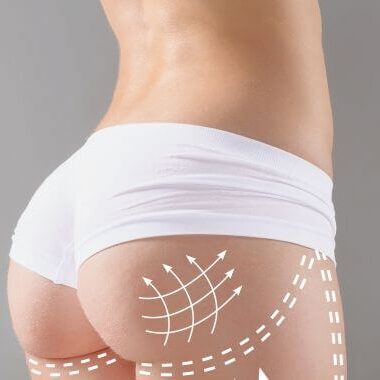
Sculptra vs. Hyaluronic Acid Fillers for Liquid BBL
The core distinction is mechanism and timing. Hyaluronic acid fillers deliver immediate, direct volume that your body will gradually metabolize. Sculptra delivers a slower, biologically integrated result that lasts longer but requires a multi-session protocol and a waiting period before full results are visible. Hyaluronic acid is often the right choice for clients who want to see results quickly or who want the option to adjust. Sculptra is often better suited for clients prioritizing longevity and a natural progression of results over time.
Emerging Biostimulators: The Next Generation of Longevity
Mechanism Differences and Where the Evidence Stands
Beyond Sculptra, a newer generation of biostimulatory agents is showing promise for gluteal enhancement, including calcium hydroxylapatite-based products and polynucleotide-based injectables. These work through related but distinct mechanisms: some stimulate collagen directly, others support tissue regeneration more broadly. The clinical evidence for these agents in the specific context of liquid BBL is still developing, and their longevity profiles in the gluteal region are less established than those of hyaluronic acid fillers and PLLA. They represent a compelling frontier, but currently work best as part of a combination protocol rather than as standalone treatments.
Who Is an Ideal Candidate for a Biostimulator Protocol
Patients who are ideal for a biostimulator protocol typically have good baseline skin quality, are not looking for dramatic immediate volume change, and are willing to invest in a multi-session treatment series. They are often clients who have already experienced hyaluronic acid results and are ready to transition to a longer-lasting approach, or patients in their 30s to 50s who want to address both volume and tissue quality simultaneously.
Filler Type Comparison at a Glance
The table below offers a practical framework for matching filler type to your biology, goals, and schedule. Your practitioner will refine these recommendations based on your individual assessment.
Hyaluronic Acid Fillers
- Longevity range: 12 to 24 months
- Mechanism: Direct volume displacement via gel matrix placed in tissue
- Ideal candidate: First-time clients, patients who want immediate visible results, clients who value reversibility or plan to reassess their goals
- Maintenance frequency: Annual to biannual touch-ups depending on metabolic rate
- Key trade-offs: Shorter longevity than biostimulators, reversible with enzyme injection, fastest visible result
Sculptra / Poly-L-Lactic Acid
- Longevity range: 2 to 5 years
- Mechanism: Biostimulation of fibroblasts to produce new collagen scaffolding
- Ideal candidate: Clients prioritizing longevity and natural-looking progression, patients comfortable with a 2 to 3 month result timeline, those with healthy collagen response
- Maintenance frequency: Every 2 to 5 years depending on individual collagen output and age
- Key trade-offs: Results are not immediate, requires a series of sessions, not reversible, higher upfront investment offset by lower long-term maintenance frequency
Emerging Biostimulators
- Longevity range: Variable, currently estimated 1 to 3 years in combination protocols
- Mechanism: Collagen induction, tissue regeneration support, and extracellular matrix remodeling depending on agent
- Ideal candidate: Patients seeking tissue quality improvement alongside volume, clients experienced with injectable protocols, those comfortable with evolving evidence
- Maintenance frequency: Currently best framed as a complement to hyaluronic acid or PLLA rather than a standalone schedule
- Key trade-offs: Evidence base in gluteal applications is still developing, not appropriate as a sole treatment for most patients yet, but a strong addition to hybrid protocols for the right candidate

The right filler is not the one with the longest longevity number. It is the one whose mechanism, timeline, and maintenance requirements align with your specific body and life. That alignment is what a personalized assessment is designed to determine.
The Hidden Factors That Determine Your Liquid BBL Longevity
Your filler type sets the ceiling on how long results can last. Your biology and lifestyle determine where below that ceiling you actually land. For most clients, the gap between maximum possible duration and actual duration is explained by a handful of personal variables that generic timelines never account for.
Metabolic Rate and Enzyme Activity
Hyaluronidase, the enzyme that breaks down hyaluronic acid, varies in baseline activity from person to person. Clients with elevated hyaluronidase activity metabolize hyaluronic acid fillers measurably faster than those with lower activity. This is not visible from the outside, but its effect on your timeline is real: the same product, placed by the same provider, in two different patients can look noticeably different at 14 months. Overall metabolic rate compounds this. Clients with faster metabolisms tend to cycle through all filler types more quickly, a pattern experienced practitioners recognize and build into their maintenance recommendations.
Collagen Baseline and Age-Related Decline
Biostimulators like Sculptra work by prompting your fibroblasts to produce new collagen. How much collagen your body actually generates in response depends on your current collagen baseline and the rate of age-related decline. A 34-year-old with healthy collagen turnover will typically produce a more robust and longer-lasting response than a patient with significant collagen loss, not because the product is less effective, but because the biological substrate is different. A well-structured treatment series can partially compensate for this, but your starting point shapes your ceiling.
Physical Activity Level and Gluteal Muscle Development
High-intensity training, particularly exercises that recruit the gluteal muscles heavily, creates a mechanical environment that affects filler distribution over time. Repeated muscle contraction can accelerate the migration or degradation of superficially placed filler. Counterintuitively, clients who develop significant gluteal muscle mass may also experience a compression effect on filler placement. This does not mean you should stop training. It means your provider should account for your activity profile when selecting injection depth, filler viscosity, and placement technique.
Body Weight Fluctuations
Filler is placed within a tissue environment that changes when your weight changes. Weight gain increases adipose volume around and beneath the filler, which can alter contour. Weight loss reduces that surrounding volume, which can make previously seamless results look uneven or accelerate the visible appearance of fading. Clients whose weight is stable tend to have more predictable and longer-lasting results. This is one of the clearest modifiable variables in the longevity equation.
The Role of Genetics
Genetics influence collagen synthesis rates, skin quality, enzyme expression, and tissue density, all of which affect how long liquid BBL results last. Some clients are simply fast metabolizers of injectable products across the board, regardless of lifestyle. Others maintain results well past the population average with no particular intervention. This variance is real, and experienced practitioners develop a sense for it through careful patient history. If you have had injectable treatments before and noticed unusually fast fading, that pattern is informative and worth discussing explicitly at your consultation.
Lifestyle Accelerators That Shorten Results
Smoking degrades collagen through oxidative stress and impairs microvascular circulation, both of which undermine filler longevity and biostimulator response. Chronic UV exposure activates matrix metalloproteinases, enzymes that break down collagen and extracellular matrix. Persistent systemic inflammation, whether from diet, stress, or underlying health conditions, creates a tissue environment less conducive to filler retention and collagen production. None of these factors disqualify you from liquid BBL, but they are variables a thorough assessment should surface and account for.
A Self-Assessment Framework for Busy Professionals
Before your consultation, a quick honest inventory helps you arrive with useful information rather than starting from scratch.
- Metabolic tendency: Do you process medications quickly? Have past fillers faded faster than expected?
- Age and collagen history: Are you over 40, or do you have visible signs of accelerated collagen loss?
- Activity level: Do you train legs and glutes intensely more than three times per week?
- Weight stability: Has your weight varied by more than 10 pounds in the past year?
- Lifestyle factors: Do you smoke, spend significant time in unprotected sun, or manage a chronic inflammatory condition?
- Skin and tissue quality: Do you have thin skin or poor skin elasticity in the treatment area?
Your answers do not predict your outcome precisely, but they give your practitioner the starting data needed to select the right filler type and build a maintenance schedule that fits your real life rather than a statistical average.
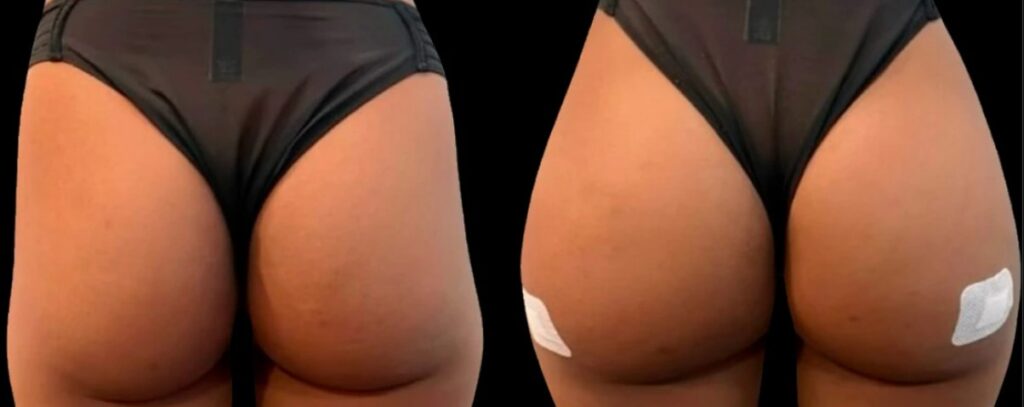
How to Extend Your Liquid BBL Results: Preservation Strategies That Actually Work
Lifestyle and nutritional support will not transform a 12-month result into a 36-month result. But they can meaningfully shift where on your durability range you land, and for a busy professional managing a multi-year maintenance schedule, that shift has real scheduling and financial value.
Nutritional Support That Protects Your Investment
Vitamin C, Collagen Peptides, and Hydration
Vitamin C is a required cofactor for collagen synthesis. Without adequate circulating vitamin C, fibroblast activity is impaired regardless of how strong your biostimulator response would otherwise be. A consistent daily intake from food and supplementation supports the collagen production that underpins your results, particularly if you have chosen a PLLA-based protocol.
Collagen peptides provide the amino acid building blocks, primarily glycine, proline, and hydroxyproline, that your body uses to build new collagen. Whether supplemental peptides meaningfully increase collagen deposition in treated tissue is still debated, but the evidence for systemic collagen support is reasonably strong, and the risk profile is minimal. Hydration supports hyaluronic acid filler volume directly: hyaluronic acid holds water, and patients who are chronically underhydrated may see results appear less robust than they otherwise would.
What Helps and What Is Overhyped
Vitamin C and hydration have a defensible evidence base. Collagen peptides are plausible and low-risk. Beyond these, the evidence thins considerably. Various “skin-from-within” supplement blends are marketed as longevity extenders, but their specific effect on injectable filler duration in the gluteal region is undemonstrated. A simpler protocol is usually more sustainable: consistent Vitamin C, adequate protein, and genuine hydration will do more for your results than an elaborate supplement stack.
Activity Modifications That Matter
Post-Treatment Sitting Restrictions
The standard recommendation to avoid direct pressure on treated areas for 24 to 72 hours post-treatment exists because filler placed in the gluteal region needs time to integrate before sustained mechanical loading disrupts its position. Direct, prolonged sitting compresses the tissue and can cause filler to migrate or distribute unevenly before it has stabilized. A donut cushion or seated position that shifts weight to the thighs rather than the buttocks is the practical solution for clients who cannot take time away from their desk.
Long-Term Movement Habits That Support Filler Retention
After the initial recovery window, moderate movement supports circulation and tissue health without stressing the filler. Clients who are sedentary for long hours daily may develop circulation patterns that subtly affect tissue quality over time. Brief walking breaks, postural variation, and consistent low-impact activity support the overall tissue environment that holds your results in place.
Honest Expectations About Lifestyle Impact
Lifestyle optimization is real but bounded. A non-smoker who is well-hydrated and nutritionally replete will likely see results at the longer end of their durability range. A smoker who is chronically dehydrated will likely see results at the shorter end. The distance between those two outcomes is measurable and potentially significant over a multi-year protocol. That is meaningful, but it should not replace realistic planning. Your maintenance schedule should be built around your real lifestyle, not an idealized version of it.
Liquid BBL Maintenance and Touch-Up Protocols: Planning for Your Real Life
How Often Do You Need Touch-Ups for Liquid BBL?
Maintenance frequency follows directly from the filler type and your personal durability profile.
- Hyaluronic acid fillers: most clients need touch-ups every 12 to 18 months, with fast metabolizers potentially scheduling closer to 10 to 12 months
- Sculptra and PLLA: an initial series of two to four sessions spaced six to eight weeks apart, then maintenance every two to four years depending on collagen response
- Combination or hybrid protocols: intervals vary but are typically longer than hyaluronic acid alone, often 18 to 24 months between significant maintenance visits
These are planning benchmarks, not guarantees. Your provider should reassess your specific result at each visit rather than defaulting to a fixed calendar interval.
Recognizing the Fade Curve Early
Results do not disappear overnight. The fade curve for hyaluronic acid fillers is typically gradual, a subtle reduction in fullness and projection that becomes noticeable over several months before reaching a point where results feel significantly diminished. For Sculptra, the decline is even slower because collagen loss is incremental. The optimal time to schedule a touch-up is before you feel the results are gone, not after. Most experienced clients learn to recognize a modest reduction in their result as the signal to book their next appointment. Waiting until you feel you are back to baseline means scheduling restoration rather than maintenance, which typically requires more product and more cost.
The Practical Scheduling Framework for Busy Professionals
Optimal Touch-Up Timing to Minimize Visible Gaps
Schedule your touch-up appointment at roughly 75 percent of your expected durability window. For an 18-month hyaluronic acid result, that means booking at approximately 13 to 14 months. This timing keeps you within the range where your provider is maintaining a result rather than rebuilding one, often reduces the product volume required per session, and eliminates the visible gap between fading and restoration.
For Sculptra clients, a single maintenance session at the two- to three-year mark is often sufficient to reinforce collagen scaffolding and extend results into the four- to five-year range, particularly for patients with a strong initial response.
Realistic Downtime Per Session
A single touch-up session for hyaluronic acid filler typically takes 30 to 60 minutes with minimal recovery. Most clients return to desk work the same day, observing only the post-treatment sitting restriction. Sculptra sessions follow a similar time profile, though the multi-session initial series requires repeat appointments spaced weeks apart. For clients with packed schedules, knowing that an initial Sculptra series means three or four appointments over two to three months, versus a single hyaluronic acid session, is practical information that affects which approach actually fits your life.
Hybrid Maintenance Strategies: Combining Filler Types for Longer Intervals
A growing number of clients use a combination protocol, typically an initial Sculptra series to build collagen scaffolding supplemented with hyaluronic acid filler to address immediate volume or precise contouring needs. The advantage for busy professionals is a longer effective maintenance interval: once the Sculptra foundation is established, smaller hyaluronic acid touch-ups can extend the overall result without triggering a full rebuild cycle. Some clients on well-managed hybrid protocols schedule meaningful maintenance only every two to three years, with minor top-ups in between. This is not universally appropriate, but for the right candidate, it represents the best balance of longevity, flexibility, and scheduling efficiency.

The True Cost of Ownership: Liquid BBL vs. Surgical BBL Over a Multi-Year Horizon
Understanding Cost Per Month of Maintained Results
The sticker price of a single liquid BBL session understates the real financial commitment. A more useful frame is cost per month of maintained results, calculated over a realistic multi-year horizon.
Consider two illustrative scenarios using approximate figures your provider can refine with current pricing. A hyaluronic acid filler protocol repeated every 14 to 18 months yields a cost per month that accumulates meaningfully over five years, depending on session frequency and product volume. A Sculptra protocol with an initial series followed by maintenance every two to three years may land in a comparable five-year range in absolute terms, but with significantly longer intervals between visits and a lower per-month cost over time.
A hybrid protocol falls in a similar range, with the added benefit of scheduling flexibility. These are illustrative figures only, not quotes. Your actual costs depend on provider, geography, product volume, and your individual response. The framework is what matters: measure liquid BBL against a multi-year horizon, not against the price of a single session.
Surgical BBL vs. Liquid BBL: Total Investment, Risk Profile, and Lifestyle Fit
Surgical BBL carries a higher upfront cost and results that, in favorable cases, can last a decade or longer. But the comparison is not purely financial. Surgical BBL requires general anesthesia, a recovery period of four to six weeks with significant activity restrictions, and meaningful medical risk. Results are also not fully permanent: weight changes and aging affect surgical outcomes over time, though typically more slowly than injectable fillers.
Liquid BBL carries a lower upfront cost, no general anesthesia, same-day return to most daily activities, and an ongoing maintenance commitment. For clients who are not surgical candidates, who prefer avoiding anesthesia risk, or whose schedules cannot accommodate a multi-week recovery, liquid BBL is not the consolation prize. It is the appropriate choice.
Is Liquid BBL Worth the Ongoing Maintenance Cost?
Three questions structure an honest personal assessment.
First, does the result meaningfully improve your confidence and daily experience? If yes, the maintenance cost has a real return. If the improvement is modest or uncertain, ongoing investment is harder to justify.
Second, does the scheduling requirement fit your life realistically? Touch-ups every 12 to 18 months are manageable for most clients. A multi-session Sculptra series requires a two- to three-month window with repeat appointments. Know which model you are actually signing up for.
Third, is your goal best served by a reversible, adjustable approach or a more permanent solution? If your aesthetic goals are still evolving or your body is in a period of change, the flexibility of injectable maintenance is genuinely valuable.
How to Think About Value When Your Time Is as Scarce as Your Budget
For the professional managing a packed schedule, time has direct financial value. A procedure requiring four weeks of restricted activity has a cost beyond the invoice, representing lost workouts, potential schedule disruptions, and recovery management. A touch-up requiring 45 minutes and a modified afternoon does not. When you account for that asymmetry, the ongoing maintenance model of liquid BBL often compares more favorably to surgical alternatives than a pure dollar analysis suggests. The right question is not “which option costs less” but “which option delivers the result I want at a cost, in money and in time, that I can sustain.”
How MEDSPA MD Group Builds Your Personalized Longevity Roadmap
The Metabolic and Collagen Profiling Assessment
A personalized longevity roadmap starts with information your practitioner collects before recommending a single product. At MEDSPA MD Group, the initial assessment is structured to surface the individual variables that determine where on the durability range you will actually land, not where the average patient lands.
This means gathering a detailed history of how your body has responded to prior injectables, any observable signs of accelerated collagen loss, your activity profile, weight stability over the past 12 months, and lifestyle factors including sun exposure and smoking history. Practitioners also evaluate tissue quality and skin laxity in the treatment area directly, providing a clinical read on collagen baseline that no intake form can fully capture.
The goal is a working metabolic and tissue profile specific to you, one that informs both product selection and the realistic durability window your body is likely to deliver.
Filler Selection Methodology: Matching Material to Your Biology, Goals, and Schedule
Filler selection at MEDSPA MD Group follows a structured decision process, not a default protocol. The assessment data shapes three specific decisions: which filler type aligns with your biology, which timeline fits your goals, and which maintenance schedule is realistic given your life.
A client with a fast metabolic profile, healthy collagen response, and a preference for immediate visible results may be best served by a high-viscosity hyaluronic acid filler with a planned 14-month touch-up interval. A client with early collagen decline who travels frequently and cannot manage multiple appointments per quarter may be better served by an initial Sculptra series that builds a durable foundation requiring attention only every two to three years.
Neither answer is universal. The methodology exists precisely because the question of how long liquid BBL lasts has no meaningful answer outside the context of the individual receiving it.
Your Data-Backed Maintenance Roadmap
A personalized plan is a written schedule, not a verbal estimate. After the assessment and initial treatment, clients leave with a documented maintenance framework that includes the expected durability window based on their specific profile, the optimal timing for their first touch-up appointment, and the indicators to watch for that signal a maintenance visit is approaching.
For hyaluronic acid clients, that typically means a calendar reminder at month 12 to 13 for an assessment appointment, with a touch-up scheduled based on observed fading rather than a fixed date. For Sculptra clients, it means a series schedule with session dates mapped out across the initial two to three months, followed by a long-range maintenance window of two to four years.
The roadmap is also revisable. Body weight, activity level, and health status change. A plan built on your profile today gets updated as your practitioner observes how your body responds, turning each appointment into new data that refines the next prediction.
Key Takeaway
- Filler type drives your longevity ceiling: hyaluronic acid fillers typically last 12 to 24 months, while Sculptra and poly-L-lactic acid can last 2 to 5 years depending on collagen response.
- Your personal metabolic rate, enzyme activity, collagen baseline, and weight stability determine where below that ceiling you actually land.
- Lifestyle factors including smoking, UV exposure, and chronic inflammation measurably shorten results across all filler types.
- Scheduling touch-ups at 75 percent of your expected durability window reduces product volume needed and eliminates visible gaps in results.
- The one question to ask at your consultation: “Based on my specific profile, which end of the durability range am I likely to land on, and what does my maintenance schedule actually look like?”
Conclusion: From Population Averages to Your Personal Longevity Strategy
Personalized Assessment Is the Difference Between a Guess and a Plan
The “1 to 3 years” answer is not wrong. It is just not about you. Every variable covered in this article, from filler type and metabolic rate to collagen baseline, activity level, weight stability, and lifestyle factors, exists on a spectrum that makes your durability window genuinely different from the person treated before you and the person treated after. A population average cannot tell you where on that spectrum you fall. A thorough individual assessment can.
That shift from generic range to personal prediction is what separates a maintenance plan you can trust from a guess you hope holds up.
What to Bring to Your First Conversation with MEDSPA MD Group
Arrive with as much relevant history as you can articulate. Prior injectable experience and how long those results lasted, any pattern of fast fading with medications or treatments, your current training frequency and intensity, weight history over the past year, and an honest account of lifestyle factors like sun exposure and smoking all give your practitioner a meaningful starting point.
Bring your scheduling reality as well. Knowing whether you can manage a multi-session initial series or need a single-session protocol with a longer interval before the next visit shapes the recommendation before any product is selected.
Your Next Step: A Personalized Liquid BBL Longevity Consultation
The most useful thing this article can do is replace a generic range with a specific question you now know to ask. The answer to that question, your personal durability profile, your filler match, and your maintenance roadmap, is what a consultation with MEDSPA MD Group is designed to provide.
Book your personalized liquid BBL longevity consultation and leave with a plan built around your biology, your goals, and your schedule.
Frequently Asked Questions
Maintaining a liquid BBL involves scheduling touch-up appointments before your results fade significantly, ideally at around 75 percent of your expected durability window. Supporting your results between sessions with adequate hydration, consistent Vitamin C intake, weight stability, and sun protection helps you land at the longer end of your durability range. Your provider should reassess your result at each visit and adjust the maintenance schedule based on how your body has responded rather than defaulting to a fixed calendar interval.
No currently available injectable filler for the gluteal region produces permanent results. Hyaluronic acid fillers are gradually metabolized by the body, typically within 12 to 24 months. Poly-L-lactic acid biostimulators like Sculptra produce longer-lasting results by stimulating your own collagen production, with results that can persist two to five years, but these too require eventual maintenance. Any practitioner suggesting a permanent outcome from injectable treatment is overpromising.
Liquid BBL longevity is shaped by a combination of filler type, metabolic rate, baseline hyaluronidase enzyme activity, collagen levels, physical activity, weight stability, and lifestyle habits including smoking and sun exposure. Genetics also play a meaningful role: some patients are inherently faster metabolizers of injectable products regardless of lifestyle choices. A personalized consultation is the most reliable way to identify which of these factors applies to you and what your realistic durability window looks like.
Hyaluronic acid fillers create immediate volume by physically occupying space within the tissue and typically last 12 to 24 months. Sculptra, a poly-L-lactic acid biostimulator, works by triggering your body’s own collagen production, with results that build gradually over two to three months and can last two to five years. Hyaluronic acid is reversible with an enzyme injection and suits clients who want visible results quickly or value flexibility. Sculptra suits clients prioritizing longevity and a natural progression of results who are willing to invest in a multi-session protocol.
Touch-up frequency depends on the filler type and your individual metabolic profile. Most clients using hyaluronic acid fillers schedule maintenance every 12 to 18 months, with faster metabolizers potentially returning closer to 10 to 12 months. Sculptra clients typically complete an initial series of two to four sessions and then require maintenance only every two to four years. Clients on hybrid protocols combining both filler types often achieve effective maintenance intervals of 18 to 24 months or longer.
For most clients, the value depends on three factors: whether the result meaningfully improves your confidence and daily experience, whether the scheduling requirement is genuinely compatible with your life, and whether the flexibility of an adjustable, reversible approach suits where you are in your aesthetic journey. When the total cost of ownership is measured over a multi-year horizon and compared against the financial and time cost of surgical alternatives, including recovery, anesthesia, and potential revision, liquid BBL is a competitive and practical option for the right candidate.