
Table of Contents
- Is Laser Hair Removal Safe During Pregnancy?
- How Pregnancy Affects Hair Growth and Skin Sensitivity
- Potential Risks and Downsides of Laser Hair Removal While Pregnant
- Effectiveness Issues: Why It Often Isn’t Worth It During Pregnancy
- Safer Alternatives for Hair Removal During Pregnancy
- When Can You Safely Resume Laser Hair Removal After Pregnancy?
- FAQs
- Why Choose MedSpa MD Group
The short answer: laser hair removal is not recommended during pregnancy. Below, our team at MedSpa MD Group in Philadelphia and Houston explains why, what changes in your body make the procedure riskier and less effective, and what you can safely do about unwanted hair until after delivery.
Is Laser Hair Removal Safe During Pregnancy?
Reputable providers, including MedSpa MD Group, do not perform laser hair removal on pregnant clients. There is insufficient research on laser hair removal’s safety during pregnancy, and no clinical research proving that the procedure is safe for a developing fetus. The lack of clinical safety data exists largely because pregnant individuals are excluded from studies for ethical reasons.
Here is what we do know: laser hair removal works by directing focused light energy at the dark pigment in hair follicles, converting it to heat that damages the follicle at the skin’s surface. In theory, this energy stays in the superficial layers of skin and should not reach the fetus or affect amniotic fluid. A 2019 systematic review of roughly 380 pregnant women treated with various lasers found no confirmed fetal harm, but the evidence level remains low.
Despite the absence of documented risks, experts recommend postponing laser hair removal during pregnancy because it is an elective procedure, not a medical necessity. Many laser clinics have policies against treating pregnant patients regardless of individual doctor opinions. At-home laser or IPL devices carry the same caution and are also not recommended while pregnant.
If you already had a session before you knew you were pregnant, don’t worry. Current research does not show harm in those situations, but you should inform your healthcare provider and pause further treatment.
How Pregnancy Affects Hair Growth and Skin Sensitivity
Hormonal changes during pregnancy, especially rising estrogen, progesterone, and androgen levels, can dramatically alter both hair growth and skin behavior. Higher estrogen levels lead to denser and thicker hair across the body. Many women experience hirsutism during pregnancy, noticing new hair growth on the face, nipples, lower abdomen, back, and legs.
Pregnancy hormones can cause temporary excess hair growth by keeping hair follicles stuck in the anagen (active growth) phase longer than normal. Understanding the hair growth cycle helps explain this:
- Anagen – active growth, when the follicle is rich in melanin and responsive to laser
- Catagen – a short transition phase
- Telogen – the resting phase, when hair eventually sheds
Because pregnancy disrupts the normal cycling between these stages, body hair appears thicker and more widespread. After birth, postpartum hair shedding can occur due to hormonal stabilization, when follicles finally shift to telogen and release accumulated hair.
Increased skin sensitivity is another hallmark. Pregnant skin is more vascular, more prone to redness, itching, and skin irritation. Conditions like eczema and contact dermatitis can flare. Hyperpigmentation is common too – melasma, linea nigra, and darkening of the areolas all reflect how pregnancy hormones affect melanin. This darker skin can respond unpredictably to heat-based laser treatments, making permanent hair removal results harder to predict.
Potential Risks and Downsides of Laser Hair Removal While Pregnant
While no documented risks to the fetus from laser hair removal exist in the current literature, several practical and theoretical concerns justify caution.
Skin-level side effects. In non-pregnant patients, known risks of laser treatments include burning, blistering, swelling, changes in pigmentation, scarring, and paradoxical hair growth (which occurs in roughly 3% of patients). Increased skin sensitivity during pregnancy may worsen these side effects, making reactions more likely or more severe on sensitive skin.
Hyperpigmentation. Pregnancy hormones can increase the risk of hyperpigmentation, particularly on the bikini area, inner thighs, and underarms where friction and moisture already stress the skin. Laser heat applied to these areas could lead to lasting darkening or discoloration.
Pain and discomfort. The procedure can feel more painful during pregnancy because nerve endings become more reactive. The heat “snap” sensation of laser hair may be less tolerable, potentially affecting your well being and increasing stress during treatment.
Positioning concerns. In late pregnancy, lying flat on your back for longer sessions risks vena cava compression, which can cause dizziness, nausea, and reduced blood flow to the uterus.
The unknowns. The absence of large safety studies and the exclusion of pregnant people from clinical trials means that we simply cannot rule out potential risks. Conservative medical ethics consistently favor avoiding avoidable procedures when data gaps exist.
Effectiveness Issues: Why Laser Hair Removal Often Isn’t Worth It During Pregnancy
Even setting safety aside, pregnancy hormones can make laser hair removal results unpredictable. Active hormonal changes stimulate new hair growth in treated areas, meaning hair can reappear even after technically successful sessions. Results from laser hair removal may be unpredictable during pregnancy because follicles cycle inconsistently under fluctuating hormones.
Laser hair removal treatments work best when hormones are stable and hair cycles are consistent – typically several months after pregnancy and breastfeeding end. Consider a realistic example: a pregnant client treating her underarms in the second trimester may see initial reduction, but new hairs appear postpartum as hormones shift, requiring additional sessions anyway.
Reputable clinics like MedSpa MD Group will pause an existing treatment plan if a client becomes pregnant mid-series and resume once hormones settle. Postponing until after pregnancy usually means fewer total sessions, better hair reduction per session, and less frustration – a smarter investment overall. Hormonal changes may also reduce hair thickness postpartum, meaning some of the unwanted hair you’re concerned about now may resolve on its own after birth.
Safer Alternatives for Hair Removal During Pregnancy
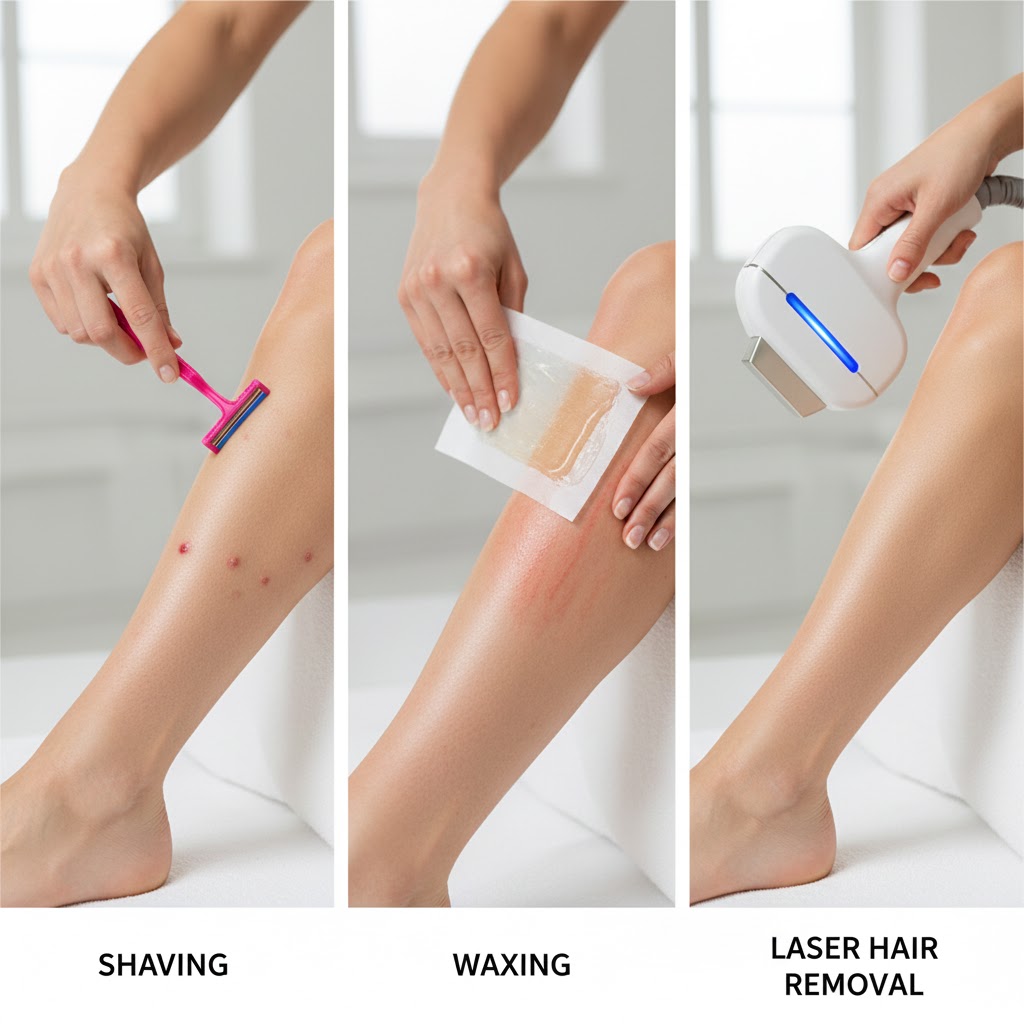
Most obstetricians consider several traditional methods acceptable to remove hair during pregnancy. Here are your best options for hair removal during pregnancy:
| Method | Safety Level | Notes |
|---|---|---|
| Shaving | Very safe | Use a fresh razor, fragrance-free cream, moisturize after |
| Waxing / Sugaring | Generally safe | More painful with sensitive skin; patch test first |
| Trimming / Clippers | Very safe | No chemicals, no heat, no follicle disruption |
| Depilatory creams | Use with caution | Patch test, small areas, good ventilation, avoid broken skin |
Shaving is a safe hair removal method during pregnancy and remains the simplest option. In the third trimester, ask a partner to help with hard-to-reach areas like legs and the bikini area.
Waxing is considered safe for pregnant women, though it can feel more painful due to increased skin sensitivity. Choose an experienced, pregnancy-aware esthetician and avoid areas with varicose veins or active irritation.
Clippers can be used safely for hair removal during pregnancy – they keep hair shorter without affecting the follicle or introducing heat or chemicals.
Depilatory creams are acceptable in small amounts according to many OB-GYNs, but always patch test and ensure good ventilation to minimize exposure to chemicals.
Methods to avoid: laser hair removal, electrolysis (not recommended during pregnancy due to safety concerns, especially on the abdomen or breasts), and at-home laser/IPL devices due to uncontrolled settings and lack of supervision.
When Can You Safely Resume Laser Hair Removal After Pregnancy?

Most women can consider laser hair removal again once their doctor clears them postpartum and any delivery-related healing – including C-section incisions or infection risks – is complete. Many providers suggest waiting at least three to six months after birth for hormones and hair growth patterns to begin normalizing.
Laser hair removal is not recommended for breastfeeding mothers without consultation, because hormones can still fluctuate during lactation. Some clinics, including MedSpa MD Group, recommend waiting until breastfeeding is well established or completed before starting a new series.
A responsible postpartum consult should review your medical history, any pregnancy complications, current medications, and skin conditions. Your provider will assess your skin tone using the Fitzpatrick scale to customize laser settings safely. Postpartum hair shedding is normal and separate from body hair concerns – laser hair removal targets specific body areas, not scalp hair loss. If you had sessions before or early in pregnancy, bring that up so your provider can adjust the treatment plan accordingly.
Laser Hair Removal While Pregnant: FAQs
Here are direct answers to common misconceptions and questions our team at MedSpa MD Group regularly hears from pregnant and postpartum clients.
Can you get laser hair removal while pregnant if your OB-GYN says it’s okay?
Even with OB-GYN approval, most reputable medspas follow internal safety policies that prohibit laser hair removal during pregnancy. At MedSpa MD Group, this is a clinic-level decision rooted in caution, liability standards, and the absence of strong safety data – not a reflection of your doctor’s judgment.
What if I had laser hair removal before I knew I was pregnant?
Many pregnant people find themselves in this situation. Current data do not show the procedure causing pregnancy complications, so there is no reason to worry. Stop further sessions, inform your OB-GYN, and monitor treated skin for any irritation or pigmentation changes. In rare cases, skin may react differently, but fetal harm has not been reported.
Is laser hair removal safe on the bikini area while pregnant?
Most providers avoid treating the bikini area during pregnancy because of increased skin sensitivity, risk of hyperpigmentation from dark pigment changes, and the area’s proximity to the uterus. Safer temporary methods like shaving, careful waxing, or trimming are recommended until you are no longer pregnant.
Are at-home laser or IPL devices safer than in-clinic treatments during pregnancy?
No. At-home devices use the same principle of concentrated light energy and lack professional skin typing, parameter control, and supervision. They carry the same potential risks and should be avoided during pregnancy for the same conservative reasons.
Can I have laser hair removal while trying to conceive?
If you are planning to conceive, discuss timing with your provider. Some clinics are comfortable treating clients who are not yet pregnant but will pause immediately once pregnancy is suspected or confirmed. Try to schedule treatments during clearly non-pregnant windows, understanding that a series may be interrupted.
Does laser hair removal affect fertility or hormones?
No. Laser hair removal works only at the skin and follicle level and does not affect systemic hormones, estrogen production, or fertility. The concern during pregnancy is strictly about unknown fetal safety and heightened skin side effects – not hormonal or reproductive changes.
Why Choose MedSpa MD Group After Pregnancy for Laser Hair Removal
MedSpa MD Group in Philadelphia, PA and Houston, TX follows strict, physician-led safety protocols that prioritize maternal and fetal health over short-term cosmetic goals. Our team uses modern, medical-grade laser technology appropriate for a wide range of skin tones and hair types, with settings customized based on your Fitzpatrick skin type to minimize risk of burns or pigmentation changes.
Every postpartum client receives a thorough consultation covering medical history, pregnancy or delivery complications, current medications, and realistic expectations about hair reduction timelines. We believe in honest planning – not rushing you into a procedure before your body is ready.
For busy new parents, we offer flexible scheduling, efficient sessions, transparent pricing per area or package, and the ability to combine multiple non-surgical treatments on the same visit when appropriate. Beyond laser hair removal, MedSpa MD Group provides body contouring, Botox, facial fillers, microneedling with PRP, Endolift, and skin rejuvenation – everything you need to plan a safe, staged postpartum glow-up. Clients from across Pennsylvania and Texas trust our experienced providers, and many travel in specifically for our combination of expertise and personalized care.
Next Steps: Talk to a Provider Before Making a Decision
The key takeaway: because laser hair removal is elective and lacks strong pregnancy safety data, the safest choice is to wait until after pregnancy – and often until after breastfeeding – before resuming or starting treatments. Unwanted hair growth during pregnancy is temporary for most women, and long-term solutions can be safely pursued once your body has recovered.
If you are in or near Philadelphia or Houston and want to get rid of unwanted body hair permanently, schedule a consultation with MedSpa MD Group. We will help you create a personalized post-pregnancy hair removal and aesthetic plan based on your trimester, medical history, and goals. Contact us online, use our booking tool, or call to speak directly with a member of our team. Your body has done something extraordinary – we are here to help you feel like yourself again when the time is right.