Table of Contents
- Introduction: Seeing Real Body Contouring Results Before You Commit
- What Is Body Contouring After Weight Loss? (Surgical vs. Non-Surgical)
- Body Contouring Before and After: What These Photos Really Show
- Common Body Contouring Procedures and Typical Before & After Changes
- How Weight Loss (Including Semaglutide) Changes Your Body Shape
- Am I a Good Candidate for Body Contouring? (Non-Surgical vs. Surgical)
- What to Expect: Your Body Contouring Journey from Consult to After Photos
- Body Contouring Safety, Recovery, and Scarring: Non-Surgical vs. Surgery
- Body Contouring Results Timeline: When Will I See My “After” Look?
- Financing & Planning Your Investment in Body Contouring Results
- Why Choose MedSpa MD Group for Non-Surgical Body Contouring
- Frequently Asked Questions About Body Contouring Before and After
- Plan Your Own “Before and After” with MedSpa MD Group
Introduction: Seeing Real Body Contouring Results Before You Commit
If you’ve lost a significant amount of weight-whether through semaglutide injections, bariatric surgery, or years of disciplined diet and exercise-you already know that the number on the scale doesn’t always match the reflection in the mirror. Loose skin around your abdomen, stubborn fat along your flanks, or a deflated look in areas that used to feel full can leave you feeling like your body hasn’t caught up with your effort. That gap between where you are and where you want to be is exactly why body contouring before and after photos matter so much. They show you what’s actually possible.
At MedSpa MD Group, we specialize in non-surgical body contouring across our Philadelphia, PA and Houston, TX locations. Our approach focuses on targeted fat reduction, skin tightening, and shape refinement-without the incisions, general anesthesia, or weeks of downtime that come with surgery. That said, we know many of our patients are weighing surgical options like a tummy tuck, breast lift, or liposuction alongside non-surgical treatments. So in this article, we cover both paths honestly.
Whether you’ve lost 15 pounds on semaglutide and want to smooth out what’s left, or you’ve lost 80 pounds and are trying to figure out if you need surgery, this guide will walk you through what body contouring is, what before and after results actually look like, who qualifies, how recovery compares, and how to plan your next step. Patients report improved body image and self-confidence following body contouring, and the first step toward that outcome is understanding your options clearly.
What Is Body Contouring After Weight Loss? (Surgical vs. Non-Surgical)
Body contouring is the process of reshaping the body after weight loss, aging, or pregnancy by reducing fat, tightening skin, or both. Body contouring includes both surgical and nonsurgical treatment options, and the right approach depends on how much weight you’ve lost, the condition of your skin, and what kind of recovery you’re comfortable with.
Surgical Body Contouring
Body contouring surgery encompasses procedures like abdominoplasty (tummy tuck), breast lift, lower body lift, and panniculectomy. These plastic surgery procedures physically remove excess skin and fat through incisions, often repositioning tissues and tightening underlying muscles. They’re typically performed under general anesthesia, require weeks of recovery, and leave permanent (though fading) scars.
After massive weight loss, say 50 to 100 or more pounds from bariatric surgery, prolonged diet effort, or medications like semaglutide-excess skin can remain even when BMI reaches a healthy range. Nearly 96% of patients who have bariatric surgery report some form of redundant skin afterward. Body contouring removes excess skin after significant weight loss and improves body proportions, eliminating uncomfortable skin chafing that can cause rashes and hygiene challenges.
Non-Surgical Body Contouring
Non-surgical body contouring uses energy-based technologies (radiofrequency, cryolipolysis, ultrasound, laser) and injectable treatments (like liquid BBL) to reduce localized fat, tighten mild to moderate skin laxity, and refine shape without incisions. These treatments are performed in-office, require little to no downtime, and produce gradual results over multiple sessions, without the fat transfer involved in surgical augmentation procedures.
Non-surgical body contouring tends to work best for patients who have lost a moderate amount of weight (roughly 10 to 40 pounds), still have pockets of fat that resist diet and exercise, and have mild to moderate skin laxity rather than large hanging folds. Results from body contouring may range from subtle refinement to dramatic transformations depending on the starting point and treatment plan.
MedSpa MD Group does not perform tummy tucks, breast lifts, or surgical body lifts. However, we frequently treat patients before or after surgery to smooth, refine, or maintain their results, particularly in the flanks, back, arms, and under-chin areas that surgery may not fully address.
Body Contouring Before and After: What These Photos Really Show
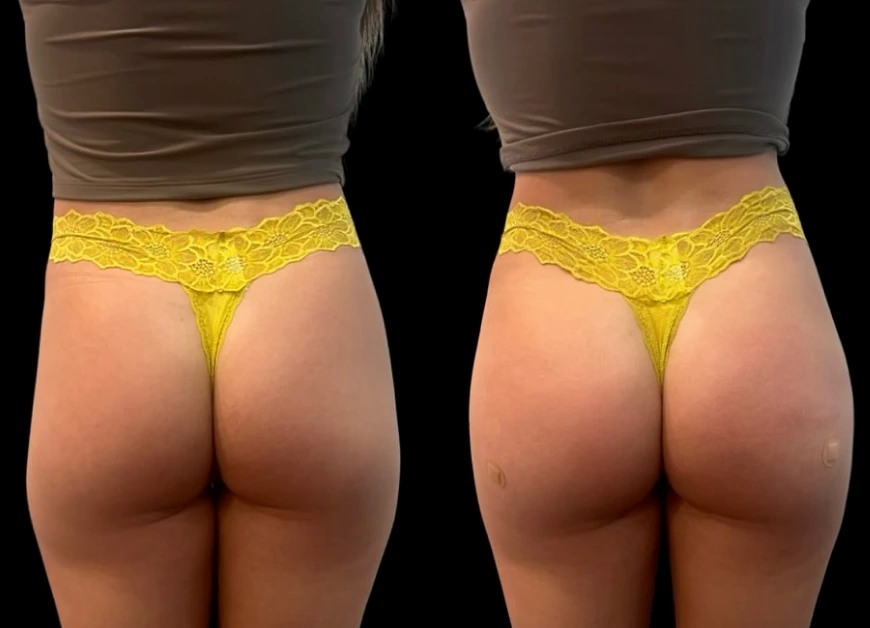
Before and after photos are a tool for setting realistic expectations. They are not guarantees. Every patient’s body, genetics, skin quality, and response to treatment will produce different outcomes, and the photos you see in a gallery represent specific individuals with specific starting points.
What to Look For in a Gallery
When evaluating body contouring before and after galleries, pay attention to:
- Angles and views: Consistent front, side, and oblique views give a more honest picture than a single flattering angle.
- Lighting: Same lighting conditions in both photos prevent shadows from exaggerating or hiding changes.
- Posture and clothing: Standardized poses and consistent garments eliminate variables that could distort the comparison.
- Time between photos: Note how many weeks or months separate the before and after images.
Surgical body contouring photos-from a tummy tuck, breast lift, or 360 liposuction-often show dramatic removal of excess skin and fat in a single procedure. Non-surgical photos show more gradual contour refinement: smoother silhouettes, firmer skin, and softened bulges over several sessions. Body contouring can yield dramatic, meaningful results in both categories, but the timeline and magnitude differ.
Before and after photos show real patient transformations. At MedSpa MD Group, we use standardized photo protocols in both our Philadelphia and Houston locations-same room, same lighting, similar poses-to give honest representations of non-surgical fat reduction and skin tightening outcomes. Actual patient results are documented in before and after galleries, and all photos used are of real patients. We encourage you to view the official gallery on the MedSpa MD Group website rather than relying on stock images found elsewhere.
Common Body Contouring Procedures and Typical Before & After Changes
Results differ depending on whether the treatment is surgical or non-surgical and which area of the body is addressed. Here’s what each common procedure typically shows in before and after comparisons.
Surgical Body Contouring Procedures
- Tummy tuck (abdominoplasty): A tummy tuck tightens abdominal muscles and removes extra skin, producing a flatter lower belly and improved waistline. Before photos typically show a protruding or sagging abdomen; after photos reveal a smoother, tighter midsection with a hip-to-hip scar that fades over time.
- Panniculectomy: A panniculectomy removes excess skin-the apron-like fold (pannus) that hangs over the groin or thighs after massive weight loss. This is primarily a functional procedure and is sometimes covered by insurance when documented medical issues like chronic rashes or hygiene problems exist in the skin folds.
- Breast lift (bilateral mastopexy): Before photos show sagging breasts with downward-pointing nipples, often the result of breastfeeding, aging, or large weight fluctuation. After photos show repositioned nipples, firmer breast shape, and less drooping. A bilateral mastopexy can dramatically reshape the breasts without implants.
- Lipoabdominoplasty: This combination procedure addresses breast ptosis and excessive abdominal skin, blending liposuction with abdominoplasty for patients who need contouring in multiple areas simultaneously.
- 360 liposuction: Circumferential fat removal around the waist, flanks, and lower back produces a more defined waistline and smoother silhouette in after images. Liposuction and laser liposuction are common surgical options for targeted fat removal.
- Submental liposuction: Before photos show fullness under the chin (the “double chin”); after photos reveal a more defined jawline and cleaner profile. Procedures like VASER liposuction target localized fat deposits in body contouring for areas like this.
Non-Surgical Body Contouring at MedSpa MD Group
Non-surgical body contouring at our Philadelphia and Houston locations uses targeted fat reduction and skin tightening technologies in the abdomen, flanks, thighs, arms, buttocks, or under the chin, without incisions. Nonsurgical options include CoolSculpting and Kybella treatments, among other modalities, depending on the area and the patient’s goals.
Multiple sessions are typically needed for measurable improvements. Many surgical after photos are taken 3 to 12 months post-op, whereas non-surgical body contouring before and after photos are often captured at 8 to 16 weeks after the final session.
Combination approaches are common. A patient may have a surgical tummy tuck performed by a plastic surgeon and then use non-surgical treatments at MedSpa MD Group to refine flanks, back rolls, or other areas that surgery didn’t address.
How Weight Loss (Including Semaglutide) Changes Your Body Shape
Rapid weight loss from medications like semaglutide, intensive lifestyle changes, or bariatric surgery often leaves residual issues that the scale can’t fix. Deflated fat pockets, crepey or loose skin, and localized bulges that resist further diet or exercise are the most common complaints we hear from patients in our Philadelphia and Houston clinics.
Common Patterns After Significant Weight Loss
In our experience, certain patterns appear consistently:
- Losing 30 to 60 pounds: Loose lower abdominal skin, softened flanks, and mild laxity around the upper arms
- Losing 40 to 80+ pounds: Inner-thigh laxity, more pronounced “bat wings” on the arms, visible skin folds on the back, and deflated buttocks
- Losing 80+ pounds: Severe hanging skin in multiple areas, functional impairments, and rashes beneath skin folds
Non-surgical body contouring can be ideal for patients who still have mild to moderate fat thickness but don’t yet have severe skin redundancy needing a tummy tuck or body lift. If your skin still has some elasticity and you’re dealing with pockets rather than drapes, non-surgical options can enhance your shape meaningfully.
MedSpa MD Group often treats patients who have recently completed a semaglutide weight loss program to “polish” stubborn areas and improve the overall before and after transformation. Semaglutide at 2.4 mg weekly produces approximately 14.9 to 16% body weight loss over 68 weeks on average-for someone starting at 220 pounds, that’s roughly 33 to 35 pounds lost. That level of weight loss frequently leaves behind enough residual fat and mild laxity for non-surgical contouring to make a visible difference.
Stable weight is crucial for maintaining results after body contouring. We recommend that your weight be stable for at least 3 to 6 months before starting any significant contouring plan. This ensures your before and after photos reflect lasting results rather than a snapshot of a body that’s still changing.
Am I a Good Candidate for Body Contouring? (Non-Surgical vs. Surgical)
Candidacy comes down to your goals, your health, the quality of your skin, and how much weight you’ve lost. Here’s how to think about it.
Good Candidates for Non-Surgical Body Contouring
- Near goal weight (usually within 10 to 25 pounds)
- Mild to moderate localized fat pockets in the abdomen, flanks, thighs, arms, or under chin
- Mild to moderate skin laxity (not large hanging folds)
- Desire for minimal downtime and no surgical scars
- Preference to avoid general anesthesia
- A Body Mass Index (BMI) under 30 is recommended to minimize complications in body contouring
- High skin elasticity allows skin to smooth over new contours after body contouring, so patients with better skin quality tend to see stronger results
Good Candidates for Surgical Body Contouring
- Large areas of hanging skin after massive weight loss (typically 50+ pounds)
- Functional issues like chronic rashes in skin folds, hygiene difficulties, or mobility restrictions
- Willingness to accept scars and longer recovery periods
- Medically cleared by a board-certified plastic surgeon
- Weight has been stable for 6 to 24 months
Health and Lifestyle Considerations
Regardless of which path you choose, several factors matter:
- Smoking status: Nicotine constricts blood vessels and increases risks of complications in body contouring-both surgical and non-surgical. You’ll be asked to stop well before any procedure.
- Weight stability: Gaining or losing significant weight after contouring can undermine results.
- Realistic expectations: Improvement, not perfection. Results vary by individual.
- Overall health: Conditions affecting healing, clotting, or immunity should be discussed in your consultation.
At MedSpa MD Group, we offer in-depth consultations with our physician-led team to determine if non-surgical options can meet your goals. If they can’t, we’ll tell you honestly and suggest that you also consult a board-certified plastic surgeon for surgical evaluation.
What to Expect: Your Body Contouring Journey from Consult to After Photos
Understanding the step-by-step process takes a lot of the uncertainty out of body contouring. Here’s what the journey typically looks like for a non-surgical body contouring patient at MedSpa MD Group in Philadelphia or Houston.
The Process, Step by Step
- Consultation: A detailed conversation about your weight history (including any semaglutide use, bariatric surgery, or prior procedures), problem areas, medical history, and timing goals. This is where we assess whether non-surgical contouring fits your situation or whether surgery should be part of the conversation.
- Assessment and measurements: Standardized photos are taken from multiple views. Circumferential measurements or body composition data may be collected to track progress objectively.
- Custom plan: Based on the assessment, we select specific technologies and determine the number of sessions needed. We clarify realistic target changes for each area-this is where honesty matters most.
- Treatment sessions: A typical appointment lasts 30 to 90 minutes, depending on the area and technology used. Most patients describe the sensation as warmth, pressure, or a tugging feeling. You can return to work the same day in most cases.
- Aftercare: Hydration helps the lymphatic system process destroyed fat cells after non-surgical treatments. We may recommend light activity, compression garments for certain protocols, and adequate water intake. Visible changes often start at 3 to 4 weeks and continue up to 3 to 6 months as the body remodels.
- Follow-up photos: After photos are typically captured at 8 to 16 weeks following the final session. These are reviewed with you to assess progress, discuss any additional sessions, and compare against your starting images.
Out-of-town patients and fly-in patients can cluster sessions over a few days or weeks with advance planning. Both our Houston and Philadelphia locations are close to major airports, making the logistics straightforward for patients traveling from other cities or states.
Body Contouring Safety, Recovery, and Scarring: Non-Surgical vs. Surgery
Both surgical and non-surgical body contouring carry risks, but the type and severity differ significantly. Understanding these differences is essential for choosing the right approach.
Surgical Recovery and Risks
Recovery may take several months after body contouring surgery. Here’s what patients typically experience:
- Initial discomfort may last up to six weeks post-surgery
- Patients may experience soreness for the first four weeks
- Compression garments are recommended for six to eight weeks to support healing and reduce swelling
- Surgical drains may be required to remove excess fluid from the treatment area
- Scars are permanent, though they typically fade over 12 to 18 months; location and length depend on the surgery type (hip-to-hip for a tummy tuck, around the areola for a breast lift)
- Adequate protein intake is essential for surgical wound healing after body contouring
- Activity restrictions (no heavy lifting, no strenuous exercise) generally last 2 to 6 weeks, depending on the procedure
Complications can include infection, bleeding, poor wound healing, seroma, and numbness. These risks increase with higher BMI, nutritional deficiencies, and tobacco use.
Non-Surgical Recovery and Risks at MedSpa MD Group
Non-surgical recovery looks completely different:
- No incisions, no general anesthesia
- Temporary redness, swelling, or tenderness at treatment sites-usually resolving within 24 to 72 hours
- Patients typically return to daily activities immediately or within 24 hours
- No surgical scars; subtle skin changes or temporary bruising may appear at treatment sites but resolve quickly
- Rare risks include more significant bruising, temporary numbness, or (with injectable treatments like liquid BBL) nodules or filler-related complications if not performed by an experienced provider
We prioritize transparency during the consultation about medications, smoking status, and medical conditions. If your case would be better served by a board-certified plastic surgeon, our team will tell you directly.
Body Contouring Results Timeline: When Will I See My “After” Look?
Most patients want to know exactly when their body contouring before and after transformation will show up-in photos, in clothing, and in the mirror. The honest answer depends on the type of treatment.
Surgical Body Contouring Timeline
| Milestone | Timeframe |
|---|---|
| Major swelling and bruising | First 2–6 weeks |
| Noticeable shape changes | 6–12 weeks post-op |
| Final refined contour | 6–12 months post-op |
| Scar maturation | 12–18 months |
Final results of body contouring can take 3 months to 2 years to fully appear, depending on the extent of the procedure and the patient’s healing response.
Non-Surgical Body Contouring Timeline
| Milestone | Timeframe |
|---|---|
| Early subtle changes | Week 3–4 after session |
| More obvious improvements | 8–12 weeks after final session |
| Continued skin remodeling | Up to 6 months |
For example, consider a patient who lost 40 pounds with semaglutide over the course of a year, then completed three non-surgical abdominal contouring sessions at our Philadelphia location spaced three weeks apart. After photos taken at 12 weeks showed a flatter, more defined midsection with smoother flanks-not a surgical transformation, but a visible and meaningful improvement in how clothing fit and how the abdomen looked from a side view.
Lifestyle factors-nutrition, hydration, movement-and weight stability strongly influence how stable your after results remain long term. Body contouring shapes you, but your habits protect those results.
Financing & Planning Your Investment in Body Contouring Results
Many patients budget for both weight loss and body contouring as parts of a single transformation, and they appreciate knowing the full financial picture before committing.
MedSpa MD Group provides clear, itemized estimates for non-surgical body contouring plans. You’ll know the cost per session, the total number of sessions recommended, and the overall expected investment before your first treatment. No hidden fees, no surprise charges.
For context, surgical body contouring procedures like a tummy tuck, panniculectomy, or breast lift are typically billed separately by plastic surgeons. Costs generally range from $11,000 to $30,000 or more per procedure, depending on complexity, anesthesia, and facility fees. Insurance coverage for surgical contouring is rare unless there’s documented medical necessity (chronic rashes, infections, functional impairment from excess skin).
Non-surgical plans at MedSpa MD Group are significantly more affordable per session, though multiple sessions are required. We encourage patients to think about the combined cost of their overall transformation-weight loss program plus contouring, and ask about financing options or payment plans. Customizing your plan by adjusting the number of areas treated or pacing sessions over time lets you spread out both the time and cost without compromising safety or results.
Why Choose MedSpa MD Group for Non-Surgical Body Contouring
MedSpa MD Group exists for a specific purpose: delivering natural-looking, physician-led non-surgical body transformations for patients in Philadelphia, Houston, and those willing to fly in from elsewhere.
Here’s what sets us apart:
- Specialization in non-surgical solutions: We focus exclusively on treatments like body contouring, liquid BBL, non-surgical facelift, Endolift, cellulite treatment, microneedling with PRP, and semaglutide-based weight loss programs. This isn’t a sideline for us-it’s our entire practice.
- Physician-led protocols: Every assessment and treatment plan is overseen by licensed providers using evidence-based settings and realistic timelines. We don’t overpromise.
- Transparent pricing and planning: You receive clear quotes, session counts, and expected outcomes before treatment begins-especially important for larger multi-area plans covering the abdomen, flanks, thighs, face, or buttocks.
- Fly-in friendly process: Streamlined consultation, scheduling, and follow-up designed for out-of-town patients. Both locations are near major airports.
- Focus on subtle, natural refinement: We prioritize balanced proportions and safe, gradual change. Our goal is to enhance your shape, not create something that looks done or unnatural.
We encourage you to compare our non-surgical before and after gallery with typical surgical galleries. Understanding the difference in magnitude, recovery, and cost will help you determine which path fits your goals, your body, and your lifestyle.

Frequently Asked Questions About Body Contouring Before and After
How long should I wait after major weight loss before getting body contouring?
For non-surgical body contouring, we generally recommend that your weight be stable for at least 3 to 6 months. For surgical body contouring, most plastic surgeons advise waiting 6 to 24 months after reaching your weight plateau, especially following bariatric surgery or completion of a GLP-1 medication program. The average time from major weight loss to body contouring consultation is about 2.4 years in published studies.
Will non-surgical body contouring help loose skin after massive weight loss, or do I need surgery?
It depends on the degree of laxity. Non-surgical treatments can improve mild to moderate skin laxity and reduce localized fat pockets effectively. However, if you have large hanging skin folds, particularly after losing 80 or more pounds, surgical excision (like a tummy tuck or lower body lift) is likely the only way to fully address that excess tissue. During your consultation at MedSpa MD Group, we’ll assess your skin quality and be straightforward about what non-surgical options can and cannot achieve in your specific case.
Can I combine semaglutide weight loss injections with body contouring at the same time?
In many cases, yes, though timing matters. We typically prefer that patients are approaching their weight goal or have stabilized before starting contouring sessions. Starting contouring while still losing significant weight can mean the treated areas continue to change, potentially reducing the longevity of your results. We can coordinate both services and advise you on the best sequencing.
How permanent are body contouring results in my before and after photos?
Non-surgical fat reduction destroys targeted fat cells permanently-those specific cells don’t regenerate. However, remaining fat cells can still expand if you gain weight. Skin tightening results are durable but do gradually diminish over time as aging continues. Maintaining a stable weight through consistent diet, exercise, and hydration is the best way to preserve your results. Surgical results are also long-lasting but similarly subject to weight fluctuation and aging.
Is there a BMI limit for non-surgical body contouring at MedSpa MD Group?
We evaluate each patient individually, but a BMI under 30 is generally recommended to minimize complications and maximize visible results. Patients with higher BMIs may benefit more from weight loss first (potentially through our semaglutide program), followed by contouring once they’ve reached a more optimal range.
Will I need maintenance treatments to keep my body contouring results?
For non-surgical fat reduction, maintenance isn’t always required if your weight remains stable. For skin tightening and injectable treatments like liquid BBL (which lasts approximately 18 to 24 months), periodic maintenance sessions help sustain results. We build this into your treatment plan upfront so there are no surprises about ongoing care or cost. At both our Philadelphia and Houston locations, we schedule follow-ups to assess whether touch-ups would be beneficial.
Plan Your Own “Before and After” with MedSpa MD Group
Every body contouring before and after story starts with a decision to take the first step-and that step is simply a conversation. Whether you’ve lost 20 pounds or 80, whether you’re exploring non-surgical options or want to understand how they complement a future tummy tuck or breast lift, we’re here to map out a plan that fits your body, your budget, and your life.
At MedSpa MD Group, we see patients every week who wanted to improve their shape but didn’t know where to start. Some come to us after losing weight on semaglutide. Some are referred by plastic surgeons for pre- or post-surgical refinement. Others simply have areas that diet and exercise haven’t been able to fix. All of them leave the consultation knowing exactly what’s realistic and what it will take to get there.
Book a consultation at our Philadelphia, PA or Houston, TX location by phone, online form, or through our website. Bring your weight loss history, any surgical plans you’re considering, and your questions. We’ll design a coordinated, long-term contouring strategy tailored to where you are right now.
No pressure. Just expert guidance, transparent pricing, and an honest assessment of what your own before and after can look like.