
Table of Contents
- When the Mirror Starts Telling a Different Story Than You Feel Inside
- What Is an Endolaser Face Lift and How Does It Work
- Treatment Comparison: Endolaser Face Lift vs. Surgical Facelift vs. Surface Laser Treatments
- How the Endolaser Technology Works Beneath the Skin
- Who Is the Ideal Candidate for an Endolaser Face Lift
- What to Expect Before, During, and After Your Treatment
- How Endolaser Compares to Other Non-Surgical Lifting Options
- Why Personalized Treatment Planning Makes All the Difference
- Conclusion: The Clearest Path to a Lifted, Refreshed Result Without Compromise
- Frequently Asked Questions
When the Mirror Starts Telling a Different Story Than You Feel Inside
There is a specific moment most professionals recognize. Not a dramatic transformation, but a quiet disconnect. You feel sharper, more capable, and more confident than you did at thirty-five. Yet the face looking back from the mirror has begun to soften in ways that feel misaligned with everything else about how you show up in the world. The jawline is less defined. There is a heaviness developing along the lower face. Skin that once sat firmly has started to drift.
This is not vanity. For someone whose professional presence is part of their currency, the way they look is directly connected to the way they are perceived — in client meetings, on video calls, in leadership rooms. The question is not whether to address it. The question is how.
Why Traditional Facelifts Are No Longer the Only Credible Answer
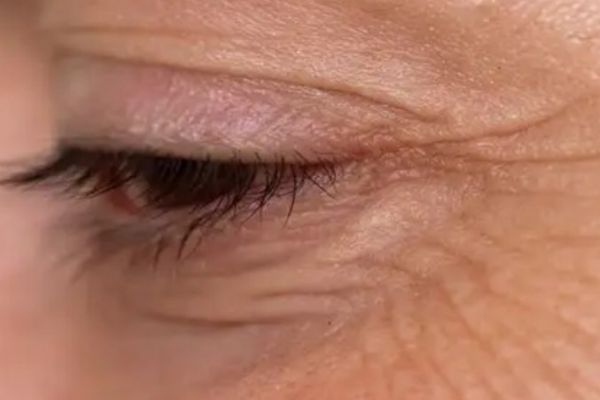
For decades, a surgical facelift was the only procedure that could deliver a genuine structural lift. If you wanted meaningful change, you accepted the operating table, general anesthesia, weeks of visible recovery, and the inherent risks of an invasive procedure. For patients with advanced laxity, surgery remains the gold standard.
But for the majority of professionals noticing early-to-moderate changes in their facial architecture, a surgical facelift is not proportionate to the problem. It is a significant procedure for a concern that may not yet require it. That mismatch has driven a genuine shift in how both practitioners and patients think about facial rejuvenation.
The Gap Between Surgery and Surface Treatments
The aesthetic industry responded to surgery’s limitations by developing a wide range of non-invasive surface treatments: laser resurfacing, radiofrequency skin tightening, focused ultrasound, and topical stimulants. These have genuine value for improving skin texture, tone, and surface quality. What they cannot do is address the structural loosening that occurs beneath the skin.
Skin laxity is not a surface problem. Jowling does not develop because the skin’s outer layer has changed. It develops because the deeper tissue architecture, the fibrous network and fat compartments beneath the dermis, has shifted and lost integrity. Treating only the surface of a structural problem produces surface results. That has always been the gap between what was available and what was actually needed.
The Endolaser Face Lift as the Sophisticated Third Path
The endolaser facelift occupies the space between those two options with clinical precision. It is not surgery, and it is not a skin treatment. It delivers laser energy directly beneath the skin’s surface through a micro-optical fiber, targeting the subdermal tissue where structural change actually begins. The result is measurable tissue contraction, genuine lifting, and the long-term stimulation of new collagen, without a scalpel, without general anesthesia, and without weeks of recovery.
For the professional who needs to be back at her desk within days rather than weeks, and who wants results that read as refreshed rather than worked on, this represents a meaningful advancement in what non-surgical aesthetics can achieve.
What Is an Endolaser Face Lift and How Does It Work
Defining the Procedure
The endolaser face lift, also known clinically as Endolift, is a minimally invasive laser procedure performed under local anesthesia. A hair-thin micro-optical fiber is introduced beneath the skin through a micro-entry point, and laser energy at the 1470 nm wavelength is delivered directly into the subdermal tissue. This triggers immediate contraction of the fibrous tissue and initiates a remodeling response that builds over the following weeks as new collagen is produced.
The distinction worth holding onto is the word “subdermal.” The treatment happens below the skin, not on it. That single variable changes the category of results that is possible.
How Endolaser Compares to Surgical Facelifts
A surgical facelift repositions tissue mechanically. Incisions are made, deeper structures are lifted and sutured, and excess skin is removed. The results can be dramatic and long-lasting. They can also be perceptible in ways that concern many patients: a pulled appearance, visible scarring, or a face that no longer reads as naturally their own.
Beyond aesthetics, surgery carries real logistical weight. General anesthesia introduces its own risk profile. Recovery is measured in weeks, not days. Bruising and swelling are expected for the first two to three weeks, with full result clarity taking months. For a professional whose life does not pause, that timeline is prohibitive.
It is also worth being direct about the limits of comparison. The endolaser facelift is not a surgical replacement for patients with significant, advanced laxity. If tissue has descended substantially or if skin excess requires physical removal, surgery remains the appropriate intervention. Endolaser’s value is clearest in the earlier stages, where the architecture is shifting but has not yet collapsed, where acting now prevents the need for a more significant intervention later.
How Endolaser Compares to Surface-Level Laser Treatments
Surface laser treatments work by delivering controlled energy to the skin’s outer layers, prompting cellular renewal, collagen stimulation at the dermal level, and improvements in pigmentation and texture. For the right indication, they are effective. But their reach is fundamentally limited by their depth.
Endolaser targets the tissue layer beneath the dermis, where the fibrous septae and fat compartments that give the face its structural shape reside. By working at this depth, the procedure addresses the mechanical cause of laxity rather than its surface expression. This is the distinction that separates meaningful lifting from surface refinement, and it is why patients who have had multiple rounds of surface treatments often find that nothing quite moved the needle on jowling or jawline definition until they addressed the deeper layer.
Is Endolaser Better Than a Traditional Facelift?
“Better” depends entirely on the clinical picture and the patient’s priorities. For early-to-moderate laxity where minimal downtime is a non-negotiable, an endolaser facelift is the more proportionate, lower-risk, and more immediately practical choice. For advanced structural descent, surgery may be the only option that achieves the required change. Both procedures serve real needs, and the right one is determined by an individual assessment rather than a general preference.
Treatment Comparison: Endolaser Face Lift vs. Surgical Facelift vs. Surface Laser Treatments
Use this matrix to orient yourself within the treatment landscape before your consultation.
Degree of Invasiveness
- Endolaser face lift: Minimally invasive. Micro-optical fiber is introduced under local anesthesia. No incisions, no general anesthesia.
- Surgical facelift: Highly invasive. Requires incisions, suturing, and general or deep sedation anesthesia.
- Surface laser treatments: Non-invasive. Energy is applied to the skin’s outer layers. No entry point required.
Recovery and Downtime
- Endolaser face lift: Mild swelling and redness for 48 to 72 hours. Most patients return to professional activities within two to four days.
- Surgical facelift: Two to four weeks of visible recovery. Full swelling resolution can take months.
- Surface laser treatments: Minimal to moderate downtime depending on intensity. Redness resolves within hours to a few days.
Depth of Structural Change
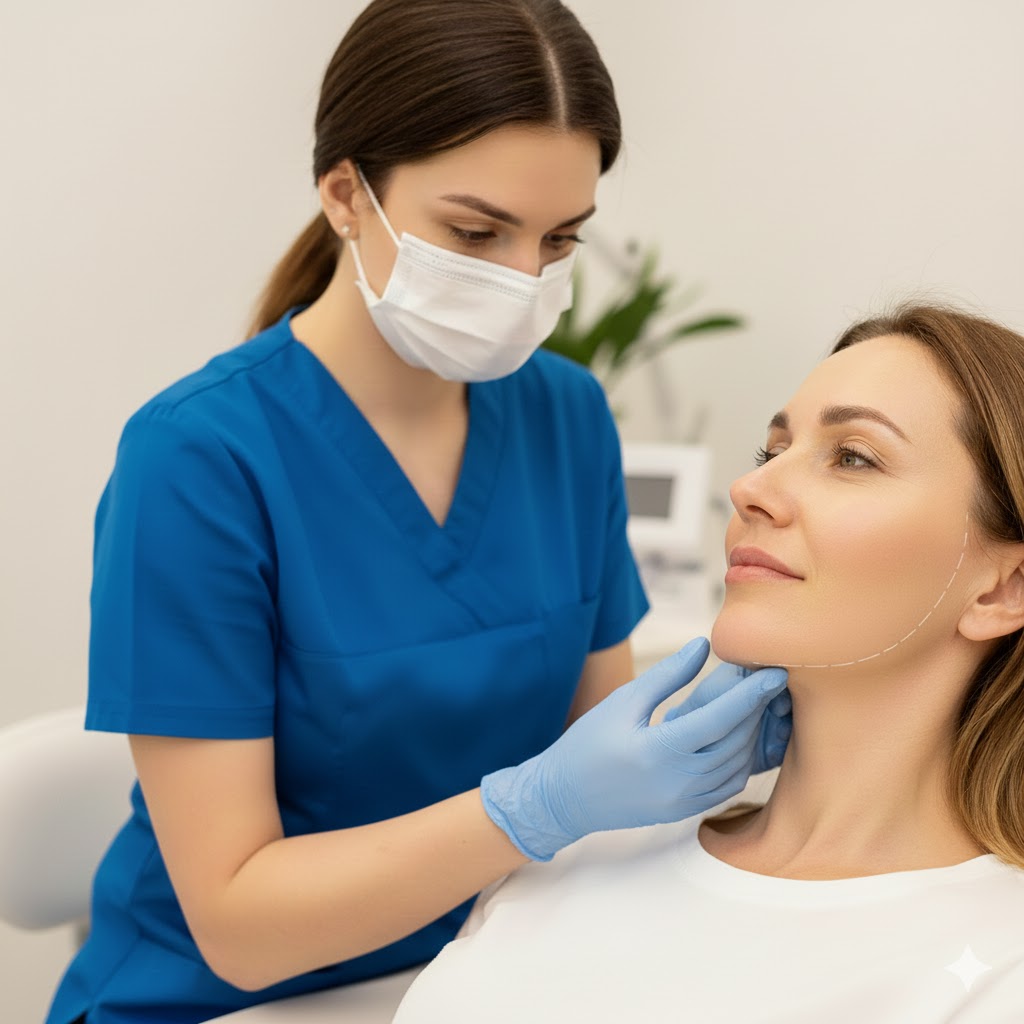
- Endolaser face lift: Subdermal. Targets fibrous tissue and fat compartments beneath the dermis. Addresses mechanical causes of laxity.
- Surgical facelift: Deep structural. Physically repositions tissue and removes excess skin. Maximum structural impact.
- Surface laser treatments: Dermal and epidermal. Improves skin quality, tone, and texture. Does not address deeper structural laxity.
Results Longevity
- Endolaser face lift: Results typically last two to four years, supported by the body’s ongoing collagen production. Maintenance sessions extend outcomes.
- Surgical facelift: Results last considerably longer on average, though aging continues.
- Surface laser treatments: Results last months to one to two years, depending on the modality. Regular maintenance is standard.
Suitability for Early-to-Moderate Laxity
- Endolaser face lift: Optimal. Designed precisely for this candidacy window. Delivers structural improvement before laxity advances.
- Surgical facelift: Disproportionate for mild-to-moderate laxity. Most appropriate for significant or advanced descent.
- Surface laser treatments: Partial. Addresses surface quality but not the underlying structural change driving laxity.
The clearest takeaway: if you are in the early-to-moderate laxity window and cannot accommodate weeks of recovery, the endolaser facelift is designed for exactly where you are right now.
How the Endolaser Technology Works Beneath the Skin
The Science of Subdermal Laser Delivery
Micro-Optical Fiber Placement and the 1470 nm Wavelength
The technical precision of an endolaser facelift begins before a single unit of energy is delivered. A hair-thin micro-optical fiber, finer than a standard sewing needle, is introduced beneath the skin through an entry point so small it requires no suture. From there, the practitioner guides the fiber through the subdermal tissue with controlled, deliberate movements, positioning the laser energy exactly where structural change is needed.
The 1470 nm wavelength is the clinically significant detail here. This wavelength has a high affinity for water and adipose tissue, meaning it is absorbed preferentially by the fat and fibrous components beneath the skin rather than dissipating broadly. That selectivity is what makes subdermal delivery precise rather than approximate. Energy reaches the intended tissue without significant impact to the skin surface above it.
Immediate Tissue Contraction
The first response to laser energy at this depth is thermal: fibrous tissue contracts immediately as it absorbs heat. This is not a theoretical change that develops over time. It is a mechanical effect observable during the procedure itself, as tissue tightens and redistributes in real time. Patients may perceive a sensation of firming as the treatment progresses, though the area is numbed with local anesthesia throughout.
This immediate contraction is one reason the endolaser face lift produces results that feel accelerated compared to surface-level energy treatments, where all improvements depend on the body’s slower biological response.
Long-Term Collagen Remodeling
The thermal stimulus also triggers the body’s wound-healing cascade, which includes the production of new collagen in the treated area. Over the weeks following treatment, fibroblasts lay down fresh collagen that progressively thickens and tightens the tissue architecture. The result is a gradual improvement in skin firmness and structural definition that continues building through the three-month mark and beyond.
The dual mechanism matters: immediate contraction delivers visible change, while collagen neogenesis deepens and extends that change over time.
Treatment Areas: Where Endolaser Delivers Structural Change
Jawline Definition and Jowl Reduction
The jawline is where the endolaser facelift tends to produce its most visually striking outcomes. Jowling occurs when the fibrous tissue anchoring the lower face loses integrity and soft tissue descends beyond the mandibular border. By delivering energy directly to this subdermal layer, the procedure contracts the tissue that has shifted and stimulates remodeling in the area where definition has been lost. The result is a cleaner, sharper jawline without surgically repositioning tissue.
Neck Tightening and Lower Face Contouring
The neck and submental area respond well to subdermal laser energy for the same structural reasons. Laxity in the neck, the early softening of the cervicomental angle, the subtle loss of crispness between chin and neck, is addressable at this depth in a way that topical or surface treatments cannot reach. Lower face contouring, including the marionette area and the transition between jaw and neck, falls within the same treatment corridor.
Cheeks and the Full Facial Architecture
Beyond the lower face, the mid-cheek region benefits from endolaser treatment when volume redistribution and early ptosis of the fat compartments have created a flattened or descended appearance. Skin laxity across the face more broadly is addressed throughout the treatment plan. Because the practitioner maps the fiber placement to each patient’s specific structural concerns, the procedure is tailored to the full facial architecture rather than applied as a fixed protocol.

Side Effects and Risks of Endolaser Treatment
The Safety Profile of a Minimally Invasive Procedure
The endolaser facelift sits well within the minimally invasive category by any clinical standard. Local anesthesia eliminates the risks associated with general anesthesia. The micro-entry points require no sutures and carry no significant scarring risk. Serious adverse events, such as infection, significant bruising, or thermal injury, are uncommon when the procedure is performed by a trained practitioner using appropriate protocols. As with any procedure involving tissue heating, the skill and experience of the operator are meaningful variables in the safety and quality of the outcome.
What Mild Post-Treatment Effects Look Like
Most patients experience mild swelling, redness, and tenderness in the treated areas for the 48 to 72 hours following treatment. Some bruising is possible, particularly in areas where the fiber navigates close to superficial vasculature. Firmness or a slightly uneven texture in the treated tissue is normal during the first one to two weeks as the remodeling process begins. These are expected biological responses, not complications. By the end of the first week, most patients are presentable for professional settings, and the temporary effects have typically resolved.
Who Is the Ideal Candidate for an Endolaser Face Lift
Early-to-Moderate Laxity as the Optimal Window
The endolaser facelift performs most effectively in patients who are addressing laxity before it has significantly advanced. This is not a limitation to apologize for — it is the procedure’s most clinically intelligent quality. Catching structural change early means the tissue still has sufficient integrity to contract and remodel meaningfully. Waiting until laxity has progressed substantially reduces what any non-surgical intervention can achieve and increases the likelihood that surgery becomes the more appropriate option.
The practical signs that suggest you are in this window: a jawline that has softened but not yet sagged noticeably below the mandible, early jowling that bothers you in photographs or on video calls, skin that feels looser but has not yet gathered or folded. These are structural signals, and they represent the optimal moment to act.
Candidacy Beyond Skin Type and Age
What a Thorough Assessment Evaluates
Age is a useful starting point, but it is not the determining criterion. The assessment that matters evaluates the actual condition of the subdermal tissue, the degree and distribution of laxity, skin quality and thickness, and the specific anatomy of the lower face and neck. Patients with good baseline skin quality tend to see more pronounced results because the skin itself can respond to the new structural support beneath it. Patients with very thin or significantly photo-damaged skin may see more modest outcomes.
A thorough consultation also considers the patient’s aesthetic goals and their realistic alignment with what the procedure delivers. This is where an honest, personalized treatment plan is built.
When Endolaser Is the Right Fit — and When It Is Not
Endolaser is the right fit when there is meaningful structural laxity to address, sufficient skin quality to support a strong response, and a preference for minimal downtime and a natural-looking outcome. It is not the right fit for patients with significant skin excess that would need to be physically removed, or for those with advanced ptosis where surgical repositioning is the only intervention capable of achieving the required change. An experienced practitioner will tell you which category applies to you, and that honesty is itself a sign of clinical integrity.
Who Benefits Most and Why
The patients who see the most transformative results are typically those who act while the structural shift is still early. This is partly biological: more responsive tissue remodels more robustly. It is also strategic. Addressing laxity at an earlier stage means a more proportionate intervention, a faster recovery, and a result that reads as natural maintenance rather than visible correction.
The professional who treats her facial structure the way she treats her health — proactively, with attention to early signals rather than crisis response — consistently achieves better long-term outcomes than the patient who waits until the concern has become conspicuous.
Addressing the Fear of Looking Overdone
The fear of looking “done” is legitimate, and it deserves a direct answer. The endolaser facelift works by contracting and remodeling your own tissue. It does not add volume, reposition structures dramatically, or alter the fundamental character of your face. The outcome is a version of your own facial architecture that has been structurally reinforced, not redesigned.
“Subtle” in aesthetic medicine is often used as a hedge. Here it describes something specific: an outcome where the improvement is visible but the mechanism is not. Colleagues notice that you look well-rested, or that something about your appearance has sharpened, without identifying that you have had a procedure. For the professional who needs to maintain credibility in rooms full of perceptive people, that is arguably the most important result the treatment delivers.
What to Expect Before, During, and After Your Treatment
The Consultation and Personalized Assessment
The consultation is where clinical decision-making begins. A practitioner experienced in endolaser facial rejuvenation will assess the distribution and degree of your laxity, evaluate your skin quality, discuss your aesthetic priorities, and map a treatment plan that addresses your specific structural concerns. This is a diagnostic conversation, not a sales one. The quality of your outcome depends significantly on the quality of the planning that precedes it.
You should leave the consultation with a clear picture of which areas will be treated, what to expect during recovery, and a realistic sense of the results timeline.
The Treatment Experience
A full endolaser face lift session typically takes 60 to 90 minutes, depending on the number of areas treated. Local anesthesia is applied first, and most patients describe the treatment itself as producing mild pressure or warmth rather than pain. The practitioner introduces the micro-optical fiber through small entry points, usually positioned discreetly within the hairline or natural facial contours, and guides it through the subdermal tissue in the planned treatment zones.
Most patients are surprised by how straightforward the experience is. There is no operating theatre, no sedation, and no prolonged procedure time. Many describe it as less uncomfortable than a dental appointment.
Real-World Recovery for Busy Professionals
The First 48 to 72 Hours
The 48 hours following treatment are the most noticeable part of the recovery. Expect mild-to-moderate swelling in the treated areas, possible redness at the entry points, and some tenderness when touching the skin. Sleeping with your head slightly elevated helps reduce swelling. Strenuous activity, alcohol, and heat exposure should be avoided during this window. The entry points are small enough that they do not require dressing, and most patients manage this phase comfortably at home.
Returning to Professional Life
By day three to four, most patients are presentable for professional contexts. Residual swelling may be perceptible to you in the mirror but is rarely noticeable to others. Video calls are manageable by the end of the first week for most patients. Physical meetings in professional settings are typically fine within four to five days, particularly with light makeup coverage over any residual redness. The return-to-work timeline is consistently one of the most positively remarked-upon aspects of this procedure among professional patients.

Before-and-After Results and How Natural They Look
Before-and-after photography at the three-month mark consistently shows improved jawline definition, reduced jowling, and a firmer, more lifted lower face. The quality of the change is structural — not a surface improvement in texture or pigment, but a visible shift in how the face sits. Because the results reflect the patient’s own tissue remodeling rather than a foreign intervention, the outcome reads as a natural improvement rather than an obvious treatment.
Results Timeline: When You Will See Change
The Immediate Post-Treatment Phase
Some tightening is perceptible immediately after treatment, even accounting for initial swelling. Once the swelling resolves, typically within one to two weeks, an early result becomes visible. This phase reflects the immediate tissue contraction achieved during the procedure rather than the longer collagen-building response that follows.
The Collagen Neogenesis Window: Weeks Four Through Twelve
The most significant improvement accumulates between weeks four and twelve, as newly produced collagen matures and integrates into the treated tissue. This is when patients typically report that others are noticing the change, that their jawline looks sharper in photographs, and that the result has moved beyond “refreshed” into genuinely structural. The full result is best assessed at the three-month mark, and in most cases, improvement continues to consolidate through month four.
How Long Do Endolaser Results Last
Results from a single endolaser face lift session typically last two to four years, supported by the collagen produced during the remodeling phase. Individual longevity depends on the patient’s baseline skin quality, the rate of ongoing aging, and lifestyle factors, including sun exposure and skin care maintenance.
Most patients choose a maintenance session every two to three years to preserve the result rather than allowing laxity to re-establish. Some practitioners recommend complementary surface treatments in the intervening period to support skin quality and extend the structural benefit. The approach that serves you best is built around your specific anatomy and aging pattern, which is precisely why the treatment plan is personal rather than prescriptive.
How Endolaser Compares to Other Non-Surgical Lifting Options
Understanding the Non-Surgical Landscape
Three energy modalities currently dominate the non-surgical lifting conversation: laser, radiofrequency, and focused ultrasound. Each works through a different physical mechanism, reaches a different tissue depth, and produces a different quality of result. Understanding the distinction matters because the treatment landscape is crowded with options that sound similar but are not interchangeable. Choosing the wrong modality for your specific concern is a common reason patients feel underwhelmed by non-surgical aesthetics.
Laser vs. Radiofrequency vs. Ultrasound: A Principled Comparison
Depth of Tissue Targeting and Structural Impact
Focused ultrasound devices, the category most associated with non-surgical brow and lower face lifting, deliver energy to the superficial muscular aponeurotic system (SMAS), the same layer addressed in surgical facelifts. The depth is real, and the structural intent is credible. The limitation is the delivery method: energy passes through all the tissue layers above before reaching its target, and the precision of that delivery depends heavily on the device’s transducer technology and operator placement.
Radiofrequency devices heat the dermis and subdermal layer through electrical resistance. Monopolar and bipolar variants differ in their depth of penetration, but the mechanism is thermal stimulation of collagen at the dermal level. Some devices use microneedling to carry radiofrequency energy deeper, which narrows the gap somewhat. The result is predominantly skin tightening rather than structural lifting.
The endolaser facelift bypasses the question of delivery precision entirely by placing the energy source directly at the target tissue. The micro-optical fiber sits within the subdermal layer, not above it. That changes the nature of the result from approximation to accuracy.
Comfort Profile and Practical Differences
Focused ultrasound treatments have a well-documented comfort challenge. The delivery of energy at depth through intact skin produces significant transient discomfort in many patients, and managing that experience requires topical anesthesia, oral analgesia, or patient tolerance. Results are gradual and entirely dependent on biological response, with no immediate structural effect.
Radiofrequency treatments sit on a spectrum from virtually painless microneedling RF to intensely heated monopolar sessions. Most are manageable with topical anesthesia and carry minimal downtime. Their strength is convenience; their constraint is structural depth.
Endolaser treatment uses local anesthesia, which means the session itself is comfortable throughout. The entry points are small, the procedure is completed in 60 to 90 minutes, and the recovery follows the profile already discussed. For a patient comparing practical experience, it sits closer to a medical procedure than a spa treatment, in a way that is proportionate to the result it delivers.
Choosing the Right Modality
The honest comparison is that each modality has a legitimate place. The endolaser face lift’s specific advantage is the combination of subdermal access, immediate tissue contraction, and a recovery profile that suits a working professional’s schedule. Focused ultrasound devices can reach significant depth, but without the precision of direct fiber placement. Radiofrequency devices excel at laser skin tightening and are well-suited as complementary treatments. Neither produces the direct mechanical contraction of subdermal fibrous tissue that endolaser delivers.
The practical implication: if jawline definition and jowl reduction are the primary concern, endolaser addresses the structural cause. If skin quality, texture, or fine surface tightening is the goal, radiofrequency or resurfacing lasers are the more appropriate tools, and they pair well with endolaser in a combined treatment plan.
A practitioner who recommends the same modality to every patient with facial laxity is not practicing personalized medicine. The clearest signal of a competent consultation is an honest assessment of which tool best addresses your specific anatomy, which sometimes means recommending a combination, and occasionally means recommending an alternative entirely.
Why Personalized Treatment Planning Makes All the Difference
The Limits of a One-Size-Fits-All Approach
Facial aging is not uniform. Two patients of the same age, same skin type, and similar degrees of visible laxity can have meaningfully different subdermal anatomy, different rates of collagen decline, and different structural priorities. A protocol designed for the average patient serves no specific patient particularly well. The gap between a standard treatment and a tailored one is not a premium detail — it is the difference between a result that looks like you and one that does not.
What a Truly Tailored Endolaser Plan Involves at MEDSPA MD Group
At MEDSPA MD Group, the treatment plan begins with a detailed structural assessment rather than a product recommendation. The practitioner evaluates the specific distribution of your laxity, the quality and thickness of your skin, the areas where contraction will deliver the most visible improvement, and the treatment sequence that addresses your priorities in the right order. Fiber placement is mapped to your anatomy, not a standard diagram. The session is built around what you need, not what fits a fixed menu.
Building Your Long-Term Facial Rejuvenation Strategy
How Endolaser Fits Into an Ongoing Anti-Aging Plan
A single endolaser face lift session is not the entirety of a long-term strategy — it is its most structurally significant component. The procedure addresses the foundation, but the years surrounding it benefit from deliberate maintenance. Thinking about facial rejuvenation across a multi-year horizon shifts the conversation from reactive correction to proactive preservation, which consistently produces better outcomes.

Maintenance Intervals and Complementary Treatments
Most patients plan a maintenance endolaser session every two to three years. In the intervening period, the structural result is supported by surface-level treatments: radiofrequency microneedling to maintain skin quality, medical-grade skin care to support collagen, and judicious use of injectables if volume loss develops alongside structural change. Aging continues after every procedure, and the patients who maintain their results most elegantly are those who plan for that continuity rather than treating each intervention as a one-time fix.
An Illustrative Scenario for the Proactive Professional
Consider a 47-year-old marketing director who has noticed her jawline softening over the past two years. She looks well in the morning but sees the early jowl in video call thumbnails by afternoon. She has tried a premium skin care regimen and one round of surface laser — both improved her skin quality, but neither moved the structural concern. And she has a board presentation in six weeks and cannot take more than a long weekend away from client visibility.
An endolaser facelift, planned now, would give her a four-day recovery window before she needs to be camera-ready. By week three, the early result is visible. By her six-week presentation, her jawline is noticeably sharper. The change reads as a refreshed, composed version of herself, not a procedure. She leaves the consultation with a maintenance plan that keeps her ahead of the curve rather than chasing it.
This is the use case the procedure was built for.
Is an Endolaser Face Lift Right for You Right Now?
You are likely in the right window if you are noticing early jowling, a softened jawline, or skin that feels looser than it used to — but your laxity has not significantly advanced. If downtime of more than a few days is not practical, and if looking natural matters as much as looking lifted, endolaser delivers on both.
If you are unsure whether you are in the right candidacy window, the most useful next step is a personalized assessment. Book a consultation at MEDSPA MD Group to have your specific anatomy evaluated and a treatment plan built around your goals, your timeline, and the result you are actually looking for.
Conclusion: The Clearest Path to a Lifted, Refreshed Result Without Compromise
What the Endolaser Face Lift Offers
The endolaser facelift addresses the gap that has existed for years between surgery’s invasiveness and surface treatments’ structural limits. By delivering laser energy directly to the tissue layer where laxity originates, it addresses the cause rather than the symptom, and does so with a precision and recovery profile that was not possible with older technologies. The subdermal mechanism, the dual-phase result, the candidacy criteria, and the recovery timeline are now a framework for making an informed decision about your own face.
The MEDSPA MD Group Difference: Expertise, Personalization, and Advanced Technology
Results from any energy-based procedure are only as good as the practitioner delivering them. At MEDSPA MD Group, the endolaser face lift is performed by practitioners who understand both the technology and the anatomy it is designed to address. Treatment planning is specific to your face, your goals, and your life. The standard of care is one that takes your time, your appearance, and your trust seriously.
Your Next Step: Book Your Personalized Endolaser Consultation
The consultation is where the general becomes specific — where the framework described in this article becomes a plan that applies to you. Book your personalized endolaser consultation at MEDSPA MD Group and leave with a clear, honest assessment of what the procedure can deliver for your anatomy, your timeline, and the version of yourself you want to project.
Frequently Asked Questions
Most patients experience mild swelling and redness for the first 48 to 72 hours following treatment. By day three to four, the majority are presentable in professional settings, and video calls are typically manageable by the end of the first week. With light makeup coverage, most patients return to client-facing work within four to five days, making it one of the most practically accommodating procedures in this treatment category.
Before-and-after photography at the three-month mark typically shows improved jawline definition, reduced jowling, and a firmer, more lifted lower face. Because the results reflect your own tissue remodeling rather than an added volume or foreign intervention, the outcome reads as a natural improvement — colleagues tend to notice that you look well-rested or polished rather than identifying a specific procedure.
Results from a single endolaser face lift session typically last two to four years, supported by the collagen produced during the remodeling phase. Individual longevity varies based on skin quality, lifestyle factors, and the natural rate of aging. Most patients choose a maintenance session every two to three years to preserve their results, ideally supported by complementary surface treatments and medical-grade skin care in the intervening period.
The honest answer is that it depends on your clinical picture. For early-to-moderate laxity where minimal downtime is a priority and a natural-looking outcome matters, the endolaser facelift is the more proportionate, lower-risk choice. For significant structural descent or substantial skin excess, surgery may be the only intervention capable of delivering the required change. A thorough consultation will tell you which option is genuinely appropriate for your anatomy.
The most common post-treatment effects are mild swelling, redness, and tenderness in the treated areas, resolving within 48 to 72 hours. Some bruising is possible. Firmness or slight unevenness in the treated tissue is normal during the first one to two weeks of remodeling. Serious adverse events such as infection or thermal injury are uncommon when the procedure is performed by a trained and experienced practitioner. The absence of general anesthesia significantly reduces the systemic risk profile compared to surgical alternatives.
Focused ultrasound devices such as Ultherapy target depth, but energy must travel through overlying tissue layers before reaching its target, which can limit precision and comfort. Radiofrequency treatments excel at skin tightening at the dermal level but do not deliver the direct mechanical contraction of subdermal fibrous tissue. The endolaser face lift places the energy source directly within the subdermal layer via a micro-optical fiber, producing immediate tissue contraction alongside longer-term collagen remodeling — a combination that surface-delivered modalities cannot replicate. Each technology has genuine value, and the right choice depends on your specific structural concern.