Table of Contents
- Reframing the Decision: From “Should I Do This?” to “How Do I Do This Right?”
- What Are Liquid BBL Injections and How Do They Actually Work?
- Sculptra vs. Radiesse vs. Other Injectables: Matching the Right Filler to Your Body and Goals
- How Long Do Liquid BBL Results Last? A Realistic, Product-Specific Timeline
- Who Is — and Who Is Not — a Good Candidate for Liquid BBL Injections?
- Combination Treatments: How a Multi-Modality Approach Unlocks Superior Results
- What to Expect During and After Your Liquid BBL: Recovery, Post-Care, and Return to Life
- How to Evaluate a Non-Surgical Butt Lift Provider Near You: What Clinical Depth Actually Looks Like
- How Much Do Liquid BBL Injections Cost Near You? Value, Range, and What You Are Really Buying
- Conclusion: Your Next Step Toward Natural, Lasting Results With MEDSPA MD Group
- Frequently Asked Questions
Reframing the Decision: From “Should I Do This?” to “How Do I Do This Right?”
The aesthetic industry is excellent at selling confidence and poor at supplying the clinical detail that earns it. Before-and-after galleries are curated. Testimonials are selective. Neither tells you whether the approach used on someone else’s body will produce the right result on yours.
For a broader introduction to the treatment, see our overview of liquid bbl injections and how they work.
The decision shift that separates satisfied clients from disappointed ones is straightforward: stop asking whether a liquid BBL is worth it in the abstract, and start asking how to do it correctly for your specific anatomy, your timeline, and your definition of a natural result.
The Thesis in Plain Terms: One Product Does Not Fit Every Body
Two people can walk into a medspa with the same goal — fuller, lifted, more defined contours — and need completely different injectables, different treatment schedules, and different complementary modalities to get there. A provider who reaches for the same product regardless of who is sitting in the chair is not delivering personalized medicine. They are delivering a commodity service with personalized marketing.
The providers who consistently produce the best outcomes treat product selection as a clinical decision, not a default.
What Are Liquid BBL Injections and How Do They Actually Work?
Defining the Liquid BBL: Injectable Contouring vs. Surgical Brazilian Butt Lift
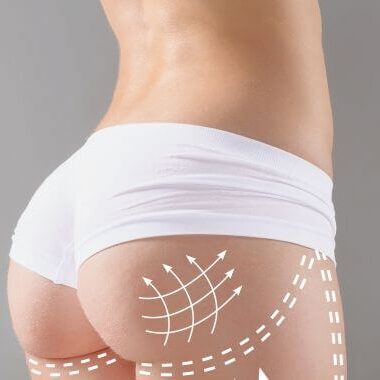
A liquid BBL is not a surgical procedure. It does not involve liposuction, fat transfer, or anesthesia. The term describes a non-surgical approach to buttock enhancement using injectable biostimulators or fillers to add volume, improve shape, and lift contour through a series of in-office treatment sessions.
The surgical Brazilian butt lift transplants your own fat from other areas into the buttocks. The liquid version uses manufactured injectable compounds to build volume from the outside in, without the surgical risks, the recovery period, or the dramatic volume shifts that surgery enables.
The Mechanism Behind the Method: Volume, Lift, and Collagen Stimulation Explained
Depending on the product used, injectable body contouring works through one of two mechanisms — or both simultaneously.
The first is direct volumization: the injectable material occupies physical space beneath the skin, creating immediate lift and shape. The second is biostimulation: the injected compound triggers your body’s own collagen-producing cells to generate new structural tissue over weeks and months. The most clinically effective products for buttock enhancement work through biostimulation, which means the best results develop gradually and last significantly longer than traditional hyaluronic acid fillers.
Is There Really a Liquid BBL? Separating Clinical Reality from Marketing Hype
Yes — with an honest caveat about scale. Biostimulatory injectables can meaningfully enhance contour, add volume, improve skin quality, and create lift in the buttock area. Practitioners use them successfully every day for patients with realistic expectations.
What they cannot do is replicate the dramatic volume increase of a surgical fat transfer. The liquid BBL is a precision enhancement tool, not a full transformation surgery. Patients who understand that distinction before their consultation are the ones who leave genuinely satisfied with their results.
How Injectable Body Contouring Differs From Facial Filler Techniques
Injecting the buttocks requires a fundamentally different skill set than facial work. The tissue planes are deeper, the product volumes are larger (often 10 to 20 vials per session compared to 1 to 2 for facial treatments), and the vascular anatomy demands a precise understanding of safe injection zones to avoid serious complications.
This is why provider expertise matters more for body contouring than almost any other injectable service. The technical demands of the treatment are not comparable to a standard lip or cheek filler appointment.
Sculptra vs. Radiesse vs. Other Injectables: Matching the Right Filler to Your Body and Goals
Understanding the Two Primary Biostimulators for Buttock Enhancement
Two products dominate evidence-based, non-surgical buttock enhancement: Sculptra and Radiesse. Both are biostimulators, but they work through different mechanisms, produce results on different timelines, and suit different patient profiles. Understanding the distinction between them is the single most important piece of clinical knowledge a prospective patient can have before booking a consultation.
Sculptra (Poly-L-Lactic Acid): Gradual Volume, Collagen Rebuilding, and Skin Quality
Sculptra is composed of poly-L-lactic acid, a biocompatible, biodegradable synthetic polymer that has been used in medicine for decades. When injected into the subdermal tissue of the buttocks, it stimulates fibroblast activity and promotes new collagen production over a period of months.
The result is gradual, natural-looking volumization that builds incrementally across multiple treatment sessions. Most patients require three to five sessions spaced four to six weeks apart to achieve their target outcome. The trade-off for that slow build is meaningful longevity: results from Sculptra buttock injections typically last two or more years, and some patients retain noticeable improvement well beyond that window. The treatment also improves the texture and quality of overlying skin, which adds meaningfully to the naturalness of the final result.
Radiesse (Calcium Hydroxylapatite): Immediate Structural Contouring With Sustained Stimulation
Radiesse is composed of calcium hydroxylapatite microspheres suspended in an aqueous gel carrier. It delivers two distinct phases of effect. On injection day, the gel carrier provides immediate volumization and structural lift. Over the following months, the microspheres stimulate collagen and elastin production before gradually resorbing.
For patients who want visible improvement sooner, or who need contour correction and definition rather than broad volume, Radiesse often delivers more immediate, architecturally precise results. Longevity typically ranges from 12 to 18 months.
Hyaluronic Acid Fillers: Why They Are Rarely the Right Choice for This Area
Hyaluronic acid fillers are the workhorses of facial aesthetics, but they are poorly suited to buttock enhancement for most patients. The area requires large product volumes to produce visible change, and hyaluronic acid fillers used at that scale carry a higher risk of migration, irregularity, and cost inefficiency. Their longevity in high-movement body areas is also significantly shorter than in the face.
Most experienced body contouring specialists reserve hyaluronic acid fillers for very specific, localized corrections rather than using them as a primary buttock enhancement strategy.
What Is the Difference Between Sculptra and Radiesse for Buttock Enhancement?
The core difference is timing and mechanism priority. Sculptra is a pure biostimulator — all of its volume benefit comes from the collagen it triggers your body to produce. Radiesse combines immediate volumization with biostimulation, making it a dual-phase product. Sculptra is the better choice for patients building gradual, diffuse volume and improving skin quality over time. Radiesse is better suited to patients who want structural lift or more immediate visible improvement alongside longer-term collagen benefit.
In practice, experienced providers sometimes use both products within a single treatment plan, applying each where it performs best within the same patient’s anatomy.
Clinical Decision Framework: Which Injectable Suits Which Body Type and Goal
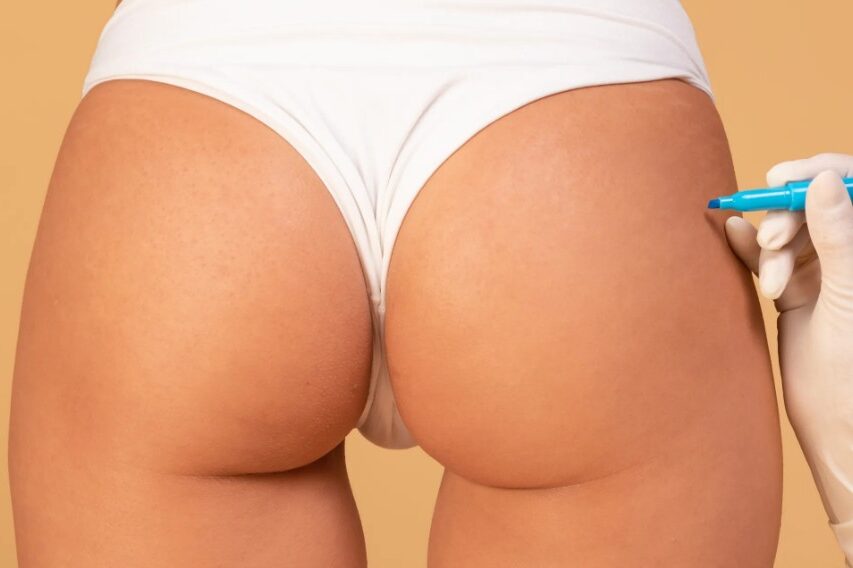
The right product depends on four intersecting variables: current tissue volume, skin quality, desired outcome timeline, and total volume goal.
- Patients with good baseline volume but poor skin quality or mild laxity benefit most from Sculptra’s collagen-rebuilding properties.
- Patients with low baseline volume who want structural lift and contour definition are often better served by Radiesse, either alone or in combination.
- Patients with moderate volume loss and a longer timeline to their goal event may find Sculptra’s gradual approach produces the most natural final result.
- Patients who need meaningful, visible improvement before a specific date should discuss whether Radiesse’s immediate phase aligns with their schedule.
No product selection should happen without a thorough consultation that evaluates all of these factors together.
Filler Comparison: Sculptra vs. Radiesse for Buttock Enhancement
| Factor | Sculptra (Poly-L-Lactic Acid) | Radiesse (Calcium Hydroxylapatite) |
|---|---|---|
| Primary mechanism | Pure biostimulation, triggers collagen production | Dual-phase: immediate gel volume plus collagen stimulation |
| Onset of visible results | Gradual over 3 to 6 months across multiple sessions | Visible improvement begins on treatment day |
| Full result timeline | 6 to 12 months after final session | 4 to 8 weeks post-treatment |
| Longevity | 2-plus years, some patients beyond | 12 to 18 months |
| Ideal candidate profile | Patients building gradual, natural volume and improving skin texture | Patients wanting structural lift, contour definition, or earlier visible results |
| Treatment cadence | 3 to 5 sessions, 4 to 6 weeks apart | 1 to 3 sessions depending on volume goals |
| Skin quality benefit | Strong — improves texture and laxity alongside volume | Moderate — collagen and elastin stimulation improves quality over time |
| Best used when | Timeline is flexible and gradual enhancement is preferred | Results are needed sooner or structural correction is the primary goal |
The practical takeaway: these products are not competitors. They are different tools for different clinical scenarios. A provider who offers only one of them is, by definition, working with a limited toolkit.
How Long Do Liquid BBL Results Last? A Realistic, Product-Specific Timeline
Sculptra Results: Why the Gradual Approach Pays Off Over Two-Plus Years
Sculptra’s longevity is its defining clinical advantage, but understanding it requires reframing what “results” means. You are not waiting for a product to settle. You are waiting for your own collagen to build. That process takes time, and the payoff compounds.
Most patients notice subtle improvement around weeks six to eight after their first session. By the three-to-four month mark, volume becomes visibly meaningful. Full results, representing the complete collagen response across all sessions, typically mature between six and twelve months after the final treatment. What you have at that point is structural tissue your body produced, not an injected material slowly disappearing. That distinction explains why Sculptra results routinely last two years or more.
The gradual nature is not a limitation to tolerate. For a professional who cannot afford to look dramatically different overnight, it is precisely the right timeline.
Radiesse Results: What to Expect at 30, 90, and 365 Days
Radiesse operates on a shorter, more visible arc. At 30 days, the gel carrier has provided immediate lift and the initial tissue response is settling into shape. Mild swelling resolves, and the structural contour becomes clearer. By 90 days, the calcium hydroxylapatite microspheres are actively stimulating collagen and elastin, and many patients see their best-looking result in this window — immediate volume and early biostimulation working together.
At 365 days, the gel has fully resorbed and the result reflects the collagen your body generated. Most patients retain meaningful improvement at the one-year mark, though some begin planning a maintenance session around 12 to 18 months depending on their goals and how their tissue responds over time.
How Many Sessions Are Standard and What Does a Realistic Treatment Cadence Look Like?
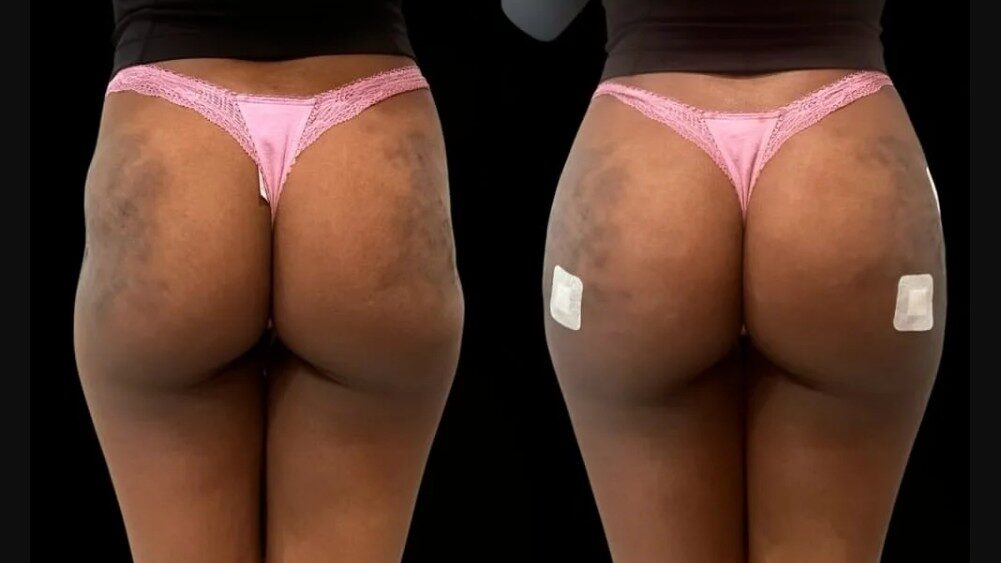
Sculptra typically requires three to five sessions spaced four to six weeks apart. Radiesse often achieves the target outcome in one to three sessions. These are guidelines, not fixed rules. The right number depends on your baseline tissue volume, your total volume goal, and how your body responds after each session.
A well-designed treatment plan builds toward a result progressively, with each session informed by what the previous one produced. Providers who quote a fixed session count before evaluating your anatomy are guessing, not planning.
The Real Cost-Per-Year When You Factor in Longevity vs. Surgical Alternatives
The upfront cost of a full Sculptra series is higher than a single session of most facial injectables. Measured against surgical alternatives, however, the math shifts considerably. Surgical BBL involves surgeon fees, anesthesia, facility costs, post-operative garments, and the real economic cost of two to four weeks of restricted activity and recovery. A full Sculptra treatment plan, amortized over two-plus years of results, typically represents a fraction of that total investment — with zero surgical risk and no recovery.
Radiesse offers a lower per-session entry point with a shorter longevity window, making it a strong option for patients who want to evaluate their response before committing to a longer program, or who prefer planning maintenance sessions annually.
Touch-Up Sessions and Long-Term Maintenance: Planning for Your Lifestyle
Most patients treat their initial series as a foundation and schedule maintenance sessions to preserve the result as their body’s collagen naturally turns over. For Sculptra, one to two maintenance vials annually is often sufficient once the initial program is complete. For Radiesse, a refresh at 12 to 18 months keeps results consistent.
The practical advantage for a busy professional is that maintenance sessions are significantly shorter and less intensive than the original series. Building them into an annual aesthetic plan — the same way you schedule other wellness investments — removes the friction of starting over.
Who Is — and Who Is Not — a Good Candidate for Liquid BBL Injections?
The Ideal Candidate Profile: Body Type, Goals, and Lifestyle Alignment
The strongest candidates for liquid BBL injections are patients who want meaningful enhancement of shape, lift, and volume, but do not require the dramatic transformation that only surgical fat transfer can deliver. Specifically, patients who respond best tend to share several characteristics:
- Moderate baseline tissue volume with some natural contour to build on
- Realistic goals oriented toward enhancement, not reconstruction
- Skin with reasonable elasticity, as laxity can be addressed but severe looseness limits the achievable result
- A lifestyle that accommodates a phased treatment schedule and brief post-session restrictions
- A preference for gradual, natural-looking change over a single dramatic shift
Body type matters in a practical sense. Patients with very low body fat have less tissue for the product to integrate with and may find that visible improvement requires more product than anticipated. Patients with higher baseline volume often see more proportional enhancement from the same treatment.
Will Liquid BBL Give You the Same Results as Surgical BBL? An Honest Comparison
No — and providers who imply otherwise are not serving their patients well. A surgical BBL can transfer significant volumes of fat in a single procedure. A full liquid BBL series adds meaningful volume, but operates within a different range. The distinction is not a failure of the injectable approach. It is simply the honest scope of what each method accomplishes.
What a liquid BBL delivers that surgery does not: no anesthesia risk, no compression garment recovery, no activity restriction measured in weeks, and no donor-site scarring. For patients whose goals align with what injectables can achieve, it is not a compromise. It is the right tool for the job.
Contraindications and Who Should Not Pursue This Treatment
Active Skin Infection, Pregnancy, Breastfeeding, and Autoimmune Conditions
Any active infection in or near the treatment area is an absolute contraindication. Injecting into compromised tissue increases infection risk and unpredictably affects product behavior. Pregnancy and breastfeeding are also disqualifying — not because of documented harm, but because neither biostimulator has established safety data in those populations, and any elective aesthetic treatment should wait. Patients with active autoimmune conditions or those on immunosuppressive therapy require careful evaluation, as the inflammatory response that drives biostimulation may be altered in ways that affect both safety and outcome.
Very Low BMI and Unrealistic Volume Expectations
Patients with minimal subcutaneous tissue present a genuine clinical challenge. Biostimulators work within the tissue architecture that exists — they amplify and build on it, not replace it. A patient with very little baseline volume who expects surgical-scale results will be disappointed, and an honest provider communicates that clearly before proceeding.
When Surgical BBL Is the More Appropriate Recommendation
If a patient’s goal requires significant volume increase that injectables cannot deliver across a reasonable treatment course, the most ethical recommendation is a surgical consultation. A skilled provider prioritizes the right outcome for the patient over the revenue from a treatment that will underdeliver. This willingness to redirect is one of the most reliable signals of genuine clinical integrity.
Can Liquid BBL Results Look Natural, or Will They Always Appear Overdone?
Results look natural when product selection, volume, and placement are matched to the patient’s existing anatomy. Overdone results almost always trace back to one of three errors: too much product in a single session, the wrong product for the body type, or an injector who lacks the anatomical precision to place product where it integrates best.
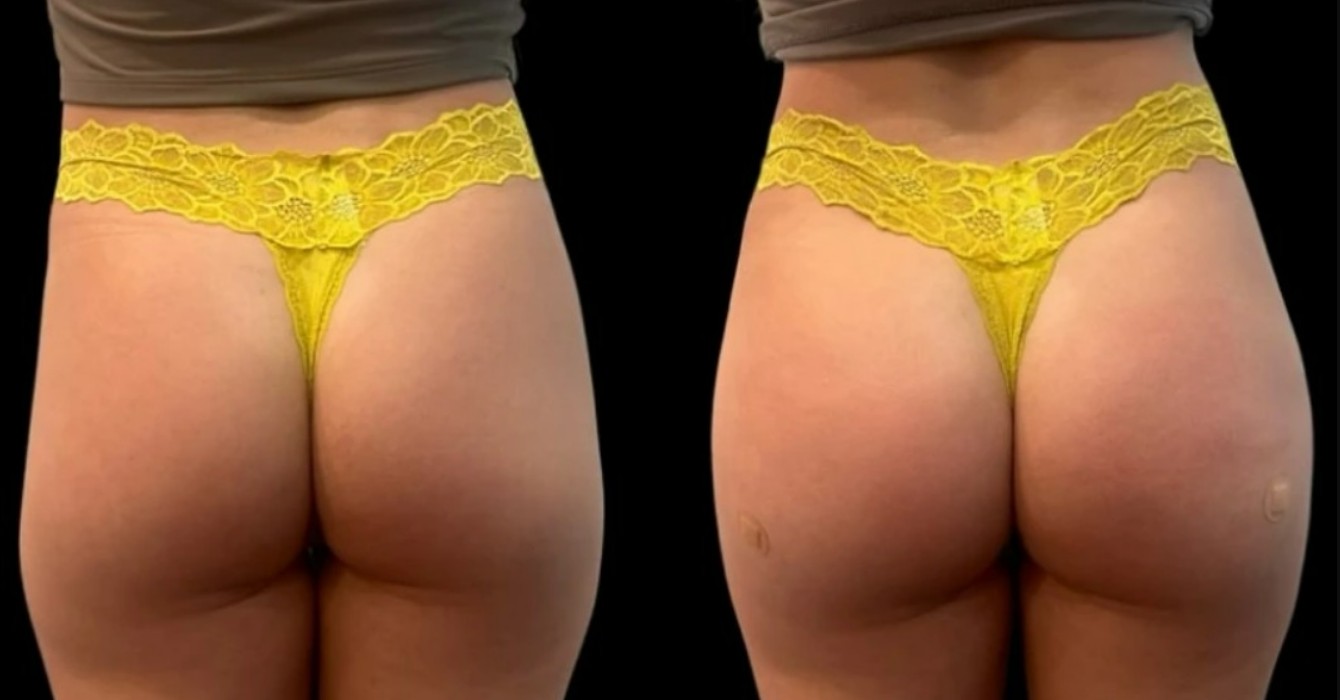
With biostimulators specifically, the gradual build works in favor of naturalness. Because volume develops over months rather than appearing overnight, there is no sudden visual discontinuity. Patients simply look progressively better — which is exactly how the best aesthetic results should register.
Combination Treatments: How a Multi-Modality Approach Unlocks Superior Results
Why Single-Product Clinics Miss the Full Picture of Body Transformation
Volume alone does not produce the result most patients are actually after. The mental image clients bring to a consultation — lifted, defined, proportionate contour — typically involves volume, muscle tone, skin quality, and surface texture working together. A single injectable addresses one of those variables. A thoughtfully designed multi-modality plan addresses all of them.
Clinics that offer only one product or one treatment category are not making a clinical recommendation. They are working within the constraint of what they stock. The most sophisticated body transformation outcomes come from providers who can evaluate the full picture and deploy the right combination of tools.
Liquid BBL Plus Emsculpt Neo: Volume Enhancement and Muscle Definition Together
Emsculpt Neo uses high-intensity focused electromagnetic energy and radiofrequency simultaneously to build gluteal muscle and reduce subcutaneous fat. Paired with Sculptra or Radiesse, it addresses what injectables cannot: the muscular architecture underneath the tissue.
The combination produces results that look genuinely athletic rather than simply padded. The injectable builds surface volume and improves skin quality. Emsculpt Neo develops the underlying muscle tone that gives that volume lift and structural definition. The two treatments are complementary by design — neither undermines the other — and sequencing them correctly (typically Emsculpt Neo first or concurrently, allowing muscle development before final injectable volume is placed) amplifies the final outcome.
Vacuum Therapy as a Complementary Modality: Circulation, Cellulite, and Contour
Vacuum therapy uses suction-based mechanical stimulation to improve local circulation, reduce the appearance of cellulite, and encourage lymphatic drainage. As a standalone treatment, its results are modest. As part of a liquid BBL program, it plays a meaningful support role — improving the tissue environment that biostimulators are working within and addressing surface texture concerns that injectables alone do not fully resolve.
Many providers include vacuum therapy sessions as part of a structured body contouring plan, particularly for patients whose primary concern involves skin surface quality alongside volume.
Skin-Tightening Modalities and When to Layer Them Into Your Treatment Plan
Radiofrequency-based and ultrasound-based skin-tightening devices address laxity that biostimulators improve but do not fully correct on their own. For patients with moderate skin laxity, layering a tightening treatment into the plan — typically after the injectable series has established its collagen foundation — refines the result and extends its durability.
Timing matters here. Introducing aggressive skin tightening too early in a biostimulator program can interfere with the tissue response. An experienced provider sequences these modalities to work with, not against, each other.
How MEDSPA MD Group’s Multi-Modality Expertise Serves the Proactive Professional
For a professional whose schedule does not accommodate multiple consultations across different providers, the value of a clinic that offers genuine multi-modality expertise under one roof is straightforward: the treatment plan is integrated from the start, not assembled piecemeal. When the injector, the body contouring specialist, and the skin quality team share clinical context, the sequencing decisions that determine the final result are made coherently.
That integration is what searching for liquid BBL injections near me should ultimately lead you toward — not just a provider who can perform the injection, but a clinical team that can design the complete approach your goals actually require.
What to Expect During and After Your Liquid BBL: Recovery, Post-Care, and Return to Life
The Treatment Experience: What Happens During a Liquid BBL Session
A liquid BBL session begins with a thorough review of your treatment plan, confirming product selection, target zones, and volume for that session. The treatment area is cleansed and a topical numbing agent is applied. Most biostimulators are also mixed with lidocaine prior to injection, which significantly reduces discomfort during the procedure.
The injections are placed at precise depths within the subcutaneous tissue using a cannula or needle, depending on the technique and zone being treated. A full Sculptra session typically takes 45 to 90 minutes. Radiesse sessions are often shorter given the lower volume per session. When the session is complete, the injector performs an initial massage to distribute the product evenly, and post-care instructions are reviewed before you leave.
How Much Downtime Is Realistic After Liquid BBL Injections?
Most patients return to desk work and light daily activity within 24 to 48 hours. This is not a recovery that requires time away from work in the traditional sense. The primary restrictions in the first 48 hours involve sitting directly on the treatment area and avoiding strenuous physical activity that significantly elevates heart rate or blood pressure.
Mild bruising, swelling, and tenderness at injection sites are normal and typically resolve within five to seven days. Significant swelling that temporarily distorts the visible result in the first week is also normal and not a sign of complications — the initial appearance does not reflect the final outcome.
Week-by-Week Recovery for a Busy Professional
- Days 1 to 2: Minimize direct pressure on the treatment area. Use a cushion or rolled towel to offload the buttocks when sitting is unavoidable.
- Days 3 to 7: Resume normal work and social activities. Visible swelling continues to resolve. Avoid intense lower-body exercise.
- Weeks 2 to 4: Full return to exercise, including strength training. Begin seeing early, subtle improvement.
- Months 2 to 6: Gradual collagen development produces progressive visible enhancement. Schedule the next session within the planned treatment cadence.
The recovery experience is deliberately manageable for someone who cannot step away from professional obligations for weeks at a time.
Specific Post-Care Protocols That Protect Your Investment
The 24-to-48-Hour Sitting Restriction and Why It Matters
Sustained pressure on freshly injected tissue during the first 48 hours can displace product before it begins integrating with the surrounding tissue matrix. The restriction is not absolute — brief, unavoidable sitting is acceptable — but prolonged sitting, long drives, or flights immediately after treatment should be planned around rather than through.
The Sculptra Massage Protocol: The Step Most Patients Skip
Sculptra requires a specific massage protocol in the days following each session: five minutes of massage, five times per day, for five days. This guideline distributes the poly-L-lactic acid particles evenly through the tissue and significantly reduces the risk of nodule formation. Patients who skip or inconsistently perform the massage are the ones who occasionally develop small, palpable irregularities beneath the skin. The massage is not optional — it is a clinical instruction that directly affects your outcome.
Activity Restrictions, Hydration, and Follow-Up Scheduling

Avoid intense heat exposure (sauna, hot tub, steam room) for 72 hours post-treatment, as elevated tissue temperature affects the inflammatory response involved in biostimulation. Maintain strong hydration, as biostimulators work within a tissue environment and hydrated tissue responds more effectively. Schedule your follow-up appointment before leaving the clinic so your treatment cadence stays on track and your provider can evaluate your response and adjust the next session accordingly.
What Complications Can Happen and How Are They Prevented and Managed?
Serious complications from liquid BBL injections are rare when performed by a properly trained injector who understands the vascular anatomy of the gluteal region. The risks that exist are primarily product-related or technique-related: nodule formation (most common with Sculptra and mitigated by the massage protocol), bruising and hematoma, asymmetry from uneven product distribution, and infection.
Vascular occlusion — the most serious complication in injectable procedures generally — is significantly less common in the buttock region than in the face due to the tissue depth involved, but remains a reason why injection anatomy training is non-negotiable for anyone performing this treatment. A qualified provider maintains a written complication protocol, carries appropriate reversal agents for hyaluronic acid products, and will not perform the treatment without a clinical pathway for managing adverse events. Asking a prospective provider directly about their complication protocol is one of the most revealing questions you can ask.
How to Evaluate a Non-Surgical Butt Lift Provider Near You: What Clinical Depth Actually Looks Like
Why Injection Anatomy Knowledge Separates Specialists From Commodity Injectors
The gluteal region contains the superior and inferior gluteal arteries, branches of the pudendal artery, and a network of perforating vessels that sit at varying depths depending on the patient’s tissue composition. An injector who does not know precisely where those structures lie is not performing body contouring. Facial filler training does not transfer to this anatomy. The tissue planes are deeper, the vascular territory is different, and the consequences of a misplaced injection are categorically more serious.
Provider evaluation for a liquid BBL should start with anatomy, not aesthetics. A before-and-after gallery tells you what outcomes a provider produces on their best days. Anatomy knowledge tells you whether they can manage their worst.
How to Know If a Provider Is Actually Qualified to Perform Liquid BBL Safely
Qualification for liquid BBL extends beyond a general injectable certification. Look for providers who have completed specific training in body contouring with biostimulatory agents, who can name the anatomical landmarks they use to establish safe injection zones, and who have a documented protocol for managing complications including vascular events.
A practical test: ask the provider to explain how their technique accounts for gluteal vasculature. A qualified injector answers specifically. An under-trained one pivots to outcomes language.
Medical background matters, too. Providers operating under physician oversight or with advanced practice credentials in a medically directed setting carry more accountability than independent injectors working outside a clinical framework.
The Questions Every Proactive Professional Should Ask Before Booking
The consultation is a clinical interview, not a sales conversation. Bring questions that reveal process and depth rather than just outcomes.
- How do you decide between Sculptra and Radiesse for a patient like me?
- How many liquid BBL cases have you performed in the past year?
- What does your complication protocol look like, and what reversal agents do you carry?
- Who do you refer patients to when their goals exceed what injectables can achieve?
- How do you approach volume placement differently for different body types?
The answers reveal whether a provider is making individualized clinical decisions or applying a single formula to every patient who books. A provider who cannot or will not answer these questions directly is telling you something important about their depth.
What Provider Credentials, Training, and Complication Protocols to Expect
Credentials alone are not sufficient, but they establish a floor. Look for licensed medical providers, physician oversight, and training specifically in injectable body contouring rather than general aesthetics. Complication protocols should be written and practiced, not improvised. Any clinic performing liquid BBL should carry hyaluronidase for hyaluronic acid-related events, maintain emergency protocols, and have a clear escalation pathway if a complication exceeds what can be managed in-office.
Provider Evaluation Checklist: Before You Book
Confirm all five of the following before booking a liquid BBL with any provider:
- The injector has completed training specific to biostimulator body contouring, not general injectable certification only.
- The clinic operates under physician oversight or with a credentialed advanced practice provider.
- The provider can articulate their approach to gluteal vascular anatomy without pivoting to marketing language.
- A written complication protocol exists and includes escalation procedures.
- The provider has offered an honest assessment of whether your goals are achievable with injectables, including a referral recommendation if they are not.
How Much Do Liquid BBL Injections Cost Near You? Value, Range, and What You Are Really Buying
Understanding Cost Ranges: Why Personalized Quotes Matter
Published price lists for liquid BBL are rarely useful because treatment cost scales directly with volume, and volume is not determined until a provider evaluates your anatomy. A patient requiring four vials to achieve their goal pays differently than one requiring twelve. The product selected, the number of sessions in the plan, and whether combination modalities are included all shift the total meaningfully.
A personalized consultation produces an accurate quote. A website price estimate does not.
Cost-Per-Result Framing: Comparing Liquid BBL to Surgical Costs, Anesthesia, and Downtime
Surgical BBL carries costs that rarely appear in the headline number: anesthesiologist fees, facility charges, post-operative compression garments, follow-up visits, and the economic cost of weeks of restricted work and activity. For a professional billing at a high hourly rate, losing several weeks of productivity is not a footnote. It is a significant line item.
A full biostimulator series, amortized across two or more years of results, typically delivers a substantially lower all-in cost than surgery when those factors are included in the calculation. That framing does not make injectables right for every goal, but it changes the comparison from “injectables are cheaper” to “injectables deliver competitive long-term value for the right patient.”
What Drives Price Variation and Why the Lowest Quote Is Rarely the Safest Choice
Price variation across liquid BBL providers traces to three variables: product quality and sourcing, injector expertise, and clinic overhead. Clinics offering unusually low quotes typically compress one or more of those variables — thinner margins on authentic product, less experienced injectors, or both.
Biostimulatory injectables placed incorrectly do not simply fail to work. They can produce nodules, asymmetry, or migration that requires correction. Correction costs more than the original treatment. The lowest quote nearly always becomes the most expensive outcome.
Conclusion: Your Next Step Toward Natural, Lasting Results With MEDSPA MD Group
Personalized Expertise Is the Non-Negotiable Variable
Every decision point covered in this guide — product selection, treatment sequencing, combination modalities, candidacy evaluation, post-care compliance — matters only as much as the provider making those decisions on your behalf. A sophisticated injectable plan built on a weak clinical foundation produces a disappointing result. A simpler plan executed by a provider with genuine anatomical expertise and sound clinical judgment produces a natural, lasting one.
The variable that most reliably separates outcomes is not the product. It is the person holding the syringe and the team they work within.
How MEDSPA MD Group’s Clinical Depth Defines the Advanced Body Transformation Standard
MEDSPA MD Group approaches liquid BBL as a clinical design problem, not a product delivery service. That means consultation-driven product selection between Sculptra and Radiesse based on your specific tissue characteristics, not default protocols. It means multi-modality integration — Emsculpt Neo, vacuum therapy, skin-tightening options — sequenced by providers who understand how these tools interact. And it means a team structure where the clinical depth required for safe, effective body contouring is built into every patient encounter, not assembled on request.
For patients in the DC, Virginia, and Maryland area searching for liquid BBL injections near me, the question has never been whether the treatment works. It is whether the provider executing it is qualified to deliver the specific result you are after. That is the standard MEDSPA MD Group holds itself to.
Book Your Personalized Liquid BBL Consultation in the DMV Area Today
A consultation with MEDSPA MD Group begins with an honest evaluation of your anatomy, your goals, and whether injectable body contouring is the right tool to achieve them. If it is, you leave with a complete, personalized treatment plan. If a different approach would serve you better, you will hear that directly.
Schedule your consultation online or by phone. The next step is a conversation — and that conversation is where the right result begins.
Frequently Asked Questions
The liquid BBL is a real, clinically practiced treatment, though the name is partly a marketing construct. It refers to non-surgical buttock enhancement using injectable biostimulators such as Sculptra or Radiesse to build volume, improve contour, and lift the area over a series of sessions. What it cannot do is replicate the dramatic volume increase of a surgical fat transfer, so understanding the honest scope of the treatment before booking is essential.
Sculptra is a pure biostimulator that works entirely by triggering your body’s own collagen production, with results building gradually over months and lasting two or more years. Radiesse combines an immediate volumizing effect from its gel carrier with longer-term collagen and elastin stimulation, making it better suited to patients who want visible structural improvement sooner. The right choice depends on your baseline tissue volume, skin quality, timeline, and aesthetic goals — and a thorough consultation should drive that decision, not provider preference or product availability.
Results depend on the product used. Sculptra results typically mature over six to twelve months following the final session and can last two years or more, as the volume reflects collagen your body has produced rather than a material slowly disappearing. Radiesse results are visible sooner but have a longevity window of 12 to 18 months for most patients. Both products benefit from planned maintenance sessions that extend and preserve the result over time.
Results look natural when product selection, placement, and volume are matched carefully to your existing anatomy. Overdone outcomes almost always trace back to too much product in a single session, the wrong product for the body type, or insufficient anatomical precision in placement. With biostimulators specifically, the gradual nature of the result works strongly in favor of naturalness — volume builds over months, so there is no sudden visual discontinuity. Patients simply look progressively better.
Most patients return to desk work and light daily activities within 24 to 48 hours. Intense lower-body exercise should be avoided for about one week, and prolonged sitting or pressure on the treatment area should be minimized for the first 48 hours. Mild swelling and tenderness are normal for up to a week. The recovery is manageable for a working professional and bears no resemblance to the weeks-long restriction associated with surgical BBL.
Look beyond general injectable certification. A qualified provider will have completed specific training in biostimulator body contouring, can clearly articulate how their technique accounts for the gluteal vascular anatomy, and maintains a written complication protocol with escalation procedures. Ask directly how they would manage a vascular event, and listen for a specific, clinical answer. Providers operating under physician oversight in a medically directed setting offer an additional layer of accountability. A provider who cannot answer anatomy questions directly and pivots immediately to outcomes language is telling you something important.