Table of Contents
- Defining the Liquid BBL: Beyond the Marketing Buzzword
- The Injectable Options Explained: Sculptra, Radiesse, and Hyaluronic Acid Fillers
- Non Surgical BBL Injectable Options: A Side-by-Side Evaluation
- How the Liquid BBL Procedure Works: A Step-by-Step Walkthrough
- Realistic Expectations: What Non Surgical BBL Injections Can and Cannot Do
- Who Is the Ideal Candidate for a Liquid BBL Treatment?
- Non Surgical BBL vs. Surgical BBL: A Clear-Eyed Comparison
- Safety, Practitioner Standards, and Why Where You Go Matters Enormously
- How Many Sessions Do You Need and How Long Do Results Last?
- Conclusion: Non Surgical BBL Is Not Plan B — It’s a Smarter Plan Entirely
- Frequently Asked Questions
Defining the Liquid BBL: Beyond the Marketing Buzzword
The term “liquid BBL” sounds like a marketing invention, and in some ways it is — but the procedure behind it is clinically real and meaningfully distinct from its surgical counterpart. Non surgical BBL injections use injectable biostimulators or dermal fillers placed strategically into the gluteal region to add volume, improve projection, and refine contour. No incisions, no general anesthesia, no fat harvesting. The “BBL” label is borrowed from the surgical Brazilian Butt Lift to signal the aesthetic goal — a rounder, higher, more sculpted silhouette — not to imply equivalent results through equivalent means.
For a full breakdown of the treatment, see our complete guide to non surgical bbl enhancement.
Understanding that distinction upfront matters, because the treatment performs best when you approach it on its own terms rather than as a surgical substitute.
How Non-Invasive Butt Lift Injections Differ Fundamentally from Surgical Fat Transfer
A surgical BBL harvests fat from one area of your body via liposuction and transplants it into the buttocks. The result is permanent, substantial in volume, and carries meaningful surgical risk, including the well-documented risk of fat embolism during deep injection.
Non surgical BBL injections work entirely differently. Instead of relocating tissue, they either deposit a filler material directly into the subcutaneous layer or trigger your own collagen production over time. There is no fat transfer, no liposuction, and no operating room. The trade-off is proportional: the results are more modest in scale, but the risk profile and recovery burden are dramatically lower. For many patients, that trade-off is not a compromise. It is the point.

The Injectable Options Explained: Sculptra, Radiesse, and Hyaluronic Acid Fillers
Three categories of injectables are used in liquid BBL treatments, each with a distinct mechanism and ideal application.
Sculptra (Poly-L-Lactic Acid): The Biostimulator Approach
Sculptra does not add immediate volume. Instead, poly-L-lactic acid particles trigger a controlled inflammatory response that stimulates your body to produce new collagen in the treatment area. Results build gradually over three to six months as that collagen accumulates, creating a natural-looking lift and fullness that integrates with your existing tissue. Because the result is largely your own collagen, it tends to look and feel particularly natural. Longevity is the standout advantage: well-maintained Sculptra results can persist two to three years or longer. The trade-off is patience. Multiple sessions are standard, and you will not leave your first appointment noticing a difference.
Radiesse (Calcium Hydroxylapatite): Immediate Volume with Collagen Induction
Radiesse provides both immediate correction and longer-term biostimulation. Calcium hydroxylapatite microspheres create visible volume on the day of treatment while simultaneously triggering collagen synthesis around the injection site. This dual mechanism makes Radiesse a useful option when patients want some immediate feedback on the aesthetic direction, alongside the progressive improvement that follows. Results typically last 12 to 18 months, with maintenance sessions extending that timeline.
Hyaluronic Acid Fillers: Direct Volumizing for Targeted Contouring
Hyaluronic acid fillers work through direct displacement. The gel occupies physical space in the tissue, creating lift and contour immediately. They integrate well with surrounding tissue and can be precisely placed to address specific areas like hip dips or asymmetries. The key advantage hyaluronic acid offers over biostimulators is reversibility: an enzyme called hyaluronidase can dissolve the filler if a patient wants to adjust or remove results. Longevity is shorter, typically 12 to 18 months, and because larger volumes are needed for meaningful gluteal enhancement, treatment costs tend to be higher per session with this approach.
What “Buttock Enhancement Without Surgery” Actually Means Mechanically
The mechanism that unites all three approaches is subcutaneous placement. Injectables are deposited beneath the skin but above the muscle, in the fatty tissue layer where they can safely add volume or stimulate structural support without entering the vascular territory that makes deep gluteal injections dangerous. This placement zone is what makes non-surgical BBL injections fundamentally safer than poorly executed procedures that stray deeper into tissue.
The enhancement that results is real, with measurable projection, improved roundness, and refined upper pole lift. It operates, however, within the limits of what injectable materials can achieve without moving large volumes of living tissue. That ceiling is meaningful to understand before you begin.
Non Surgical BBL Injectable Options: A Side-by-Side Evaluation
| Sculptra | Radiesse | Hyaluronic Acid Fillers | |
|---|---|---|---|
| Onset of results | Gradual (3–6 months) | Immediate plus progressive | Immediate |
| Longevity | 2–3+ years | 12–18 months | 12–18 months |
| Volume capacity per session | Moderate (builds over time) | Moderate | Moderate to high |
| Mechanism | Collagen biostimulation | Immediate fill + collagen induction | Direct tissue displacement |
| Ideal use case | Long-term lift, diffuse projection, patients comfortable waiting | Patients wanting visible same-day feedback with lasting improvement | Targeted contouring, hip dip correction, patients who value reversibility |
| Reversibility | No | No | Yes (hyaluronidase) |
| Maintenance cadence | Annual touch-up after initial series | Every 12–18 months | Every 12–18 months |
| Sessions to full result | 2–4 (spaced 4–6 weeks apart) | 1–3 | 1–2 |
The right choice depends less on which product is “best” and more on your timeline, your tolerance for gradual results, and how much flexibility you want in the outcome. A patient who travels frequently and wants to plan sessions around their schedule may prefer the low-maintenance longevity of Sculptra. A patient addressing a specific structural asymmetry may benefit from the precision and reversibility of hyaluronic acid. Many experienced providers combine approaches within a single treatment plan to optimize both immediacy and duration, using Radiesse for early projection while Sculptra works progressively beneath the surface.
How the Liquid BBL Procedure Works: A Step-by-Step Walkthrough
The Consultation: Why Personalized Assessment Is Non-Negotiable
No two patients arrive with the same gluteal anatomy, body composition, or aesthetic goal. A skilled provider does not walk into your first appointment with a preset protocol. They assess the specific structural characteristics of your buttocks, including baseline projection, skin laxity, fat distribution, and hip-to-waist ratio, and cross-reference those findings against what you are actually trying to achieve. The filler type, volume, injection depth, and placement pattern all follow from that assessment. Skipping this step in favor of a price-first, protocol-second approach is the single most common reason patients end up with results that feel generic rather than tailored.
Mapping the Gluteal Anatomy: How Injection Pattern Determines Outcome
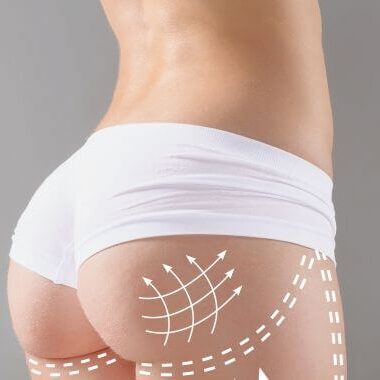
The gluteal region is not a single target. Skilled providers divide it into functional zones: the upper pole, responsible for the lifted appearance; the central projection area; the lateral hip curves; and the infragluteal fold that defines the lower contour. Each zone responds differently to filler placement, and enhancing one without considering the others can create results that look disproportionate. A well-designed injection map treats the buttocks as a three-dimensional structure, distributing volume to complement what is already there rather than simply adding bulk.
The Subcutaneous Injection Technique and What Happens Beneath the Surface
The actual procedure is straightforward in execution. After topical numbing or local anesthetic, a cannula or fine needle deposits the filler material into the subcutaneous fat layer in precise, distributed placements. A cannula is generally preferred for this region because its blunt tip reduces bruising risk and allows the provider to move smoothly through tissue planes. Sessions typically take 30 to 60 minutes depending on the volume being placed and the number of zones being treated.
Collagen Stimulation, Volume Addition, and the Progressive Transformation Timeline
What happens after you leave the clinic depends on which filler was used. With hyaluronic acid or Radiesse, the volume is present immediately, though initial swelling may temporarily exaggerate results before settling over the following two weeks. With Sculptra, the poly-L-lactic acid particles begin dissolving almost immediately, and the visible result builds gradually as collagen accumulates over months. Both pathways lead to the same destination: structural improvement in shape, projection, and lift. They simply take different routes to get there.
Can You See Results Immediately, or Does It Take Time?
With volume-based fillers like hyaluronic acid or Radiesse, you will see a noticeable change on the day of treatment. With Sculptra, you may see subtle swelling initially that resolves within days, followed by a quiet waiting period before the progressive improvement becomes apparent. Most patients report that by their second or third Sculptra session, the cumulative change is unmistakable. Managing this expectation honestly at the consultation stage separates providers who earn long-term patient trust from those who oversell the immediate experience.

Realistic Expectations: What Non Surgical BBL Injections Can and Cannot Do
Body Refinement, Not Body Reinvention: Setting an Honest Benchmark
Non surgical BBL injections are a precision contouring tool, not a volumetric overhaul. The procedure refines what you have — adding subtle projection, lifting the upper pole, smoothing lateral curves — rather than restructuring your silhouette from the ground up. Patients who arrive with that understanding consistently report high satisfaction. Patients who arrive expecting surgical-scale transformation consistently do not.
The honest benchmark: a well-executed liquid BBL can take you from a flat or undefined contour to one with noticeable roundness, improved projection, and a lifted appearance. It cannot replicate the scale of a procedure that transfers hundreds of milliliters of living fat tissue. Framing the treatment as body refinement rather than body reinvention is not a limitation disclaimer. It is the accurate description of a procedure that excels precisely within that scope.
How Much Volume and Projection Is Actually Achievable Per Session
A single Sculptra session typically involves four to six vials of product, with each vial reconstituted to approximately eight to ten milliliters. The actual collagen it stimulates adds diffuse structural volume over time rather than the immediate measurable displacement you would calculate from the liquid volume alone. With Radiesse or hyaluronic acid fillers, a meaningful session for gluteal enhancement typically involves 10 to 20 milliliters of product per side, depending on baseline anatomy and target outcome.
In practical terms, most patients notice a genuine change in projection and roundness after completing their initial series. That represents a visible, photographable difference, though it is not the dramatic before-and-after transformation that surgical patients achieve with several hundred milliliters of transferred fat. Knowing this range before your first session is the difference between feeling pleasantly surprised and mildly disappointed.
How Results Vary by Baseline Gluteal Anatomy and Body Type
Starting anatomy influences outcome more than product selection does. Patients with moderate existing gluteal volume and good skin elasticity tend to respond best — the filler has structural tissue to work with, and the skin accommodates new volume without looking strained. Patients who are very lean with minimal subcutaneous fat may find that filler has less surrounding tissue to integrate into, which can limit how naturally the results sit. Also, patients with significant skin laxity may see projection improve but notice that laxity becomes more apparent as volume increases beneath it.
None of these scenarios disqualifies a patient, but they do shape the conversation about what is achievable and how the treatment plan should be sequenced. An experienced provider will tell you this directly in the consultation rather than defaulting to a generic treatment protocol.
Will It Look Natural or Overdone? Addressing the Appearance-Conscious Professional’s Core Fear
This is the question most patients want answered before anything else, and it deserves a direct response. In skilled hands, with appropriate volume and a thoughtful injection map, liquid BBL results read as natural. The fear of looking “done” is legitimate, but it is also largely a function of provider selection and treatment philosophy rather than an inherent property of injectable fillers.
How Provider Skill and Injection Pattern Determine Proportional Harmony
The injection pattern determines whether added volume integrates with your existing anatomy or sits on top of it. A provider who distributes filler across multiple zones — upper pole, central projection, lateral hips — in proportions calibrated to your specific measurements creates a result that looks like you, improved. A provider who deposits volume in a single location, or who works from a standard template rather than a patient-specific map, creates a result that looks like filler was placed.
Proportional harmony requires understanding your hip-to-waist ratio, your natural gluteal curvature, and how the two interact when volume is added in any given zone. These are not instinctive judgments. They come from training and experience with gluteal anatomy specifically, not general filler placement skills.
Why the Precision Refinement Philosophy Protects Against an Overdone Appearance
An artificial-looking result in gluteal contouring typically occurs when projection is increased without equivalent attention to infragluteal fold definition, or when lateral hip volume is added without addressing upper pole lift to maintain proportion. The result looks augmented rather than enhanced.
A precision refinement approach treats the gluteal region as a unified three-dimensional form. Every volume addition is evaluated against the whole, not just the target zone. This philosophy is more time-intensive at the planning stage, but it is the reason patients leave looking subtly better rather than noticeably altered.
Who Is the Ideal Candidate for a Liquid BBL Treatment?
The Profile That Responds Best: Body Type, Health Status, and Aesthetic Goals
The patients who get the most from non surgical BBL injections share a few consistent characteristics. They have a defined aesthetic goal, typically improved projection, hip curve definition, or upper pole lift, that falls within the achievable range for injectables. They are in good general health without autoimmune conditions or active infections in the treatment area. And they have realistic expectations about the pace of results, particularly with Sculptra.
Body type matters, but there is no single ideal. Patients across a wide range of BMIs and body compositions benefit from this treatment. What matters more is whether the structural goal is appropriate for injectable enhancement versus surgical volume addition.
Why This Treatment Suits the Time-Pressed, Recovery-Averse Professional
The liquid BBL requires no general anesthesia, no compression garments, no weeks of modified sitting, and no time away from work. Most patients return to their normal routine the same day or the following morning. For professionals who manage dense schedules and cannot absorb several weeks of post-surgical activity restrictions, this is not a minor convenience. It is the reason the treatment is viable at all.
Sessions can be scheduled around travel, professional commitments, and personal obligations. The treatment fits into a life in progress rather than requiring that life to pause.
When Non Surgical BBL Injections Are the Smarter Strategic Choice
Injectable gluteal enhancement is the stronger choice when the goal is subtle to moderate enhancement, when reversibility or adjustability matters, when the patient’s health profile or personal risk tolerance makes surgery inappropriate, or when the patient simply wants to improve their silhouette without the permanence and recovery burden that surgery demands. It is also the right entry point for patients who are curious about enhancement but uncertain about committing to surgical results.
When Surgery May Still Be the More Appropriate Route
A liquid BBL cannot replicate surgical volume. Patients seeking a dramatic size increase, significant correction of severe ptosis, or structural change that requires tissue repositioning will not achieve those outcomes with injectables. A candid provider will say this clearly rather than accepting every patient as a candidate.
Surgery also produces permanent results that many patients value. If you want to make a single decision and not think about maintenance for a decade, a surgical BBL performed by a qualified plastic surgeon with a rigorous safety protocol may genuinely serve you better. The goal of an honest consultation is matching the right tool to the right outcome, not filling every appointment.

Non Surgical BBL vs. Surgical BBL: A Clear-Eyed Comparison
Downtime, Recovery, and Life Disruption: The True Cost of Each Route
Surgical BBL recovery typically spans four to six weeks of modified activity, including restrictions on direct sitting that require specialized cushions, compression garment wear, and limited physical exertion. Most patients need two to three weeks away from desk-based work and four to six weeks before returning to exercise. The physical and logistical demands of recovery extend well beyond the procedure itself.
Non surgical BBL injections involve mild swelling and potential bruising at injection sites, resolving within a few days. There are no sitting restrictions, no compression requirements, and no work absences. The gap between these two recovery profiles is not a matter of degree. It is a categorical difference in life disruption.
General Anesthesia, Surgical Risk, and the Safety Equation
Surgical BBL carries the risks associated with all procedures requiring general anesthesia, including cardiovascular events, anesthesia reactions, and infection. The procedure also carries a procedure-specific risk: fat embolism from inadvertent intravascular fat injection, which, while rare, has driven significant attention in the plastic surgery community and led to revised safety guidelines around injection depth and technique.
Injectable gluteal enhancement uses local anesthetic or topical numbing only, with no systemic anesthetic risk. The subcutaneous placement protocol used in reputable clinics keeps needles and cannulas well clear of the deep vascular structures associated with fat embolism risk.
Reversibility and Adjustability: The Advantage of a Non-Permanent Approach
Surgical results are largely permanent, which is a feature for patients confident in their outcome and a liability for those whose preferences evolve. Non surgical BBL results are temporary by nature. Sculptra and Radiesse fade gradually over 12 to 36 months, and hyaluronic acid fillers can be dissolved enzymatically if adjustment is needed. This built-in flexibility lets patients refine their approach over time, change their aesthetic direction as their body or priorities shift, and course-correct if a result does not land exactly as planned.
Is Sculptra Safer Than a Traditional BBL?
Sculptra’s safety record in gluteal applications is strong when placed correctly in the subcutaneous layer by a trained provider. The known risks, including nodule formation, superficial inflammation, and product migration, are real but uncommon with proper technique and appropriate product reconstitution. Critically, none of the serious complications associated with surgical BBL — fat embolism, deep vascular injury, general anesthesia events — apply to Sculptra treatment. The two procedures are not in the same risk category.
That said, “non surgical” does not mean risk-free. Provider training, product quality, injection depth, and sterile technique all determine whether a liquid BBL is as safe in practice as it is in principle.
The Long-Term Commitment: Thinking Beyond the Single Procedure
A surgical BBL is a single event with permanent structural results. A liquid BBL is an ongoing relationship with your results. After an initial series, most patients schedule maintenance sessions every 12 to 24 months to preserve their outcome. Over a multi-year window, this represents a meaningful time and financial investment — one that should be factored honestly into the decision alongside the lower upfront cost and risk profile.
For many patients, the ability to maintain, adjust, and evolve results over time is preferable to a permanent outcome they cannot revisit. For others, the ongoing commitment is a genuine consideration. Both perspectives are valid, and a provider worth trusting will raise this conversation without prompting.
Safety, Practitioner Standards, and Why Where You Go Matters Enormously
The Non-Negotiables: Sterile Technique, Product Quality, and Clinical Oversight
Provider selection determines more of your outcome than product selection does. Non surgical BBL injections are a safe procedure in the right hands and a problematic one in the wrong ones. The essentials are not negotiable: pharmaceutical-grade injectables from verified suppliers, sterile technique maintained throughout the session, and clinical oversight from a licensed medical professional who can recognize and manage adverse events if they occur.
Product quality deserves specific attention. Sculptra, Radiesse, and hyaluronic acid fillers used in reputable aesthetic clinics are FDA-cleared materials with established safety records. The same cannot be said for everything marketed and injected under the “liquid BBL” label. Counterfeit or improperly stored fillers exist in the market, and the gluteal region — where relatively large volumes are placed — amplifies the consequences of compromised product.
What Separates a Qualified Aesthetic Clinic from a High-Volume Injector
Volume and quality are not the same thing. A high-volume injector may have performed hundreds of treatments while applying the same generic protocol to every patient. A qualified aesthetic clinic structures the treatment around your anatomy, not around throughput.
Concrete differentiators to look for:
- A consultation with anatomy assessment before any product is discussed
- A provider with documented training in gluteal anatomy and injectable techniques specifically, not general filler certification
- An honest conversation about what is and is not achievable for your body type
- A medical director or physician in clinical oversight of the practice
- Clear documentation of the products being used, including lot numbers, so you know precisely what is being placed in your body
The qualification gap in aesthetic medicine is real. Injection technique for gluteal enhancement requires knowledge of tissue planes, vascular anatomy, and product behavior under pressure that general cosmetology or basic aesthetician training does not provide.
How MEDSPA MD Group’s Approach to Non Surgical BBL Injections Reflects a Signature Standard of Care
At MEDSPA MD Group, every liquid BBL treatment begins with a detailed anatomical assessment conducted by a trained provider — not a sales consultation. The injection plan is built from your specific gluteal geometry, including projection baseline, skin quality, and zone distribution, before any product volume or type is selected. This sequencing matters because the plan should follow the patient, not the price sheet.
Treatment sessions use exclusively verified, pharmaceutical-grade injectables administered under physician oversight. The clinic’s standard is subcutaneous placement with blunt-tip cannulas in the gluteal region, which reduces bruising risk and keeps the procedure well within the established safety protocol for this treatment category. Patients leave with documented follow-up timelines and direct access to their provider if questions arise between sessions.
Red Flags to Watch for When Evaluating Any Non-Surgical BBL Provider
Walk away if a provider cannot tell you which specific product they are using and where it was sourced. Decline if the consultation lasts ten minutes and ends with a treatment room recommendation. Be cautious of anyone promising surgical-scale results from injectable treatment or offering significantly below-market pricing without explanation.
Additional warning signs include no physician on site or on call, pressure to book the same day, no discussion of potential side effects, and no follow-up protocol. A provider confident in their work will welcome your questions and answer them specifically.
How Many Sessions Do You Need and How Long Do Results Last?
The Typical Treatment Series: What a Multi-Month Commitment Looks Like in Practice
A liquid BBL is not a single appointment. Most patients complete an initial series of two to four sessions spaced four to six weeks apart, then transition to a maintenance cadence. With Sculptra, results build across that series and continue improving for several months after the final session. With Radiesse or hyaluronic acid fillers, the primary series is typically shorter — one to two sessions — because the volume effect is immediate.
By month six to nine, most patients who started with Sculptra are seeing their full baseline result. From there, an annual or biannual touch-up maintains what was built. Total investment over a 24-month window typically involves three to five sessions, depending on anatomy, product choice, and target outcome.
Maintenance Cadence for the Busy Professional: Planning Around Your Schedule
Each session takes 30 to 60 minutes with no recovery period. Most patients schedule appointments in the late afternoon and return to work the following morning. There are no compression garments, no post-treatment positioning restrictions, and no activity limitations beyond avoiding vigorous exercise for 24 to 48 hours.
For professionals with dense travel schedules, Sculptra’s longer longevity makes it easier to manage — one annual touch-up session rather than treatments every 12 months for volume-based fillers. Sessions can be spaced to coincide with natural gaps in your calendar, making the maintenance commitment far less intrusive than any surgical alternative.
How Long Does a Non Surgical Liquid BBL Last? Realistic Duration by Filler Type
Sculptra results, once the initial series is complete, typically last two to three years with annual maintenance. Radiesse results persist for 12 to 18 months before a touch-up is needed. Hyaluronic acid fillers in the gluteal region last approximately 12 to 18 months as well, though high-movement areas may metabolize product somewhat faster.
These are averages. Individual longevity varies with metabolism, activity level, and the volume of product placed in the initial series. Patients who complete a fuller initial series generally see their results hold longer than those who start conservatively.
Touch-Up Timing and the Long-Term Relationship with Your Results
The patients who achieve the best long-term outcomes treat their liquid BBL as an evolving aesthetic plan rather than a finished project. Touch-up sessions are an opportunity to refine as well as maintain, adjusting volume distribution as your body changes, addressing new areas of interest, or fine-tuning proportion as your aesthetic preferences evolve.
Your provider should be reassessing your anatomy at each visit, not simply replicating the previous session’s protocol. This is what separates a genuine aesthetic relationship from a transactional injection appointment.
Which Non Surgical BBL Path Is Right for You?
You want gradual, long-lasting results and minimal appointment frequency. Sculptra is your match. Plan for three to four sessions over four to six months, then one annual touch-up. Results build quietly and last two-plus years.
You want to see a difference right away and stay flexible. Radiesse gives you immediate projection with progressive improvement. One to two sessions to start, with maintenance at 12 to 18 months.
You want targeted correction — hip dips, asymmetry — with the option to adjust. Hyaluronic acid fillers offer precision placement and reversibility, making them best suited for specific contouring goals rather than overall projection increase.
You want the most gradual commitment. Start with a single Sculptra session, assess your response at three months, and build from there. The protocol is designed to scale.
Conclusion: Non Surgical BBL Is Not Plan B — It’s a Smarter Plan Entirely
Recapping the Case for the Liquid BBL as a Modern Body Contouring Standard
The liquid BBL earns its place as a primary contouring option not because it avoids surgery, but because it solves a different problem than surgery does. It delivers visible, proportional enhancement to patients who want refined results without irreversible commitment, without recovery-driven disruption, and without general anesthesia risk. For the scope of improvement it addresses — meaningful projection, improved symmetry, upper pole lift — it performs with a precision that no amount of exercise or wardrobe adjustment can replicate.
The treatment category has matured significantly. The products are proven, the technique is established, and the safety profile in trained hands is strong. What separates excellent outcomes from mediocre ones now is almost entirely provider quality and patient selection, both of which are within your control.
The Confidence Outcome: What Patients Consistently Report After Treatment
Patients who complete their initial series consistently report that the change registers not just visually but in how they move through the world. Clothes fit differently. The silhouette in the mirror reflects the version of themselves they had in mind. What they rarely report is that anyone asked what they had done. That absence of detection is, for most patients, the highest possible measure of success.
The goal was never to look altered. It was to look like themselves — improved, confident, and entirely at ease with what they see.
Your Next Step: Booking a Personalized Consultation at MEDSPA MD Group
A consultation with MEDSPA MD Group begins with your anatomy and your goals, not a treatment menu. If non surgical BBL injections are the right tool for what you want to achieve, you will leave with a clear, personalized plan — product selection, session sequencing, realistic timelines, and honest projections for what your specific anatomy can achieve.
If they are not the right tool, you will know that too. That kind of candor is the standard the practice holds itself to, and it is the only foundation worth building a long-term aesthetic relationship on.
Book your consultation today and begin the conversation with a provider who treats your results as seriously as you do.
Frequently Asked Questions
The best method depends on your individual goals, timeline, and anatomy. Sculptra is generally preferred for patients seeking long-lasting, gradually building results with a natural feel, while Radiesse suits those who want immediate visible improvement alongside progressive collagen stimulation. Hyaluronic acid fillers are ideal for targeted corrections like hip dip asymmetry, particularly when reversibility is a priority. An experienced provider will assess your specific anatomy and recommend the approach, or combination of approaches, that best matches your outcome.
Longevity varies by filler type. Sculptra results, following a complete initial series, typically last two to three years with annual maintenance. Radiesse and hyaluronic acid fillers generally persist for 12 to 18 months before a touch-up is needed. Individual factors such as metabolism, activity level, and the volume placed during the initial series can influence how long results are maintained.
With Radiesse and hyaluronic acid fillers, a noticeable change is visible on the day of treatment, though some initial swelling will settle over the following two weeks. Sculptra works differently: it stimulates your own collagen production over time, so results build gradually over three to six months. Most Sculptra patients describe the cumulative change as unmistakable by their second or third session.
Most patients complete an initial series of two to four sessions spaced four to six weeks apart. With volume-based fillers like Radiesse, results are apparent after one to two sessions. With Sculptra, the most meaningful improvement typically becomes visible after the second or third session as collagen accumulates, with continued refinement for several months after the series is complete.
Sculptra works entirely through collagen biostimulation, producing no immediate volume but building a gradual, natural-looking result that can last two to three years. Radiesse provides both immediate volume through calcium hydroxylapatite microspheres and longer-term collagen induction, making it well-suited for patients who want visible feedback on the day of treatment alongside progressive improvement. Both are non-reversible, so provider expertise and careful treatment planning are essential with either option.
In the hands of a skilled, anatomy-focused provider, liquid BBL results are designed to look like a natural enhancement rather than an obvious procedure. The key lies in treating the gluteal region as a unified three-dimensional form, distributing volume across multiple zones in proportion to your existing anatomy rather than simply adding bulk to a single area. Patients treated with a precision refinement philosophy consistently report that their results read as a better version of themselves, not as evidence of treatment.