Table of Contents
- Why the ‘Duck Lips’ Reputation Persists (and Why It Doesn’t Have to Be Your Story)
- What Lip Enhancement Can Realistically Achieve — and What It Cannot
- What to Expect in Terms of Visible Outcome at Each Enhancement Tier
- Choosing the Right Treatment: A Guide to Lip Enhancement Options in Philadelphia
- Fat Transfer Lip Augmentation — A Surgical Alternative Worth Understanding
- Treatment Comparison: Hyaluronic Acid Filler vs. Fat Transfer
- The Personalized Assessment Framework: How Expert Injectors Avoid the ‘Overdone’ Result
- The Consultation Questions That Define the Right Approach for You
- What the Treatment Experience Looks Like at a Premier Philadelphia Medspa
- Recovery, Longevity, and Fitting Results Into a Professional Schedule
- Confidence in the Details: Why Your Choice of Provider Defines Your Result
- Frequently Asked Questions
Why the ‘Duck Lips’ Reputation Persists (and Why It Doesn’t Have to Be Your Story)
The overdone lip look has a specific origin: volume injected without regard for proportion. When a provider treats the lips as isolated structures rather than features that must harmonize with the nose, chin, philtrum, and overall facial geometry, the result announces itself. The “duck lips” aesthetic was never a product of hyaluronic acid filler. It was a product of poor technique, excessive volume, and a fundamental misunderstanding of what lips are supposed to do on a face.
That reputation lingers because those results do too. Filler can last anywhere from six to eighteen months, which means visible misjudgments stay visible long enough to reinforce the fear in anyone watching. Those outcomes represent a specific failure of craft, not an inherent risk of the treatment itself.
The Real Variable Between Natural and Overdone Results
The single variable that separates a subtle, flattering enhancement from an obvious, distracting one is the injector’s approach to proportion. A skilled practitioner begins with your existing lip structure, your facial thirds, and your lip-to-face ratio, working within those parameters rather than against them. The product is secondary. The same product placed well, in the right amount, in the right anatomical locations, produces a natural result. Placed carelessly, it does not.
This is why Philadelphia lip enhancement done well is invisible in the best possible sense: colleagues notice that you look rested, or that something is subtly different, but they cannot name what changed.
What ‘Effortlessly Natural’ Actually Looks Like for a Philadelphia Professional
For a marketing executive or business owner navigating client meetings and video calls, “natural” has a specific professional meaning. It means your lips look like yours, just more defined, more hydrated, and more proportionate. It does not mean pillow-soft or dramatically fuller. The goal is a result that holds up in fluorescent conference room lighting and high-resolution video without reading as “done.”
Practically, that translates to a cleaner lip border that photographs well, a hint of additional volume that adds presence without puffiness, and symmetry that feels balanced rather than engineered. It is the difference between a result that enhances your authority in a room and one that distracts from it.
Repositioning Lip Enhancement as a Precision Art Form, Not a Volume Exercise
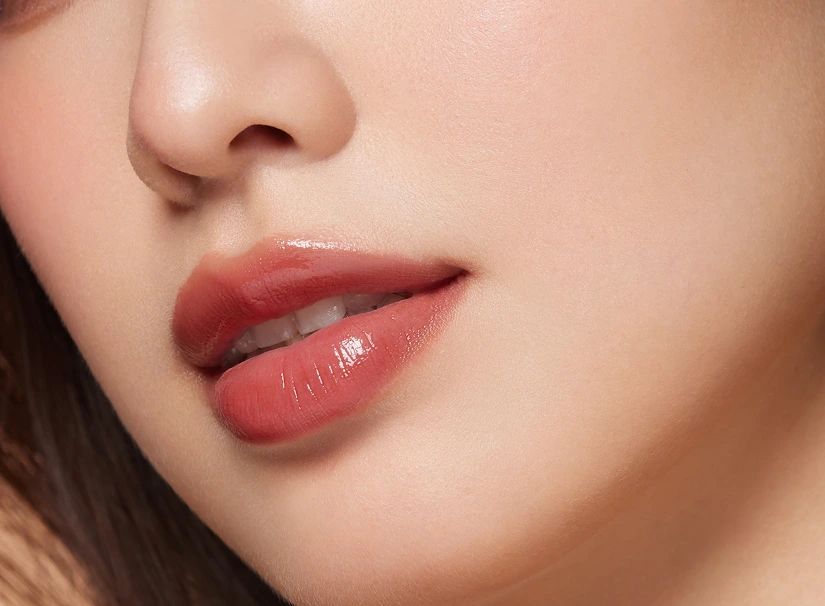
The most accurate way to think about expert lip enhancement is as structural refinement. Volume is one tool among several, and often not the primary one. A skilled injector may use a fraction of a milliliter placed precisely at the vermilion border to redefine a lip that has lost definition with age, achieving more visible improvement than a full syringe injected into the body of the lip without intention.
When you evaluate a provider, ask whether they discuss shape before volume. That question alone will tell you whether you are in the right hands.
What Lip Enhancement Can Realistically Achieve — and What It Cannot
Defining the Spectrum: From Micro-Refinement to Moderate Enhancement
Lip enhancement exists on a continuum. At one end sits micro-refinement: small amounts of product used to restore definition, correct minor asymmetry, or subtly project a lip that has flattened over time. At the other end sits moderate enhancement, a meaningful increase in volume that reshapes the lip profile while remaining within natural-looking proportions. Beyond that range, results begin to conflict with facial anatomy rather than complement it.
Most professionals seeking their first treatment sit firmly in the micro-refinement range, and that is where the most sophisticated work happens.
The Four Dimensions of Lip Improvement: Volume, Shape, Definition, and Symmetry
Expert injectors think in four dimensions, not one.
- Volume: the fullness of the lip body
- Shape: the curvature, projection, and overall lip silhouette
- Definition: the clarity of the lip border and the crispness of the Cupid’s bow
- Symmetry: the balance between left and right, and between upper and lower lip
A one-dimensional treatment plan — more volume and nothing else — is what produces the results people fear. A four-dimensional assessment produces results people notice for the right reasons.
Enhancing Lip Border Definition and the Cupid’s Bow
Border definition is frequently the highest-value intervention, particularly for clients in their thirties and forties who have noticed their lip line becoming less distinct. A small amount of filler placed precisely along the vermilion border sharpens the edge, restores the shadow that defines a lip’s shape in photographs and natural light, and makes lipstick adhere more cleanly. The Cupid’s bow can be accentuated without adding any overall volume, producing a more youthful appearance through shape alone.
Improving Philtrum Columns and Lip Projection
The philtrum columns, the two vertical ridges running from the base of the nose to the upper lip, naturally flatten with age, which causes the upper lip to thin and lose forward projection. Strategic placement of filler along these columns lifts the center of the upper lip outward, creating a more defined pout without enlarging the lip itself. This is one of the most underused and most effective techniques in sophisticated lip enhancement.
Correcting Asymmetry Without Overcorrection
Subtle asymmetry is nearly universal. The goal is not geometric perfection but balance that reads as natural to the eye. Overcorrection, where a provider tries to make both sides of the lip identical, often produces a result that looks stiff or manufactured. A skilled injector brings the less prominent side closer to the dominant side, preserving your lip’s character while improving overall harmony.
How Much Enhancement Actually Looks Natural in a Professional Context
For most first-time clients, the answer is less than they expect, and the result is more than enough. A conservative approach, typically 0.5 to 1 milliliter of filler depending on the starting anatomy, allows the practitioner to assess how your lips respond to the product before committing to more. Starting conservatively is also reversible. Starting aggressively is not, at least not without intervention.
The benchmark for professional appropriateness is simple: the enhancement should not be the first thing anyone notices about you in a room.
What to Expect in Terms of Visible Outcome at Each Enhancement Tier
- Micro-refinement (0.3 to 0.5 ml): Sharper border, restored definition, minimal volume change. Most clients are back in client-facing roles within 24 to 48 hours.
- Subtle enhancement (0.5 to 1 ml): Visible but proportionate increase in volume and shape. Mild swelling in the first 48 hours, undetectable at 5 to 7 days.
- Moderate enhancement (1 to 1.5 ml): Meaningful volume increase with full reshaping. Requires careful provider judgment and a clear conversation about facial proportions before proceeding.
Knowing which tier aligns with your goals and your professional schedule is exactly the kind of decision that belongs in a thorough consultation, not an online quiz.
Choosing the Right Treatment: A Guide to Lip Enhancement Options in Philadelphia
Hyaluronic Acid Fillers — The Gold Standard for Non-Surgical Lip Enhancement
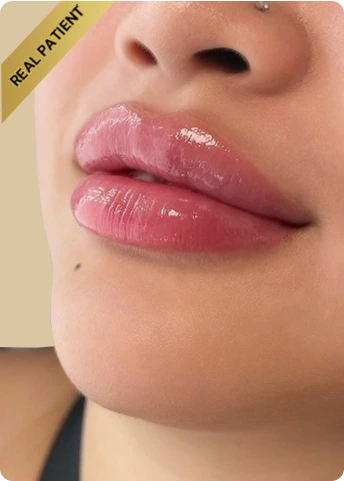
Hyaluronic acid fillers dominate lip augmentation in Philadelphia for a reason that goes beyond popularity: they work with your biology rather than against it. It occurs naturally in the body, which means these fillers integrate smoothly with lip tissue, producing a feel and movement that reads as authentic rather than artificial.
How Juvéderm and Restylane Differ in Texture, Longevity, and Aesthetic Result
Juvéderm and Restylane are both hyaluronic acid-based, but they are not interchangeable. Juvéderm formulations tend to have a smoother, more cohesive gel consistency that integrates fluidly into lip tissue, making them a common choice for adding volume and softness. Restylane products are typically more particulate in structure, which gives them a firmer hold and makes them particularly effective for defining the lip border and Cupid’s bow. Longevity varies by formulation and individual metabolism, but most clients see results lasting six to twelve months. A skilled injector selects the product that matches the specific correction, not simply the one they use most often.
Why Reversibility Is a Critical Safety Advantage for First-Time Clients
Hyaluronic acid fillers can be dissolved with hyaluronidase, an enzyme that breaks down the filler rapidly and safely. For a first-time client, this is not a footnote. It is a meaningful safety net. If the result is not what you envisioned, or if unexpected swelling reveals a placement issue, the treatment can be adjusted or reversed without waiting months for the product to metabolize on its own. That option does not exist with surgical alternatives.
Fat Transfer Lip Augmentation — A Surgical Alternative Worth Understanding
Fat transfer involves harvesting a small amount of fat from another area of the body, processing it, and injecting it into the lips. The appeal is longevity: because the material is your own tissue, a portion of it integrates and remains long-term.
Key Differences from Injectable Fillers: Permanence, Recovery, and Predictability
The tradeoffs are significant. Fat transfer requires a surgical setting and a recovery period measured in weeks rather than days. The results are also less predictable. Fat retention varies by individual, meaning the final outcome is not fully apparent until the initial swelling resolves and non-integrated fat is reabsorbed, a process that can take several months. Adjustability after the procedure is limited. For clients who want precise, controllable, fine-tuned results, that unpredictability is a meaningful disadvantage.
Why Non-Surgical Lip Enhancement Remains the Preferred Choice for Busy Professionals
The professional calculus here is straightforward. Non-surgical lip enhancement with hyaluronic acid filler offers immediate results, a recovery window measured in days, full reversibility, and the ability to refine results at follow-up appointments. For someone managing a client-facing schedule, those properties matter as much as the aesthetic outcome itself. Fat transfer has its appropriate candidates, primarily those seeking permanent volume after repeated filler treatments, but for most first-time clients exploring lip augmentation in Philadelphia, injectable filler offers more control with less risk and less disruption to daily life.

Treatment Comparison: Hyaluronic Acid Filler vs. Fat Transfer
| Dimension | Hyaluronic Acid Filler | Fat Transfer |
|---|---|---|
| Reversibility | Fully reversible with hyaluronidase | Not reversible |
| Downtime | 1 to 3 days mild swelling | 2 to 4 weeks |
| Longevity | 6 to 12 months | Partial permanence (variable) |
| Natural feel | High, especially when placed well | High once fully integrated |
| Customization flexibility | Excellent, adjustable at follow-up | Limited post-procedure |
| Ideal candidate | First-time clients, busy professionals | Repeat filler clients seeking long-term volume |
The Personalized Assessment Framework: How Expert Injectors Avoid the ‘Overdone’ Result
How Facial Anatomy and Lip-to-Face Ratio Guide Treatment Planning
No two lips occupy the same face, which means no two treatment plans should be identical. A qualified injector assesses your lips in relation to your other features: the distance between your nose and upper lip, the width of your mouth relative to your cheekbones, and the proportion of your upper to lower lip. Classical aesthetic guidelines offer reference points, but your bone structure, skin quality, and existing lip shape all influence which proportions read as natural on your face.
Reading Your Lip Structure: Thin Lips, Asymmetry, Undefined Borders, and Flat Projection
Before discussing volume, a skilled injector reads the existing architecture. Thin lips may need projection more than fullness. Asymmetry may require differential placement rather than equal volume on both sides. An undefined border often responds better to precise vermilion-edge work than to body volume. Flat projection frequently traces back to the philtrum columns rather than the lip itself. The treatment that follows from this reading is specific to you, not a template applied uniformly across clients.
The Consultation Questions That Define the Right Approach for You
What Should I Expect During My First Lip Filler Consultation?
A thorough consultation at a qualified practice begins with a conversation, not a product recommendation. Your injector should ask about your goals, professional context, prior aesthetic treatments, and tolerance for downtime. They should examine your face in natural light, photograph your lips from multiple angles, and explain their proposed approach before any product is selected. You should leave the consultation with a clear understanding of exactly what will be done, why, and what the realistic outcome looks like at each enhancement tier.
How Can I Get Natural-Looking Lip Fillers That Don’t Look Overdone?
The most reliable answer is to choose a provider who prioritizes shape over volume and proposes a conservative starting point. Ask specifically how they plan to maintain your lip’s natural movement and expression. If a provider immediately defaults to a standard syringe quantity without discussing your facial proportions, that is a signal to ask more questions.
Natural-looking results come from precise placement, appropriate volume for your anatomy, and a willingness to under-treat slightly and refine rather than pursue aggressive correction in a single session.
Why a Personalized Consultation Is Not a Formality — It Is the Treatment
The consultation is where the outcome is determined. Product selection, placement strategy, volume decision, and the identification of anatomical nuances all happen in that conversation before a needle is placed. Providers who skip this step, or compress it into a few minutes of generic intake, are treating the injection as the treatment. For expert injectors, the injection is the execution of a plan formulated in the consultation room.
What Separates a Qualified Aesthetic Injector from a Generic Provider in Philadelphia
Training credentials are a baseline, not a differentiator. What separates an expert is the quality of their assessment process, their familiarity with the full range of hyaluronic acid formulations, and their willingness to recommend less rather than more. Review their before-and-after portfolio with a specific question in mind: Can you identify which clients’ work was done? If the answer is rarely, you are looking at a practitioner who understands restraint as a skill.
What the Treatment Experience Looks Like at a Premier Philadelphia Medspa
From Consultation to Chair: A Step-by-Step Overview of the Appointment
A well-structured appointment moves through distinct phases. The consultation establishes goals and the treatment plan. Pre-treatment photographs are taken for your record and to guide placement. A topical numbing cream is applied and left on for approximately twenty minutes. The injector then administers the treatment using fine needles or a cannula, depending on the technique and the area of injection. Immediately after, they assess the result, make any minor adjustments, and apply a cold compress to minimize swelling. You receive written aftercare instructions before you leave.
Pain Management and Comfort Protocols During Lip Filler Injections
Lip filler is one of the more sensation-intensive injectable treatments, primarily because the lips are highly innervated. A topical anesthetic reduces but does not eliminate discomfort. Most modern hyaluronic acid fillers also contain lidocaine, which numbs the tissue progressively as the product is injected, making the latter portion of the treatment more comfortable than the first. Most clients describe the sensation as mild pinching or pressure rather than sharp pain, and the injection phase typically produces less discomfort than anticipated.
How Long Does the Procedure Actually Take?
From numbing cream application to walking out the door, plan for sixty to ninety minutes for a first appointment. The injection itself takes fifteen to twenty minutes. The longer time accounts for the consultation discussion, photographs, numbing, and post-treatment assessment. Follow-up appointments move faster, typically forty-five to sixty minutes total.
Can Lip Fillers Be Reversed If I Don’t Like the Results?
Yes, and this is one of the most clinically meaningful advantages of hyaluronic acid filler. Hyaluronidase dissolves the filler quickly, and most clients see a significant reduction within twenty-four to forty-eight hours of the reversal treatment. This is not a common outcome at experienced practices, but knowing the option exists meaningfully changes the risk calculus for clients considering lip enhancement for the first time. You are not making a permanent decision.
Recovery, Longevity, and Fitting Results Into a Professional Schedule
The First 48 Hours: What to Expect and What to Avoid
Swelling peaks within the first twenty-four hours and resolves meaningfully by the end of day two. Your lips will feel tender and appear fuller than the final result. This is normal and temporary. Mild bruising at injection sites occurs in some clients, typically fading within three to five days.
During this window, avoid the following:
- Strenuous exercise, which increases blood flow and extends swelling
- Alcohol, which amplifies bruising
- Heat exposure, including saunas, steam rooms, and direct sun
- Pressing, massaging, or pursing the lips forcefully
Sleeping with your head slightly elevated the first night helps reduce swelling faster. Most clients find the forty-eight-hour mark is when they stop thinking about the treatment at all.
Post-Treatment Professional Etiquette: When You Can Return to Meetings and Video Calls
The practical answer depends on your enhancement tier and your comfort with mild, visible swelling. Micro-refinement clients can typically return to in-person meetings within twenty-four to forty-eight hours without anyone taking particular notice. The swelling at that level is subtle enough that it reads as slightly fuller lips rather than as a procedure.
For subtle enhancement clients, plan for a forty-eight to seventy-two hour buffer before high-visibility commitments. Video calls are often more forgiving than in-person settings because lighting and angle naturally soften any residual puffiness. By day five, virtually all clients are indistinguishable from their pre-treatment baseline, except for the intended result.
Scheduling your appointment on a Thursday afternoon gives you the weekend as your recovery buffer, returning Monday looking polished rather than freshly treated.
How Long Do Lip Enhancements Last — and What Affects Longevity?
Most clients see results lasting six to twelve months, with individual variation driven by three primary factors: the specific filler formulation used, your metabolism, and the placement location. Product in the lip body tends to metabolize faster than product placed at the border, because the lips move constantly throughout the day. Clients with faster metabolisms consistently see shorter duration.

Lifestyle factors also play a measurable role. Significant cardiovascular activity can accelerate filler breakdown over time, and sun exposure degrades hyaluronic acid in the skin. Staying well-hydrated, by contrast, supports filler longevity because hyaluronic acid binds water, and hydrated tissue preserves the product more effectively.
Lip Filler Aftercare Habits That Protect Your Investment
The two weeks following treatment are when aftercare habits matter most. Consistent hydration supports the hyaluronic acid filler’s performance in tissue. Daily SPF application protects against UV degradation. Avoiding extremely hot foods and beverages in the first few days reduces unnecessary tissue stress while the product settles.
Beyond the immediate recovery period, the most effective maintenance habit is consistent moisturization of the lip tissue. Well-conditioned lips retain filler more evenly and maintain their appearance longer between appointments.
Planning Touch-Ups Without Disrupting Your Calendar
The goal is to schedule touch-ups before visible fading, not after. Most experienced clients learn their personal longevity window after one or two treatment cycles and can plan proactively. A standing appointment at the eight to ten month mark works well for most subtle enhancement clients, giving a comfortable buffer before any noticeable regression.
One universal rule: never schedule a touch-up within two weeks of a high-stakes event. Schedule it four to six weeks prior, so any swelling is long resolved and the result has fully settled.
Quick-Pick Scheduling Guide: Touch-Up Intervals by Enhancement Tier
| Enhancement Tier | Typical Longevity | Suggested Touch-Up Window | Timing Relative to High-Visibility Events |
|---|---|---|---|
| Micro-refinement (0.3–0.5 ml) | 6–9 months | Every 6–8 months | Schedule 4–6 weeks before key presentations, conferences, or headshots |
| Subtle enhancement (0.5–1 ml) | 8–12 months | Every 8–10 months | Schedule 4–6 weeks before; avoid the 2 weeks immediately prior |
| Moderate enhancement (1–1.5 ml) | 10–14 months | Every 10–12 months | Schedule 6 weeks before; plan for a brief follow-up at 2 weeks if needed |
Confidence in the Details: Why Your Choice of Provider Defines Your Result
Expertise and Artistry, Not Volume, Create Natural Results
Every element of this article points to the same conclusion: the outcome of your lip enhancement is determined before the needle is placed. It is determined by the quality of your injector’s assessment, the precision of their placement strategy, and their discipline to work within your anatomy rather than override it. Product is a variable. Proportion is the constant. Providers who understand that distinction produce results that look like you, refined, rested, and entirely your own.
What to Look for When Choosing a Lip Augmentation Provider in Philadelphia
When evaluating providers for Philadelphia lip enhancement, five criteria matter most.
- A portfolio where results are subtle enough that you have to look closely to identify the enhancement
- A consultation process that discusses shape, proportion, and your professional context before mentioning the product or volume
- Familiarity with multiple hyaluronic acid formulations and the ability to explain why they would choose one over another for your specific anatomy
- A clear answer to the question: “What happens if I want this adjusted or reversed?”
- A conservative starting philosophy, because providers who recommend beginning with less and refining earn the highest trust
Your Next Step: Booking a Personalized Lip Enhancement Consultation at MEDSPA MD Group
MEDSPA MD Group approaches every lip enhancement consultation as the treatment itself. Before any product is selected, your injector performs a thorough assessment of your lip structure, facial proportions, and aesthetic goals, then builds a plan specific to you. The result is an enhancement that holds up under conference room lighting, flatters you on video calls, and earns you the best possible compliment: that you look like yourself, only better.
To schedule your personalized consultation, contact MEDSPA MD Group directly. The conversation that shapes your result begins there.
Frequently Asked Questions
The cost of lip filler in Philadelphia varies depending on the provider’s expertise, the number of syringes used, and the specific product selected. Most clients require between 0.5 and 1 syringe per session, with pricing typically reflecting the injector’s training level and the practice’s quality. A thorough consultation at a reputable medspa will provide a clear, personalized cost estimate before any commitment is made.
Most hyaluronic acid lip fillers last between six and twelve months, though individual results vary based on your metabolism, the specific formulation used, and where the product is placed. Product placed along the lip border tends to last longer than product in the lip body, since the lips are in near-constant motion throughout the day. Staying well hydrated and protecting your skin from sun exposure can help prolong your results.
The most important step is choosing a provider who prioritizes shape and proportion over volume. During your consultation, look for an injector who discusses your facial anatomy before recommending any specific product or quantity, and who begins with a conservative amount that can be refined at a follow-up appointment. Natural lip enhancement results come from precise placement and a respect for your existing lip structure, not from filling to maximum capacity.
Lip fillers use injectable hyaluronic acid gel to add volume, refine shape, and define the lip border, with results lasting six to twelve months and the option to reverse with hyaluronidase if needed. Fat transfer is a surgical procedure that harvests your own fat tissue and injects it into the lips for longer-lasting volume, but it requires greater downtime, carries less predictable results, and cannot be easily adjusted after the fact.
For most clients, and particularly those in client-facing professional roles, injectable filler offers superior control, minimal disruption, and a meaningful safety net.
Most clients experience mild swelling and occasional light bruising for the first twenty-four to forty-eight hours following treatment, with the majority of visible swelling resolving by day three to five. Micro-refinement clients often return to professional settings within one to two days without drawing notice. For those receiving more moderate enhancement, a forty-eight to seventy-two hour buffer before high-visibility commitments is a practical guideline. By day seven, results have typically settled into their final appearance.
Yes. Hyaluronic acid fillers can be dissolved using hyaluronidase, an enzyme that breaks down the filler safely and quickly. Most clients who undergo reversal see a significant reduction within twenty-four to forty-eight hours. This reversibility is one of the most important advantages of non-surgical lip enhancement, particularly for first-time clients who want the reassurance of knowing they are not making a permanent commitment.